


On the morning of Sept. 18, 1759, Quebec formally surrendered to the British, five days after the two armies fighting over it had already lost the men who led them there.
The decisive battle was fought Sept. 13 on the Plains of Abraham, just outside the city’s walls. Both commanding generals were mortally wounded in it. Maj.-Gen. James Wolfe, leading the British force, was shot in the fighting and died within the hour, reportedly living long enough to be told his side had won. The Marquis de Montcalm, commanding the French and colonial defence, was wounded during the retreat into the city and died the next morning, Sept. 14.
That left Quebec’s defence to Jean-Baptiste-Nicolas-Roch de Ramezay, the King’s Lieutenant who had been left in charge of the garrison itself while Montcalm’s field army camped outside the walls. According to the National Battlefields Commission, which maintains the Plains of Abraham site today, Ramezay had roughly 2,200 men, badly depleted artillery, and no realistic hope of relief; a French relief force under the Chevalier de Lévis was still days away when the British began bombarding the city in earnest. Ramezay chose to negotiate rather than let the bombardment continue.
The resulting Articles of Capitulation were signed for the French by Ramezay and, for the British, by Admiral Sir Charles Saunders and Brig.-Gen. George Townshend, who had taken over command of the British land force after Wolfe’s death. The terms were unusually generous for the period: Ramezay submitted 11 conditions covering the treatment of civilians, property, religious practice and the garrison’s departure, and the British agreed to all of them, largely intact.
Quebec’s fall did not immediately settle the war in North America. The French army that had camped outside the city withdrew rather than surrendered, and the following spring it came back: the Battle of Sainte-Foy, fought west of the city on April 28, 1760, was a French victory that briefly put Quebec back under siege. It held anyway. Brig.-Gen. James Murray, left in command of roughly 4,000 British troops to hold the city through the winter of 1759-60, kept it until a British fleet arrived that May, forcing the French to lift the second siege for good. Montreal, and with it the rest of New France, surrendered the following September.
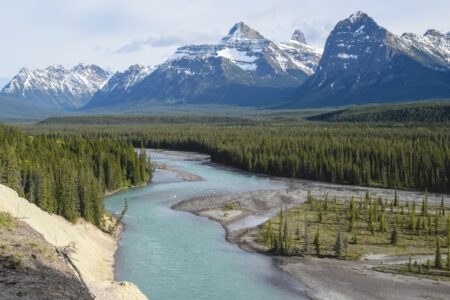
Featured image: the Plains of Abraham battlefield site, Quebec City, shown as an illustration of the location rather than the 1759 surrender itself. Photo via Unsplash.