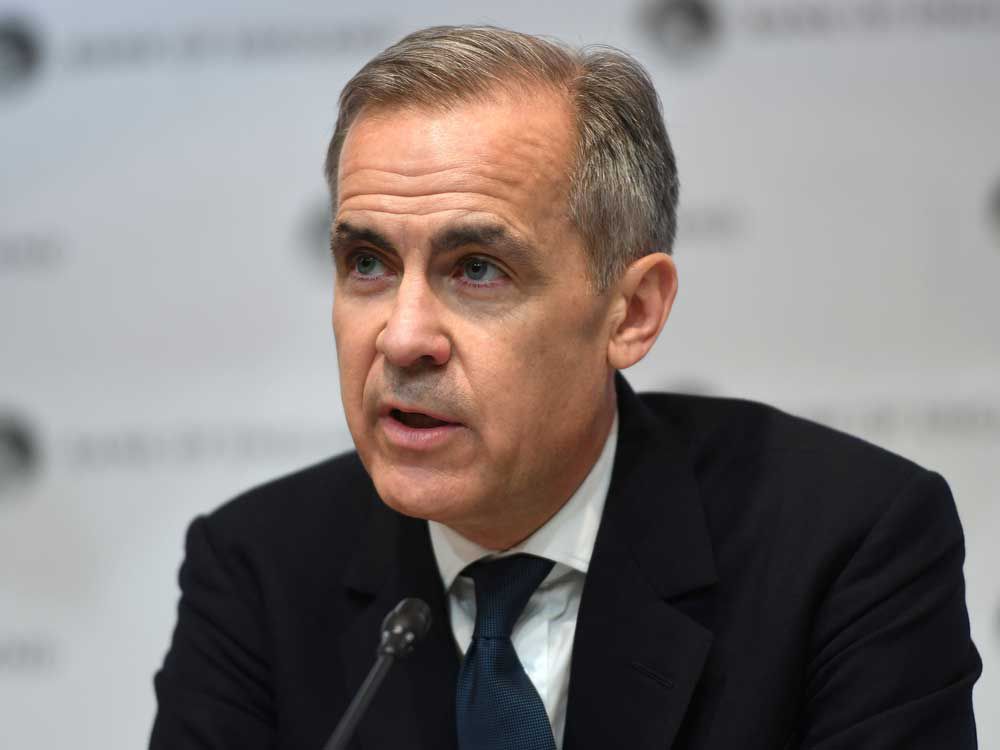

Prime Minister Mark Carney sat down with French President Emmanuel Macron on the French archipelago of Saint-Pierre-et-Miquelon on Sunday, a rare Canadian prime ministerial visit to the tiny overseas territory that sits just 20 kilometres off Newfoundland’s Burin Peninsula.
The two leaders held a working lunch, laid a wreath and issued a joint statement, according to a schedule reported by the Newfoundland outlet NewfoundNews.ca and an itinerary confirmed by the Prime Minister’s Office. Macron played down suggestions the trip was mostly symbolic. “We shouldn’t be so obsessed with sending messages,” he said, according to Euronews, calling the visit “a very strong gesture of friendship.” He added that “the ocean separates us, but what truly unites us are our values, a shared destiny, and the Republic.”
Ottawa says the agenda covers aerospace, energy and critical minerals, quantum computing, satellites and supercomputing, and a defence and security partnership, according to a Sept. 13 news release from the Prime Minister’s Office. Macron told reporters France and the European Union want to lock in Canadian supplies of critical minerals and liquefied natural gas as European fuel prices climb, Euronews reported.
The visit is landing amid a louder, blunter provocation from Washington. Weeks earlier, U.S. President Donald Trump posted a map online showing Canada, Greenland, Mexico and the Caribbean all draped in an American flag under the label “United States of America.” His son Eric Trump shared a version with the caption “We now have Canada surrounded.” A French presidency official told reporters the Saint-Pierre-et-Miquelon trip underscores France’s “geostrategic presence in the North Atlantic, at the doorstep of the United States and the Arctic,” according to Benzinga. The Élysée has taken to describing the 6,000-person archipelago not as a remote outpost but as “central to today’s France.”
That framing has a longer history than either government is advertising. Canada and France fought over the waters around these islands for years, culminating in a 1992 international arbitration that handed France an oddly shaped economic zone: an equidistant line plus a narrow 348-kilometre corridor running south into the Atlantic, a shape lawyers likened to a keyhole, a mushroom and a baguette. France received only about 18 per cent of the zone it had originally claimed, according to a summary of the tribunal’s ruling. Four years later, Canada extended its own economic zone using Sable Island as a reference point, a move that left France’s slice of ocean entirely surrounded by Canadian waters, a decision islanders still resent. Neither government has revisited that arrangement since, which helps explain why Macron’s aides are leaning so hard on Arctic and North Atlantic language now: it is as much about reasserting an old boundary claim as it is about co-ordinating polar policy with Ottawa, Denmark and Greenland.
The Trump map is not the only friction point in the room. Carney has also brushed off pressure from Washington over Canada’s talks to become the European Union’s first “associate member,” telling reporters “nobody is going to tell us with whom we can strike agreements,” according to Euronews.
Saint-Pierre-et-Miquelon’s own troubles rarely make Canadian headlines. Its economy never recovered from Canada’s cod-fishing moratoriums of the early 1990s, and the village of Miquelon-Langlade is now the site of France’s first climate-driven village relocation, as rising seas erode the spit of land it sits on.
Macron heads to New York after the visit for the United Nations General Assembly, where Trump’s Greenland security agreement with Denmark is expected to be formally signed, a reminder of exactly what is at stake in the corner of the Arctic map that Carney and Macron spent Sunday afternoon discussing over lunch.
Via CBC News: Mark Carney to meet with Emmanuel Macron in Saint-Pierre-et-Miquelon. Additional reporting from Euronews, Benzinga, the Prime Minister’s Office and NewfoundNews.ca.