
Updated Oct. 7, 2026
Quebec is the only province with a province-wide winter tire law, and it applies from Dec. 1 to March 15. British Columbia requires winter tires or chains on signed highways, and that season began Oct. 1. Ontario and the other provinces and territories we checked do not make winter tires mandatory for ordinary passenger vehicles, though rules on studded tires and insurance discounts differ.
The rules below come from provincial government pages. Where a province has not published a winter tire requirement, we say so rather than guess.
Winter tire rules at a glance
| Province | Winter tires required? | When |
|---|---|---|
| Quebec | Yes, province-wide, for vehicles registered in Quebec | Dec. 1 to March 15 |
| British Columbia | Yes, on signed highways (tires or chains) | Oct. 1 to April 30 on most routes; some end March 31 |
| Ontario | No, recommended; insurance discount possible | Not applicable |
| Other provinces and territories | No requirement found on the government pages reviewed | Check your province |
Quebec
Quebec requires winter tires on all motor vehicles registered in the province, including rental vehicles, from Dec. 1 to March 15, according to the Government of Quebec. Drivers who do not comply face a fine of $200 to $300.
The tires must carry the winter pictogram or be studded. Studded tires are permitted from Oct. 15 to May 1 on passenger vehicles, taxis and commercial vehicles up to 3,000 kilograms. Tread grooves must be at least 1.6 millimetres deep, and the province recommends at least 4.8 millimetres for winter driving.
The rule does not apply to trailers or to vehicles registered outside Quebec. The province lists other exceptions, including heavy vehicles, farm machinery and vehicles with dealer plates. The Société de l’assurance automobile du Québec can issue a seven-day exemption certificate, and buyers and lessees get seven-day exemptions around a purchase or the end of a lease with proof.
British Columbia
B.C. does not have a blanket law. Instead, winter tires or chains are required on designated highways marked with signs. The B.C. government says the requirement runs from Oct. 1 to April 30 on most routes, and ends March 31 on select highways outside mountain passes and high-snowfall areas.
The province’s route maps show which dates apply to each highway. The province says drivers without the right equipment “may be turned away and fined,” and it can impose travel restrictions at any time depending on road conditions. Its page was last updated Nov. 24, 2025, and lists no 2026 changes.
Ontario
Ontario does not require winter tires. The province’s winter driving page recommends installing four winter tires and says drivers should never mix types of tires on one vehicle. It says winter tires shorten braking distances by as much as 25 per cent, and that all-season tires are not the same as winter tires and can start to lose grip at 7 C.
The page also says drivers could get a discount on auto insurance and should ask their insurer. Studded tires are allowed on vehicles registered in Northern Ontario, but not in Southern Ontario unless the driver is visiting from out of province or is a resident of Northern Ontario.
Other provinces and territories
We did not find a winter tire requirement for ordinary passenger vehicles on the provincial and territorial government pages we reviewed for the remaining jurisdictions. That is not a guarantee that no rule exists, and several provinces regulate studded tires with their own seasonal windows. Check the transportation ministry in your province before you drive, especially if you travel across borders.
Driving across provincial borders
Quebec’s law does not cover vehicles registered outside the province, according to the Quebec government. B.C.’s highway signs apply to everyone driving on those routes. Ontario allows visiting out-of-province drivers to use studded tires.
For when to make the switch and how to do it, see our guides on when to put winter tires on and how to switch to winter tires. Other cold-weather jobs are covered in our pieces on preventing frozen pipes and draft-proofing your home.
If you find reporting like this useful, consider supporting Canada News Media, an independent Canadian newsroom with no corporate parent.
Sources: Government of Quebec, Requirements for winter tires; Province of British Columbia, Designated Winter Tire and Chain Routes; Government of Ontario, Winter driving. Rules can change, so confirm with your provincial transportation ministry.
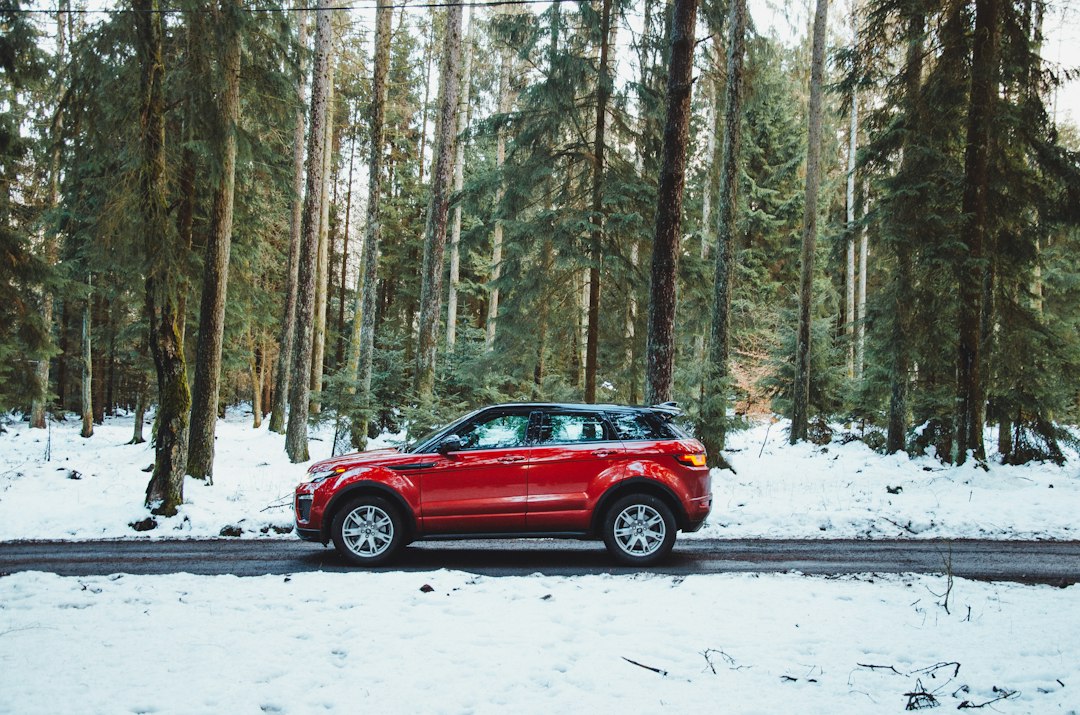
File photo: a vehicle on a snow-covered road. Photo by Michael Heuser via Unsplash.