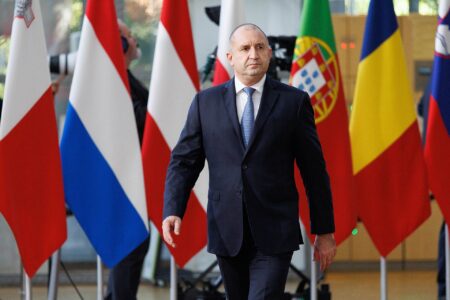


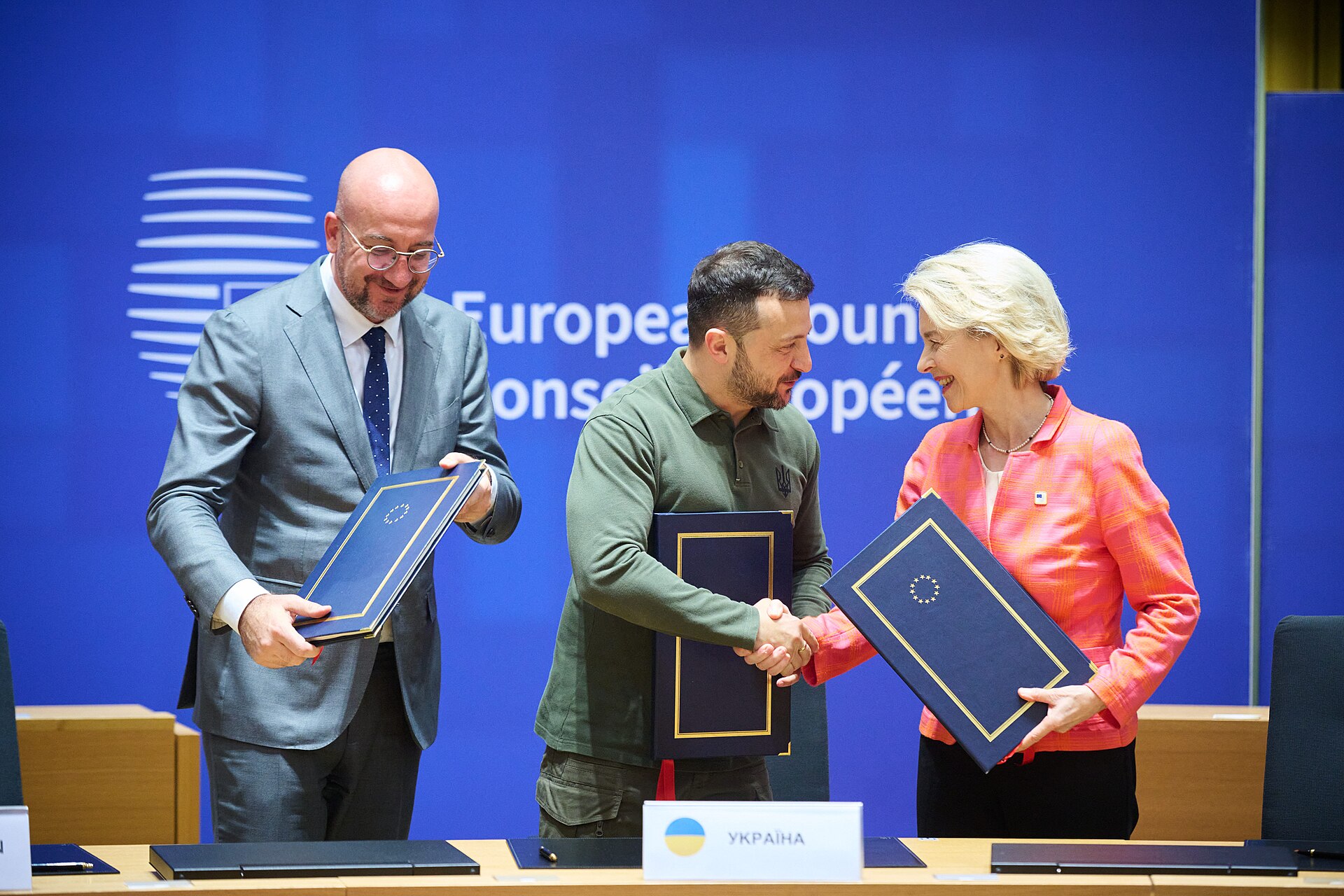
EU leaders reaffirmed their support for Ukraine at a Brussels summit on Friday, Oct. 16, as President Volodymyr Zelenskyy joined them for the second day of talks and a rift with Washington over Russian diesel sanctions deepened.
The stakes are financial as well as political. Irish Taoiseach Micheál Martin said Ukraine’s budget gap next year could reach €70 billion, and that European governments must decide quickly how to fund Kyiv through the end of 2028, the Irish Times reported.
European Council President António Costa said the bloc’s backing was not wavering. “This is no time to withdraw support to Ukraine, this is no time to relieve Russian sanctions,” Costa said, according to the Irish Times. The Council’s official summit page lists Ukraine, European defence, migration and the Middle East as the day-two topics, and had not posted day-two conclusions when this story was written.
Zelenskyy said his main priority was Ukraine’s energy needs and that the country needs more air defence systems and funding for the rest of 2026 and for 2027, Radio Free Europe/Radio Liberty reported. He said European leaders who stand by Ukraine are “real leaders” and that there is no sign Russia wants peace, the Irish Times reported. He called closing the 2027 budget gap a “key” question.
The summit comes as relations between Kyiv and Washington have frayed. Trump recently eased sanctions on Russian diesel exports to bring down fuel prices, RFE/RL reported. In an interview with Newsmax on Oct. 15, Trump said peace would only be possible if Zelenskyy left office and that Zelenskyy was “not a good guy for us to deal with,” according to RFE/RL. The Irish Times reported that Trump has also reportedly suspended U.S. satellite intelligence sharing with Ukraine. Neither report was independently confirmed by Canada News Media.
Zelenskyy told the Financial Times on Oct. 15 that Ukraine would resume attacks on Russian energy facilities after pausing strikes on refineries for three days, saying “We’re done,” RFE/RL reported. He said Moscow had not stopped hitting Ukrainian energy sites. European Commission President Ursula von der Leyen said the EU had backed the energy ceasefire announced by Trump, but that Russia failed to respect it “for a single minute.” She said EU sanctions would stay until Russia stops the war.
Draft conclusions seen by the Kyiv Independent before the summit called for further sanctions, “further intensified efforts” on Ukraine’s air defence and a stop to stolen Ukrainian grain moving through EU territory. The same draft looked forward to “the opening of all the other clusters as soon as possible” in Ukraine’s EU accession talks, according to the Kyiv Independent. The final text may differ.
How to pay is the harder question. Martin said Europe needs a “pan-European financial injection” and is open to using immobilised Russian assets for 2027 and 2028, noting an earlier attempt “came to naught in the end.” The EU’s €90-billion loan to Ukraine is already being spent faster than planned, the Irish Times reported. Belgium, which holds most of the frozen assets, blocked an earlier plan over legal concerns.
On Oct. 12 the EU also adopted its largest sanctions listings since the war began, targeting 1,569 individuals and entities in Russia’s military industry. “This is not the time to ease pressure on Moscow but to increase it,” EU foreign policy chief Kaja Kallas said in the Council’s announcement. Canada News Media reported on that package.
For Canadians, the dispute matters on two fronts. Canada belongs to NATO and the G7, and Ottawa’s sanctions and military support for Ukraine are coordinated with European partners. Canada is also home to one of the largest Ukrainian diasporas outside Ukraine, and many families here follow Kyiv’s winter power situation closely. Earlier coverage covers Zelenskyy’s claim that Russia broke the energy ceasefire and the summit’s opening day.
Leaders are expected to return to the funding question and the Russian assets in December, when a senior EU official told the Kyiv Independent the issue would dominate the European Council.
If you find reporting like this useful, consider supporting Canada News Media, an independent Canadian newsroom with no corporate parent.
Via the Irish Times and Radio Free Europe/Radio Liberty. Updated Oct. 16, 2026. This story is developing.
Follow Canada News Media
Get the day's top Canadian stories and our two daily 60-second news videos wherever you scroll.
X Threads Facebook Instagram LinkedIn TikTok YouTube Pinterest Reddit Substack Flipboard Newsletter RSS