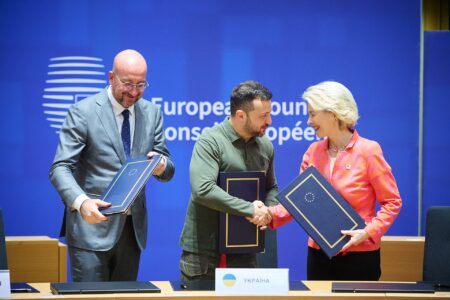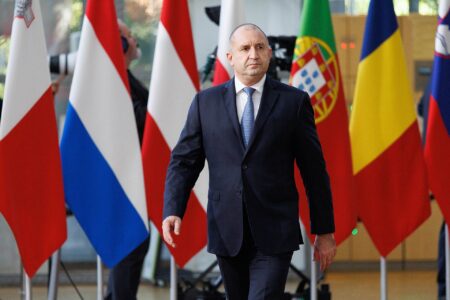


EU leaders ended the first day of their Brussels summit on Oct. 15 without agreement on the bloc’s 2028-2034 budget, and European Council President António Costa will now write a new compromise text, Euronews reported.
The gap is large. The European Parliament wants a seven-year budget of €1.938 trillion, while the Irish presidency’s proposal stands at €1.622 trillion, 16 per cent lower after a cut of €141 billion, Euronews said. A diplomat quoted by Euronews put the chance of a unanimous deal by December at 50 per cent.
The Council’s official summit page says leaders discussed the Irish presidency’s negotiating box and invited Costa to advance talks. They want a deal before the end of 2026 so legislation can be adopted in 2027 and money can flow from January 2028. Euronews reported a special budget summit is set for Nov. 26. Canada News Media’s earlier report cited other meeting dates from the Council calendar, so the schedule may still shift.
Leaders spoke bluntly. Danish Prime Minister Mette Frederiksen said a deal “will probably be as difficult as it was last time. Or even more difficult.” Spanish Prime Minister Pedro Sánchez called the proposal “clearly insufficient.” Luxembourg’s Luc Frieden said: “My country has now cut corporation tax twice, and we cannot do that at European level.” Irish Taoiseach Micheál Martin said: “We were never going to please everybody on this one,” all according to Euronews.
The split follows an old pattern. Euronews said six net-contributor states, including Germany, Denmark and the Netherlands, want deep cuts, while a group led by Spain and Italy defends cohesion funding. Parliament President Roberta Metsola said MEPs “will never rubber-stamp” the Council’s decision, Euronews reported.
Energy prices ran through every debate. Von der Leyen told the European Parliament that natural gas prices have risen 140 per cent since late February and that diesel prices have doubled, adding about €100 billion to the bloc’s fossil fuel import bill, Xinhua reported. Euronews put the Dutch TTF gas benchmark at roughly €86 to €87 per megawatt-hour, nearly triple its level before the war involving Iran began in February, and euro-area inflation at about three per cent in September.
The Council’s conclusions, published Oct. 16, welcomed Commission plans on state aid for exposed sectors, refinery capacity, voluntary joint purchasing of energy and a delay to some methane rules. Leaders asked for further short-term measures on high prices. Italy and Sweden clashed over delaying the second carbon market, ETS2, from 2029 to 2030, and an EU diplomat told Euronews the delay amendments “will never get the required unanimity.”
The conclusions also called enlargement “a geostrategic investment in peace, security, stability and prosperity” and welcomed work on Montenegro’s accession treaty. Euronews said Montenegro has closed 21 of 33 negotiating chapters, though Croatia’s grievances threaten its progress. A planned press conference on day one was cancelled after the budget debate ran long, according to Euronews and Xinhua.
For Canadians, the European Union is a major trading partner under the Canada-EU Comprehensive Economic and Trade Agreement, which has applied provisionally since 2017. A bloc fighting costly energy and a tight budget affects the industrial customers, exporters and energy markets that Canadian companies deal with. Canadian travellers to Europe should check travel.gc.ca for advisories.
Ukraine and European defence were due to be discussed on Oct. 16. Costa has said he will present his new budget text in the coming weeks, ahead of the Nov. 26 special summit, Euronews reported.
If you find reporting like this useful, consider supporting Canada News Media, an independent Canadian newsroom with no corporate parent.
Via Euronews and Xinhua. Updated Oct. 16, 2026.
Follow Canada News Media
Get the day's top Canadian stories and our two daily 60-second news videos wherever you scroll.
X Threads Facebook Instagram LinkedIn TikTok YouTube Pinterest Reddit Substack Flipboard Newsletter RSS