

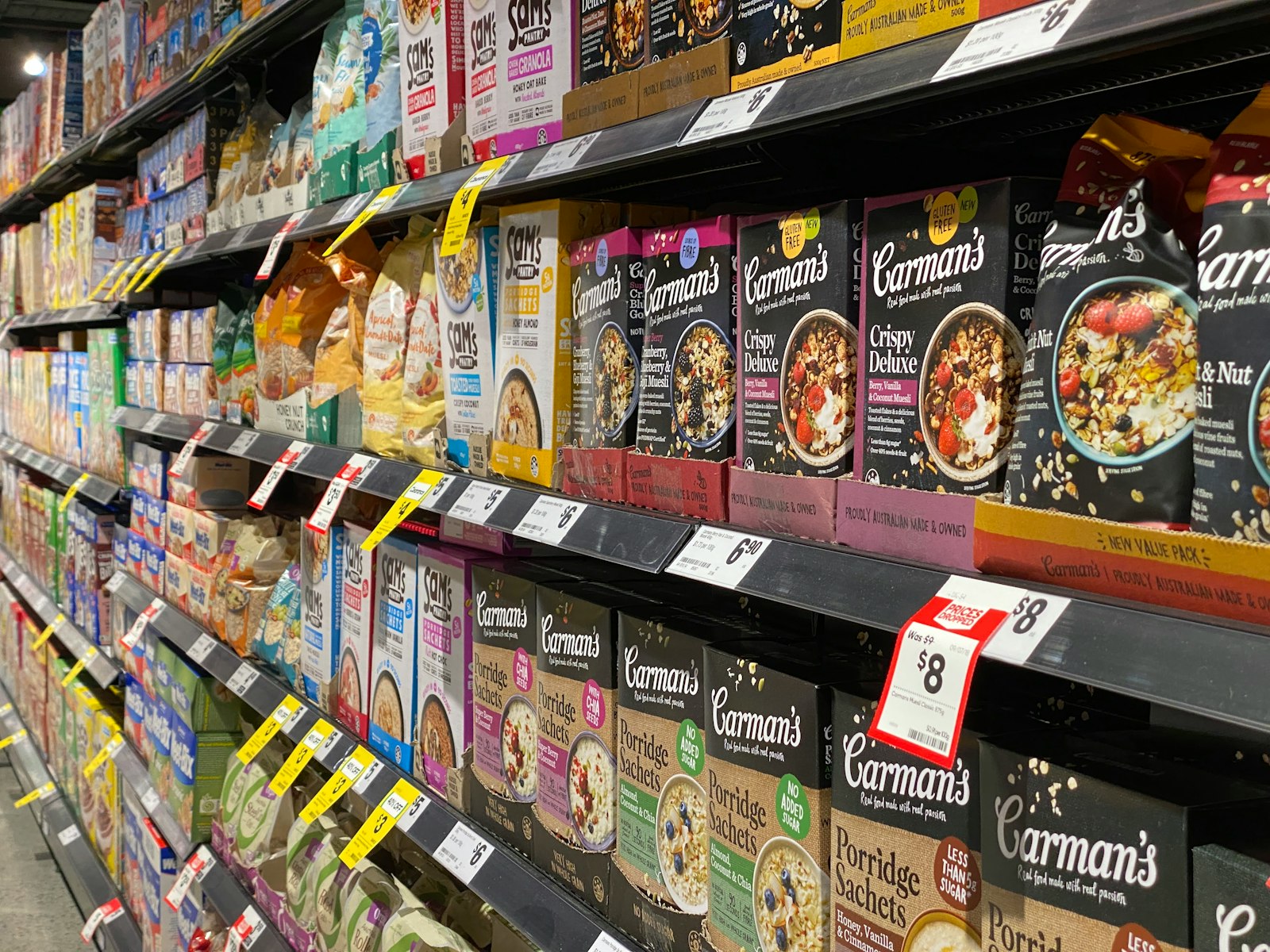
The black-and-white “High in” symbol now appearing on Canadian grocery shelves flags prepackaged foods that contain 15 per cent or more of the daily value for saturated fat, sugars or sodium, according to Health Canada.
Companies had until Jan. 1, 2026, to put the symbol on foods that meet the threshold, so many packages now carry it. Health Canada develops the regulations, and the Canadian Food Inspection Agency (CFIA) enforces them.
The symbol is meant to give shoppers a quick read on a product before they turn it over to the Nutrition Facts table. It shows a magnifying glass, the words “High in” and the name of the nutrient, followed by “Health Canada” at the bottom to show the label is required by government.
A product can carry one, two or all three nutrient names, depending on what it contains. A packaged snack that is high in both sodium and saturated fat, for example, would show both.
Health Canada says the symbol is a tool for comparing similar products, such as two cereals or two cans of soup, and for spotting foods that are high in nutrients many people are trying to limit. It suggests using the symbol alongside Canada’s food guide.
The 15 per cent figure is not the only trigger. The thresholds change with the size of the portion, because a spoonful of sauce is eaten differently than a bowl of soup.
For most prepackaged foods, the symbol is required at 15 per cent of the daily value (DV) or more. For foods with a small reference amount of 30 grams or millilitres or less, such as condiments, salad dressings and crackers, the threshold drops to 10 per cent. For main dishes with a reference amount of 200 grams or more, the threshold rises to 30 per cent. For foods meant only for children aged one to four, the main-dish threshold applies at 170 grams.
Health Canada says the thresholds are checked against the larger of the reference amount or the serving size listed on the Nutrition Facts table.
Not every food needs the symbol, and the exemptions explain why some products that seem rich in fat, sugar or salt do not have one.
Foods that are not required to carry a Nutrition Facts table are exempt. That includes foods sold at farmers’ markets, raw single-ingredient meats, poultry and fish, and raw single-ingredient ground meat and poultry. Foods not sold directly to consumers and very small packages, such as single-serve coffee creamers and mini chocolate bars, are also exempt.
Health Canada also exempts foods it considers to have health benefits. Fresh, frozen, canned or dried whole or cut fruits and vegetables are exempt, as are 2 per cent and whole milk, eggs, and foods with a healthy fat profile such as vegetable oils, nuts and fatty fish. Most cheeses and dairy yogurts are exempt for saturated fat and sugars, and most cheese is exempt for sodium, to protect calcium intake. Health Canada says those dairy exemptions will be reassessed after 10 years.
A third group is exempt because the symbol would be redundant. Sugar, honey, maple syrup, table salt, flavoured salt, butter and other fats and oils fall into this category.
Some products are not allowed to show the symbol at all. These include infant formula, human milk fortifier, infant foods and most special dietary use foods, such as meal replacements and nutritional supplements.
The same set of changes also covered two other rules. Partially hydrogenated oils were banned from Canadian foods starting Sept. 17, 2018, and the amount of vitamin D required in cow’s milk is now 2 micrograms per 100 millilitres. Required vitamin D in margarine is 26 micrograms per 100 grams. Health Canada says those levels are roughly double the earlier requirements.
The symbol is a screening tool, not a verdict on a food. A “High in” label does not mean a product is unsafe, and a missing label does not mean it is low in a given nutrient, since exempt foods and foods below the threshold carry nothing. The Nutrition Facts table still gives the full numbers, including the percentage daily value for each nutrient, which is the easiest way to compare two products side by side.
Labels are one of several tools Health Canada uses to help people read what is in their food and drink. Readers curious about how other limits are set can see our explainers on Canada’s caffeine limits for energy drinks and the country’s two sets of alcohol limits.
Questions about the symbol or about a specific product can be directed to Health Canada or the CFIA, and questions about what a label means for a person’s own diet are best raised with a doctor, pharmacist or registered dietitian.
Sources: Health Canada, Front-of-package nutrition labelling; Health Canada, Summary of amendments published in the Canada Gazette, Part II; Health Canada, Front-of-package labelling awareness messages.
This article is based on official guidance from Health Canada and is provided for general public information. It’s not a substitute for medical advice, if you have questions about how this applies to you, talk to your doctor or pharmacist.
If you find reporting like this useful, consider supporting Canada News Media, an independent Canadian newsroom with no corporate parent.
Follow Canada News Media
Get the day's top Canadian stories and our two daily 60-second news videos wherever you scroll.
X Threads Facebook Instagram LinkedIn TikTok YouTube Pinterest Reddit Substack Flipboard Newsletter RSS