

Britain and the United States signed the Convention of 1818 in London on Oct. 20, 1818, fixing much of the border between British North America and the U.S. along the 49th parallel from the Lake of the Woods to the Rocky Mountains, according to The Canadian Encyclopedia.
The agreement, also called the Treaty of 1818, was negotiated by American diplomats Albert Gallatin and Richard Rush and British representatives Frederick John Robinson and Henry Goulburn, according to the treaty’s summary on Wikipedia. It came three years after the end of the War of 1812, the conflict that had left both sides eager to settle lingering disputes.
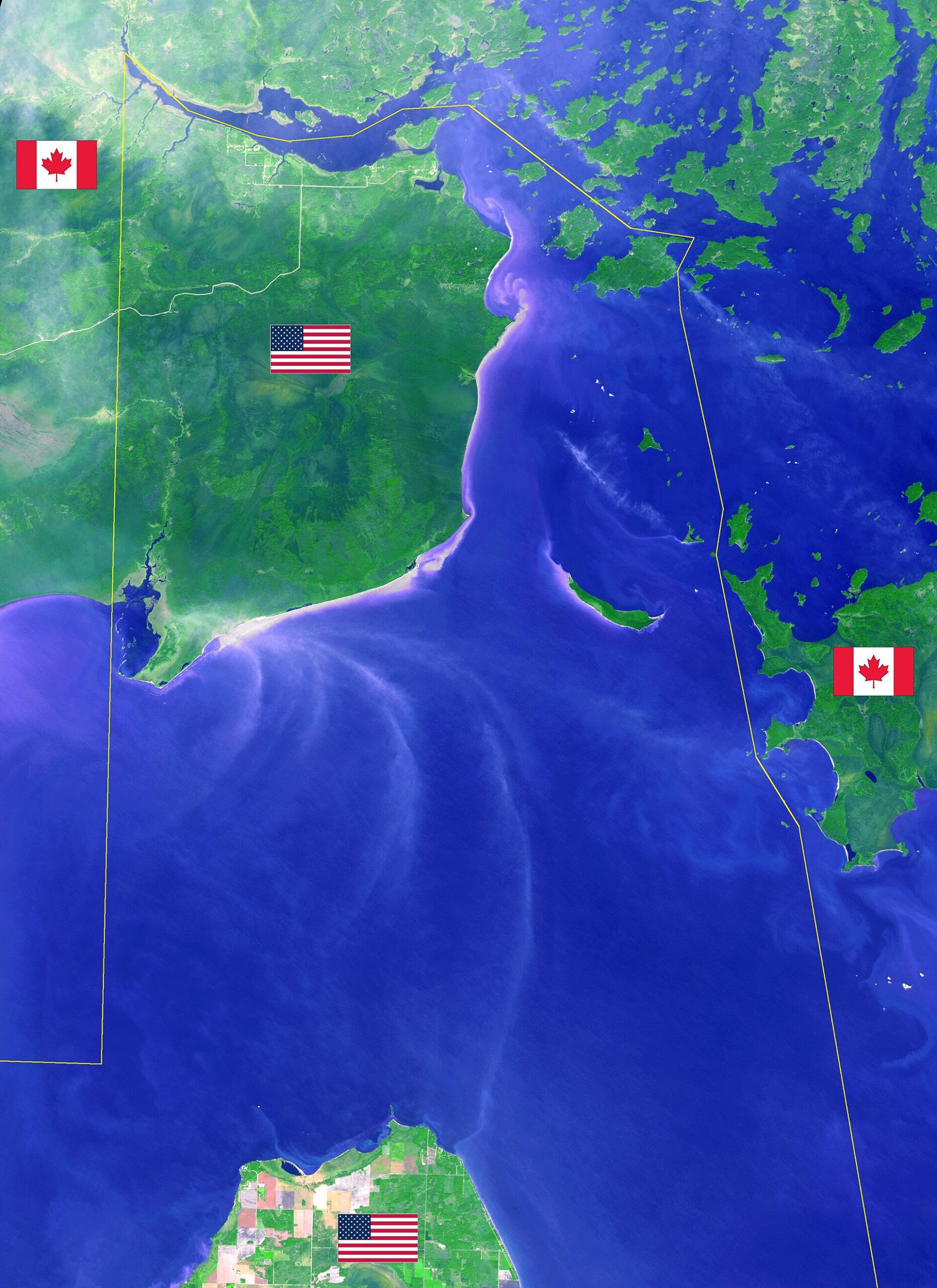
Article II set the boundary line. It ran from the northwestern point of the Lake of the Woods, due south or north as needed to reach the 49th parallel, then west along that parallel to the Rocky Mountains, the Canadian Encyclopedia said. The text also corrected an error in the 1783 Treaty of Paris, according to the Wikipedia summary, and created the Northwest Angle, the odd jut of land at the north end of the Minnesota border.
Under the same article, Britain gave up territory south of the line and the United States gave up the part of the Louisiana Purchase that lay north of it. The change drew the southern edge of what was then Rupert’s Land, the vast Hudson’s Bay Company territory, at the 49th parallel, a line that remains the border across the Prairies today.
West of the mountains, the two countries could not agree. Article III left the Oregon Country “free and open” to citizens of both nations for 10 years, the Canadian Encyclopedia said. Neither side gave up its claim. The arrangement was renewed indefinitely in 1827 and ended only with the Oregon Treaty of 1846, which extended the 49th parallel to the Strait of Georgia.
During those decades, the Hudson’s Bay Company ran its Pacific trade from Fort Vancouver. Chief Factor John McLoughlin, according to the Wikipedia summary, ended up helping American settlers who arrived on the Oregon Trail, even though the company had tried to discourage American traders.
Article I dealt with fish. It secured American fishing rights off parts of the coast of Newfoundland and Labrador, the Canadian Encyclopedia said.
Two other articles are less often remembered. Article IV extended the 1815 commercial convention between the two countries for another 10 years. Article V sent a dispute under the Treaty of Ghent to a friendly third power for settlement. That dispute was a U.S. claim for compensation over enslaved people who had escaped to British-held territory or Royal Navy ships, according to the Wikipedia summary.
The six articles were ratified on Jan. 30, 1819, when the two governments exchanged instruments, making the convention effective, the same source said.
Historians commonly pair the convention with the Rush-Bagot Agreement of 1817, which limited naval forces on the Great Lakes. The Canadian Encyclopedia describes the two as marking important turning points in the relationship after the War of 1812, though it adds that neither settled every long-standing dispute. The border drawn in 1818 would be tested again over Oregon, and later over the Alaska boundary.
Both the Canadian Encyclopedia and the treaty summary give Oct. 20, 1818, as the signing date, while the convention took effect with the exchange of ratifications on Jan. 30, 1819.
Earlier boundary and treaty anniversaries in this series include the Royal Proclamation of 1763 and the death of Maj.-Gen. Isaac Brock at Queenston Heights in 1812, which belongs to the war that preceded the 1818 settlement.
If you find reporting like this useful, consider supporting Canada News Media, an independent Canadian newsroom with no corporate parent.
Follow Canada News Media
Get the day's top Canadian stories and our two daily 60-second news videos wherever you scroll.
X Threads Facebook Instagram LinkedIn TikTok YouTube Pinterest Reddit Substack Flipboard Newsletter RSS