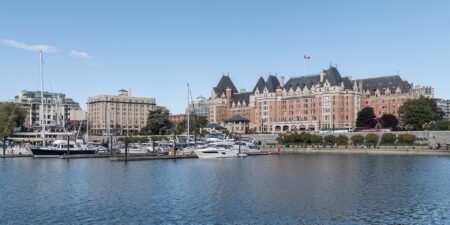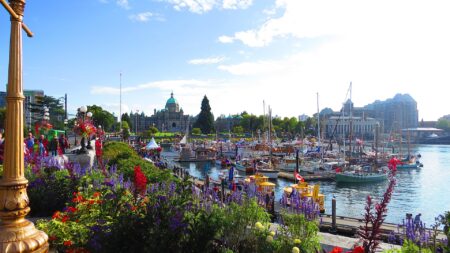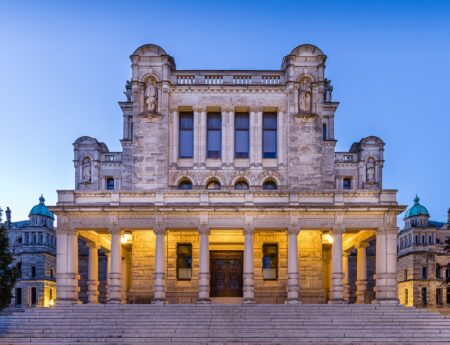



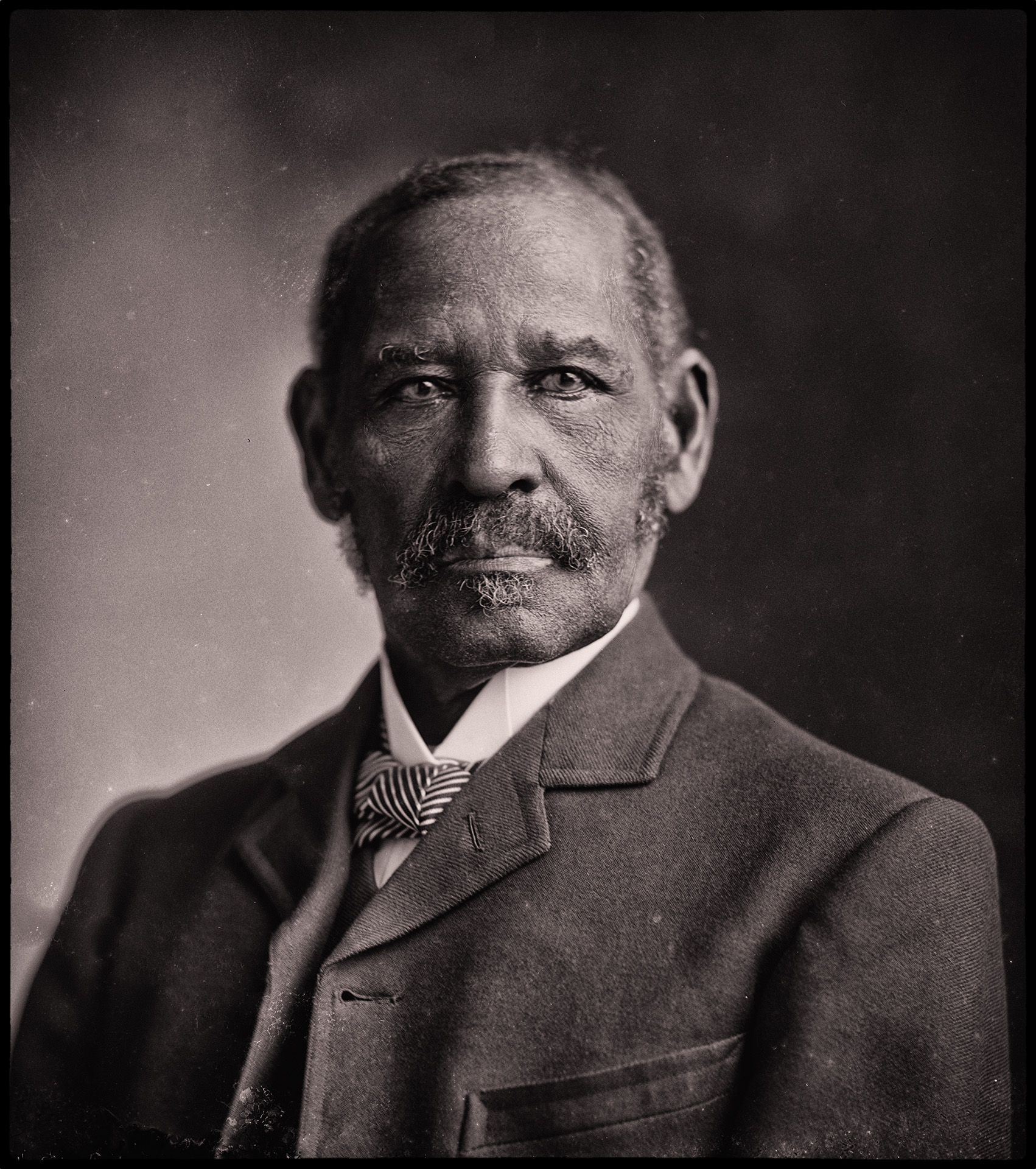
A scouting party of 35 people from San Francisco’s Black community stepped off the steamship Commodore in Victoria’s harbour on April 25, 1858, the first arrivals in a migration to the Colony of Vancouver Island, the Legislative Assembly of British Columbia said.
Several hundred more followed and settled in Victoria, Saanich and Salt Spring Island, the legislature said. The BC Black History Awareness Society says Mifflin Wistar Gibbs is considered the leader of the emigration, which it puts at about 600 people.
They came because California was closing in on them. The legislature said an 1852 law there allowed the arrest of escaped slaves, and in 1858 a bill to bar Black Americans from immigrating passed the state legislature but was never enacted. San Francisco’s Black community, it said, began looking elsewhere.
The invitation came from Gov. James Douglas of the Colony of Vancouver Island, who the legislature said wanted settlers partly to discourage U.S. annexation. Douglas was born in Demerara, British Guiana, to a Scottish father and a free mother of Barbadian-Creole descent, it said. The BC Black History Awareness Society said he sent an emissary to San Francisco to extend the invitation. Scouts reported back that settlers who became British subjects would have equal political and economic rights, the legislature said.
The settlers were a mixed group: free men and women from the northern and southern United States, people who had escaped slavery, and gold-seekers, according to the legislature. Some farmed. The BC Black History Awareness Society said Louis and Sylvia Stark settled in South Saanich in 1859 and moved to Salt Spring Island in 1860, where he farmed and worked as a dairyman while she tended animals and orchards and worked as a midwife. Sylvia Stark lived to 106, the society said.
Others went into business in Victoria. The society said Wellington Delaney Moses ran barbershops and bath houses in Victoria and Barkerville, Nathan Pointer owned a men’s clothing store on Government Street, and Samuel Ringo ran a Yates Street restaurant noted as the best in the city.
Equal rights on paper did not mean equal treatment on the street. The legislature said the settlers faced racism and discrimination from the colony’s white residents. The Canadian Encyclopedia said Black men were turned away by a white fire brigade and then asked Douglas for a volunteer militia. Douglas, who feared a war with the United States over the San Juan Islands, agreed.
The result was the Victoria Pioneer Rifle Corps, organized in April 1860 and sworn in in July 1861. The Canadian Encyclopedia describes it as the first British or Canadian military unit formed west of Ontario. The Black community paid for it through subscriptions, dances and concerts, the encyclopedia said, and Royal Marine instructors from Royal Navy ships at Esquimalt drilled the men. Recruiting quickly reached 60 officers and men, and the unit averaged 40 to 50 soldiers over five years.
The Corps was shut out of official ceremonies. In April 1864, when Gov. Arthur Edward Kennedy was inaugurated, the Rifles were not allowed to parade, the encyclopedia said. Kennedy said he would not accept units based on class, colour or nationality, but did nothing to help Black men join a white regiment, it said. The legislature said the Corps was also excluded from Douglas’s retirement. Its captain wrote to the Colonist on May 9, 1865, saying the men had “as much human nature under their dark skins as others of a paler hue” and could not forget “the snubbing they received on that occasion.”
The community thinned out soon after. The legislature said gold became harder to find on the mainland, which hurt settlers who sold goods and services to miners, and many returned to the United States after the Civil War ended in 1865 and slavery was abolished. The Canadian Encyclopedia said the Rifle Corps dissolved by 1866 for lack of interest.
The arrival is now marked in several places. The BC Black History Awareness Society said it was designated a National Historic Event on Sept. 22, 1997, and a plaque was unveiled at Shady Creek United Church in Saanich on Feb. 20, 2000. A plaque in Victoria’s Inner Harbour also marks the 1858 landing, the legislature said. The Government of Canada recognized Gibbs’s historical significance on Aug. 4, 2009, the society said.
The record leaves some questions open. The sources consulted give slightly different accounts of when the fire brigade refusal happened, and the number of settlers is an estimate. For readers tracing the wider story, Canada News Media has also reported on the founding of Amber Valley, Alta., Black volunteers who were turned away from military service until 1916 and Ottawa’s attempt to ban Black immigrants in 1911.
If you find reporting like this useful, consider supporting Canada News Media, an independent Canadian newsroom with no corporate parent.
Follow Canada News Media
Get the day's top Canadian stories and our two daily 60-second news videos wherever you scroll.
X Threads Facebook Instagram LinkedIn TikTok YouTube Pinterest Reddit Substack Flipboard Newsletter RSS