

Energy bill grants in Canada for winter 2026-27 come mostly from provinces and utilities, not Ottawa. The federal Greener Homes Grant, Greener Homes Loan and Oil to Heat Pump Affordability program are closed to new applicants. A new federal heat pump rebate of up to $10,000 opens in early 2027 and covers installs from Nov. 1, 2026.
Many households do not know this. HomeStars, the home-services platform, said Monday that 8.2 million Canadian households are confused about which energy grants are available to help with rising bills. The finding comes from its Energy Squeeze report, based on research conducted by Opinium for HomeStars through a survey of 2,000 people in September 2026. The same report found 32 per cent of respondents are worried about how they will afford to heat their homes this winter.
This guide lists the programs that are open as of Oct. 26, 2026, province by province, using only official government, Crown corporation and utility pages, each linked below. Programs change often, so check the official page before you buy anything or sign a contract.
Key facts
| Program | Status on Oct. 26, 2026 | Amount | Deadline |
|---|---|---|---|
| National Heat Pump Rebate (federal) | Announced, opens early 2027 | Up to $10,000 below median income, $2,000 for others | Covers installs from Nov. 1, 2026 |
| Canada Greener Homes Affordability Program | Open through provincial partners | No-cost retrofits | None posted |
| Oil to Heat Pump Affordability (federal stream) | Closed July 31, 2026 | Up to $10,000 | Receipts due Jan. 31, 2027 |
| Ontario Electricity Support Program | Open | $35 to $113 a month on your bill | None |
| Alberta Energy Rebate | Open | $100 per eligible adult | Oct. 31, 2026 |
| Nova Scotia Heating Assistance Rebate | Open | $400 per household | March 31, 2027 |
| N.L. Home Heating Supplement | Open | Up to $1,000 | Jan. 15, 2027 |
| PEI Home Heating Program | Open | Up to $1,200 a year | None posted |
| BC Hydro Customer Crisis Fund | Open | Up to $800 | None posted |
What federal energy help is still open in 2026?
Very little, for now. Natural Resources Canada says the Canada Greener Homes Grant is closed and that Dec. 31, 2025, was the last day to upload documents. The Canada Greener Homes Loan is also closed because its funding is fully committed, though loans already approved are not affected.
The federal stream of the Oil to Heat Pump Affordability program, which paid up to $10,000 upfront to oil-heated homeowners at or below median income, took its last applications on July 31, 2026. Households already approved must finish the work and upload final receipts by Jan. 31, 2027.
What remains open is the Canada Greener Homes Affordability Program, which pays for no-cost retrofits such as insulation, air sealing and heat pumps for low- to median-income homeowners and tenants. Ottawa does not take applications from households for it. You apply through your province’s partner: Efficiency Manitoba, BC Hydro or FortisBC, Hydro-Québec, HomeWarming in Nova Scotia, takeCHARGE in Newfoundland and Labrador, or the P.E.I. government. Ontario is not a partner. NRCan also warns it has not approved any third party to contact homeowners unsolicited about the program.
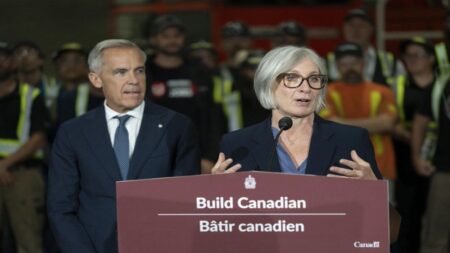
The big change is the National Heat Pump Rebate, which Prime Minister Mark Carney announced on Oct. 8, 2026. It will pay up to $10,000 toward an electric heat pump for households below median income and $2,000 for other eligible households, through an online portal that opens in early 2027. Heat pumps installed on or after Nov. 1, 2026, will count. The government said it would publish the full criteria, income limits and the list of eligible products by Nov. 1, so check that page before you sign with a contractor. We covered the announcement in detail in Ottawa unveils $2B heat pump rebate of up to $10,000.
What energy bill help is there in Ontario?
The Ontario Electricity Support Program (OESP) gives a monthly credit on your electricity bill based on household size and after-tax income, up to an income limit of $71,000 for households of five to seven people. The Ontario Energy Board’s table shows credits of $35 to $75 a month for most households, and $52 to $113 for households that are Indigenous, heat with electricity or use certain medical devices. Apply online at OESP.ca, by mail or through an intake agency. Credits last two years, or five years for people 65 and older.
If you are behind on a bill and facing disconnection, the Low-income Energy Assistance Program (LEAP) provides emergency help of up to $650 on electricity (up to $780 if your home is heated by electricity) and up to $650 on natural gas. The money goes straight to the utility. Income limits run from under $38,000 for one person to $71,000 for five to seven people, and you apply through a local LEAP intake agency.
For free upgrades, Save on Energy’s Energy Affordability Program offers a free assessment and installed upgrades such as insulation, draft proofing and, for electric or oil-heated homes, cold-climate heat pumps. Owners and renters qualify if they hold the utility account and meet income limits starting at $48,220 before tax for one person, or receive OESP, LEAP, Ontario Works, ODSP or the Guaranteed Income Supplement. Gas-heated households can apply to Enbridge’s Home Winterproofing Program, which uses the same income limits and offers free insulation and draft proofing. Both can be reached at 1-844-770-3148.
Homeowners at any income can use the Home Renovation Savings Program, run by Save on Energy and Enbridge Gas. Its site lists up to $12,000 for heat pumps (up to $7,500 for a cold-climate air source unit), up to $7,700 for insulation after a home energy assessment, and $125 for a smart thermostat. No end date is posted.
What can Quebec households get?
Hydro-Québec’s LogisVert program remains open and pays $50 per 1,000 BTU/h of capacity for an Energy Star heat pump, or $120 per 1,000 BTU/h for a cold-climate model. It also pays $1,500 for roof insulation and caulking. You apply within nine months of installation at logisvert.ca, and tenants can apply for heat pumps.
Rénoclimat changed on Oct. 1, 2026. Under the new rules it no longer funds heating systems or heat pumps. It pays for insulation (up to $2,000 for a roof and $7,000 for exterior walls on a house), windows at $300 each up to $4,500, and new flood-protection measures. The province said the new application portal was not yet online as of Oct. 13.
Lower-income households usually go through Éconologis, which provides free weatherproofing and is the gateway to Hydro-Québec’s free heat pump offer for modest-income households. Registration for the 2026-27 season is already closed because of demand. If you are struggling with a bill now, Hydro-Québec offers payment arrangements, with smaller instalments for low-income households, through your Customer Space or at 1-888-385-7252.
What help is there in British Columbia?
The income-qualified Energy Savings Program, run by CleanBC with BC Hydro and FortisBC, is open but smaller. For invoices dated on or after July 6, 2026, some rebates are no longer available. The current tables show up to $13,000 for a central heat pump replacing gas, propane or oil at the lowest income level, where the limit is $51,100 before tax for one person. You must pre-register at bcenergysavingsprogram.ca and use a registered contractor, who deducts the rebate from your invoice.
Without an income test, the CleanBC Home Renovation Rebate Program offers up to $4,000 for a heat pump in an electrically heated home, up to $5,500 for insulation and up to $2,000 for windows and doors. Rebates for switching from gas, oil or propane to a heat pump are now listed only for Northern B.C. Apply within six months of finishing the work.
If you are behind on a bill, the BC Hydro Customer Crisis Fund pays a grant of up to $800 for electrically heated homes and up to $700 for others, once a year. You qualify if your payment is at least 21 days overdue, your balance is $1,000 or less and a life event such as a job loss or medical costs caused the crisis. There is no income test, and disconnection is paused while BC Hydro reviews your application. FortisBC does not list a crisis fund on its site, but it offers income-qualified offers including free energy-saving kits and its Energy Conservation Assistance Program.
What help is there in Alberta?
The deadline that matters most is this week. The Alberta Energy Rebate pays $100 to each eligible adult with household income of $225,000 or less, and applications close Oct. 31, 2026. You apply with a verified Alberta.ca Account at energyrebate.alberta.ca. We explained it when it opened in Albertans can now apply for $100 energy rebate payouts.
Alberta has no current provincial home energy efficiency rebate. The Clean Energy Improvement Program offers financing repaid on your property tax bill in participating municipalities. Edmonton’s version lends $3,000 to $50,000 at a fixed 6 per cent but now has a waitlist, and Calgary’s residential intake is closed until winter 2026-27.
The Utilities Consumer Advocate’s winter rules say electricity cannot be fully disconnected from Oct. 15 to April 15, though a load limiter can be installed, and natural gas cannot be disconnected from Nov. 1 to April 14. Alberta Supports offers one-time help with utility arrears at 1-877-644-9992.
What help is there in Saskatchewan?
SaskPower’s Energy Assistance Program sends a home energy coach to install free LED bulbs, aerators, a block heater timer and, if eligible, a smart thermostat, which SaskPower says can save up to $230 a year. Owners and renters qualify with pre-tax income up to $54,335 for one person. Homeowners in that program with a furnace made in 1999 or earlier may be invited to SaskEnergy’s Heating Affordability Program, which replaces up to 50 furnaces for free until Jan. 31, 2027.
SaskEnergy’s equipment replacement rebate pays $325 for a furnace of 97 per cent efficiency or better and $750 for a high-efficiency boiler, if you apply within 120 days of installation. The Home Efficiency Retrofit Rebate ended in April 2026. If you are struggling to pay, SaskPower offers payment arrangements and deferrals.
What help is there in Manitoba?
Efficiency Manitoba’s Energy Efficiency Assistance Program gives lower-income owners and renters a free assessment, free insulation and a free smart thermostat, plus a free heat pump when replacing electric heat. The gross income limit starts at $46,264 for one person. Without an income test, its air source heat pump rebate pays $2,000 for a ducted cold-climate unit and $1,500 for a ductless one, and the contractor applies within 90 days.
Manitoba Hydro’s Home Energy Efficiency Loan charges 6.2 per cent for the first five years, with up to $10,000 for a cold-climate air source heat pump repaid on your bill. If you are at least 60 days behind, Neighbours Helping Neighbours, run by The Salvation Army, can pay up to $500 for electrically heated homes and $400 for others. The province also plans to use a levy on data centres and crypto miners to lower bills, as we reported in Manitoba to use data centre, crypto levy to cut hydro bills.
What help is there in Nova Scotia?
The Heating Assistance Rebate Program pays $400 per household this winter to renters and homeowners who pay for their own heat. A person living alone qualifies with 2025 net income of $30,000 or less, and a household with dependants or other adults qualifies with $45,000 or less. People receiving Income Assistance or the Guaranteed Income Supplement also qualify. Apply at novascotia.ca/heatinghelp by March 31, 2027.
Efficiency Nova Scotia’s HomeWarming program gives income-qualified homeowners a free assessment and free upgrades such as insulation and draft proofing. The Moderate Income Rebate was cut from a maximum of $10,000 to $5,000, though it can still be stacked with assessment rebates for up to $10,000. The provincial Oil to Heat Pump Affordability stream stopped taking applications on July 2, 2026, and the Salvation Army’s HEAT Fund is closed for 2026.
What help is there in New Brunswick?
NB Power’s Enhanced Energy Savings Program provides free upgrades such as insulation and heat pumps to homeowners with combined gross household income under $70,000, first come, first served. Households above that can use the Total Home Energy Savings Program, which NB Power says still offers heat pump rebates of up to $2,000. The provincial Oil to Heat Pump Affordability stream closed to registrations on June 30, 2026.
We found no general one-time heating benefit announced for 2026-27. NB Power’s payment resources page points customers in an emergency to the province’s Emergency Fuel Benefit through Social Development at 1-833-733-7835, and lists the annual $400 Low-Income Seniors’ Benefit.
What help is there in Newfoundland and Labrador?
The province doubled its Home Heating Supplement on Oct. 22, 2026, to as much as $1,000 for households with adjusted family income of $100,000 or less who heat with furnace or stove oil. Households up to $150,000 get a partial amount of at least $400. You need receipts for at least 250 litres bought in 2026, and the deadline is Jan. 15, 2027. People who already applied do not need to reapply, the province said.
The same Oct. 22 announcement moved up a Churchill Falls electricity rebate to January 2027. It takes 15 per cent off the first 2,000 kWh each month for Newfoundland Power and NL Hydro residential customers, automatically. For upgrades, takeCHARGE’s Oil to Electric Incentive pays up to $22,000 to switch from oil or propane, and its income-qualified Greener Homes Program offers no-cost heat pumps and insulation while funding lasts.
What help is there in Prince Edward Island?
The provincially funded Home Heating Program pays up to $1,200 a calendar year to Islanders facing hardship with heating costs, with gross income of $45,000 or less for a single person or $60,000 or less for a family. The Salvation Army takes applications until Oct. 31, 2026, and from November the program moves to Access PEI locations.
The province’s efficiencyPEI page says applications for free heat pumps and the Oil to Heat Pump Affordability program are closed, and its equipment rebates for air source and ground source heat pumps ended April 15, 2026. Call efficiencyPEI at 1-877-734-6336 to ask what remains, including insulation rebates and Canada Greener Homes Affordability Program spaces.
What should you do if you can’t pay your energy bill now?
Call your utility before the bill goes to collections. Most utilities in this guide offer payment arrangements or an equal payment plan, and most crisis funds, including Ontario’s LEAP, BC Hydro’s Customer Crisis Fund and Manitoba’s Neighbours Helping Neighbours, require you to be behind before they can help. Ask whether your home is protected by winter disconnection rules, and apply to any provincial heating rebate at the same time.
Cheaper fixes help too. HomeStars spokesperson Natalie O’Kelly said in the company’s release that sealing drafts, topping up attic insulation and getting the furnace checked before deep cold can make a big difference. Our guides show how to draft-proof your home for winter and how to change your furnace filter, and our earlier roundup of home heating rebates in Canada tracks the federal closures. Renters can check landlord heat rules by province.
Frequently asked questions
Is the Canada Greener Homes Grant still available?
No. Natural Resources Canada says the Canada Greener Homes Grant is closed, and Dec. 31, 2025, was the last day to upload documents. The Canada Greener Homes Loan is also closed to new applicants.
When does the new federal heat pump rebate open?
The National Heat Pump Rebate opens through an online portal in early 2027. It will pay up to $10,000 for households below median income and $2,000 for other eligible households, and heat pumps installed on or after Nov. 1, 2026, will count.
Can renters get help with energy bills?
Yes, in many provinces. Ontario’s OESP and Energy Affordability Program, Nova Scotia’s Heating Assistance Rebate, Manitoba’s Energy Efficiency Assistance Program and SaskPower’s Energy Assistance Program all accept renters who meet the rules, usually if the bill is in their name.
Which energy rebate deadlines are coming up?
Alberta’s $100 Energy Rebate closes Oct. 31, 2026. Newfoundland and Labrador’s Home Heating Supplement closes Jan. 15, 2027, and Nova Scotia’s Heating Assistance Rebate closes March 31, 2027.
How many Canadians are confused about energy grants?
HomeStars said 8.2 million households are confused about which energy grants are available, based on its Energy Squeeze report. The research was conducted by Opinium for HomeStars through a survey of 2,000 people in September 2026.
Sources: Natural Resources Canada; Government of Canada; Ontario Energy Board; Save on Energy; Enbridge Gas; Hydro-Québec; Government of Quebec; Better Homes BC; BC Hydro; FortisBC; Government of Alberta; Utilities Consumer Advocate; SaskPower; SaskEnergy; Efficiency Manitoba; Manitoba Hydro; Government of Nova Scotia; Efficiency Nova Scotia; NB Power; Government of Newfoundland and Labrador; takeCHARGE; Government of Prince Edward Island; The Salvation Army; HomeStars. Amounts and deadlines checked Oct. 26, 2026.
If you find reporting like this useful, consider supporting Canada News Media, an independent Canadian newsroom with no corporate parent.
Follow Canada News Media
Get the day's top Canadian stories and our two daily 60-second news videos wherever you scroll.
X Threads Facebook Instagram LinkedIn TikTok YouTube Pinterest Reddit Substack Flipboard Newsletter RSS