



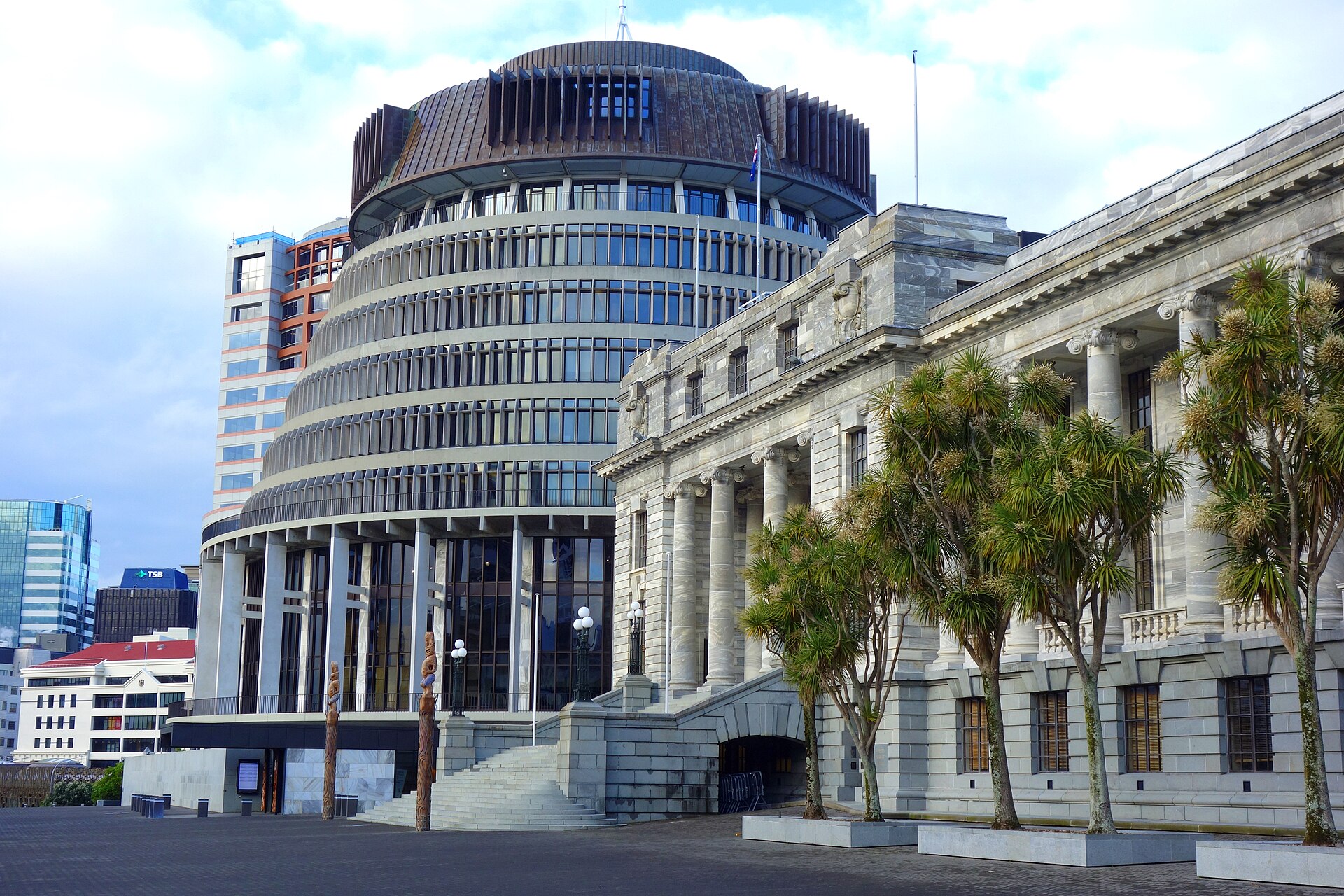
Early voting opened in New Zealand on Monday, Oct. 26, 2026, for the Nov. 7 general election, with Prime Minister Christopher Luxon’s National Party and Opposition Leader Chris Hipkins’s Labour Party in a close race and no clear frontrunner.
The latest 1News-Verian poll put National at 32 per cent and Labour at 27 per cent, but its seat projections show neither side reaching the 61 seats needed in the 120-seat Parliament without help, and a newcomer, the Opportunity Party, polling at 7 per cent could decide who governs.
The poll, taken Oct. 15 to 19 among 1,003 eligible voters, has a margin of error of 3.1 percentage points. It also put the Greens at 16 per cent, ACT at 11 per cent and New Zealand First at 8 per cent. National, ACT and New Zealand First, the current coalition, were projected at 60 seats in one scenario, level with the opposition bloc once Opportunity is counted. In another, in which Te Pāti Māori wins four electorate seats and the Te Tai Tokerau Party one, Parliament grows to 124 seats and the opposition parties plus Opportunity reach 64.
A Reuters report said a Post/Freshwater Strategy poll published a day earlier had Labour narrowly ahead, 28.7 per cent to 27.6 per cent. Reuters said Opportunity was around or above the 5 per cent threshold needed to enter Parliament in both polls. New Zealand uses a mixed-member proportional system, under which a party qualifies for list seats with 5 per cent of the party vote or one electorate seat, and coalition deals are usually needed to govern.
Luxon, who voted in Beachlands, an outer suburb of Auckland, said the election would be decided on the economy and described National’s plan as “the best plan” for growth and affordability, Reuters reported. He wrote on X: “no new taxes, so you and your family can get ahead,” Bernama reported, citing Anadolu. After the 1News poll, Luxon said “we need another three years to get the job done.”
Hipkins said he hopes to form a Labour-led government before Christmas and would move quickly to ease cost-of-living pressures, Reuters reported. Responding to the 1News poll, he said “one poll is not an election result.” On preferred prime minister, the poll had Luxon at 20 per cent and Hipkins at 17 per cent.
Political commentator Gareth Hughes told Reuters that “multiple factors are converging to contribute to the uncertainty,” including possible overhang seats, which would enlarge Parliament, and the Opportunity Party’s rise amid unpopularity of both major parties. Voters are frustrated by a sluggish economy and persistently high inflation, Reuters said.
The rules for getting on the roll are also a point of dispute. Enrolment closed at midnight on Sunday, just before advance voting began. Critics say the earlier cut-off could deter participation among hard-to-reach groups. The Human Rights Commission said last year that ending election-day enrolment would likely unjustifiably restrict participation and disproportionately affect underrepresented groups, Reuters reported. The Electoral Commission had 207 voting places open on Monday and expects more than 2,300 on election day.
National won the 2023 election and formed a coalition with ACT and New Zealand First, ending six years of Labour-led governments, Bernama reported. Parliament was dissolved on Oct. 1. Overseas voting opened Oct. 21, and advance voting runs for nearly two weeks. Official results are due Nov. 27.
For Canadians, the outcome matters mainly for trade and ties between two Commonwealth economies. Canada and New Zealand are both parties to the Comprehensive and Progressive Agreement for Trans-Pacific Partnership. Two-way merchandise trade was about $1.6 billion in 2024, including about $450 million in Canadian exports and about $1.13 billion in imports, mostly meat, beverages and dairy, Global Affairs Canada says. New Zealand’s 2023 census counted 12,894 residents born in Canada.
The vote comes in a busy stretch for elections worldwide. Brazil’s President Luiz Inácio Lula da Silva won his runoff on Oct. 25, Israel votes on Oct. 27, and Bulgaria’s presidential race heads to a Nov. 1 runoff.
Via Reuters, Bernama and 1News. Polling day is Saturday, Nov. 7.
If you find reporting like this useful, consider supporting Canada News Media, an independent Canadian newsroom with no corporate parent.
Follow Canada News Media
Get the day's top Canadian stories and our two daily 60-second news videos wherever you scroll.
X Threads Facebook Instagram LinkedIn TikTok YouTube Pinterest Reddit Substack Flipboard Newsletter RSS