

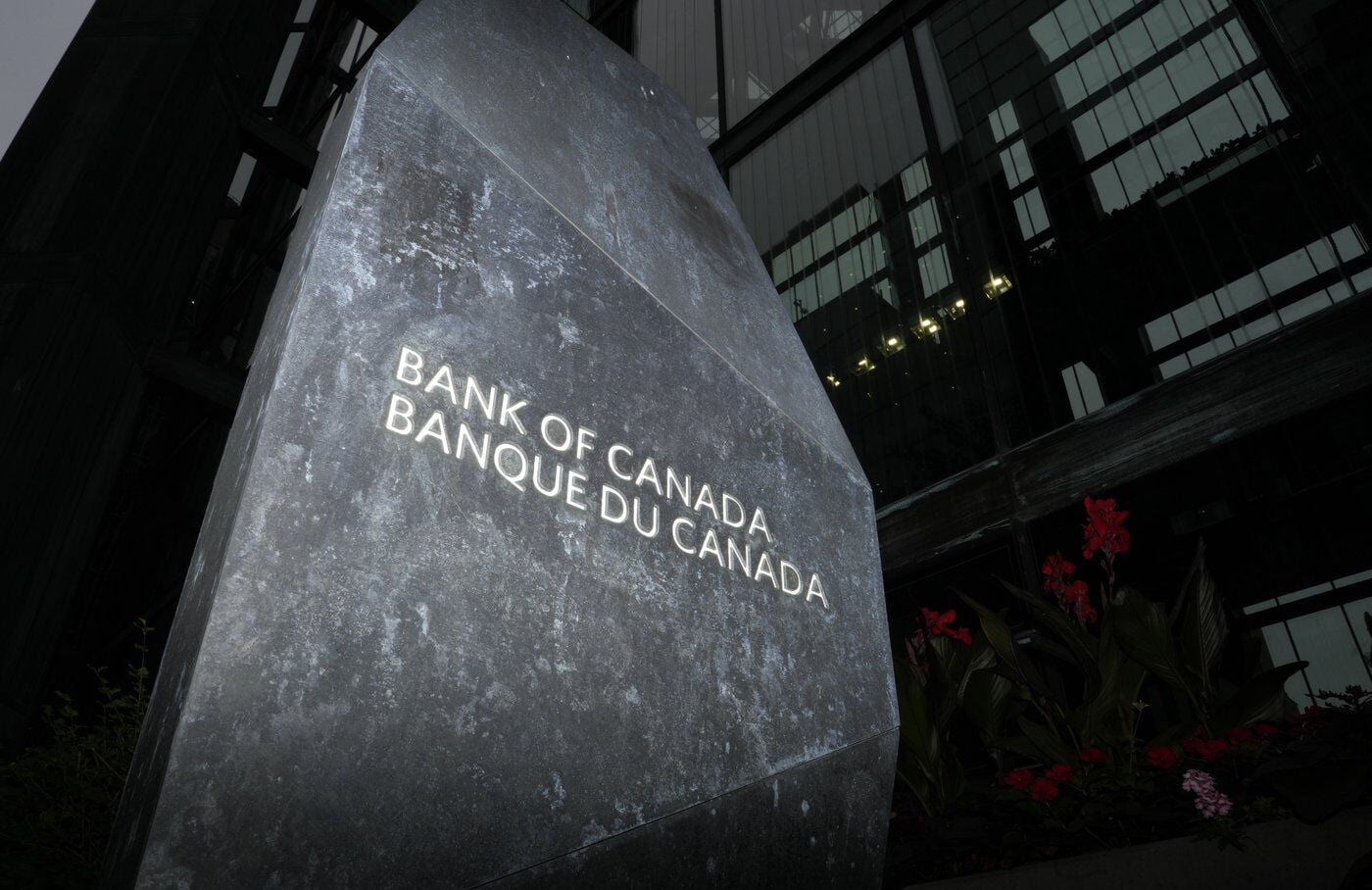
OTTAWA – The Bank of Canada raised its key policy interest rate by a quarter of a percentage point to 2.5 per cent on Wednesday, its first increase in more than three years, and Governor Tiff Macklem said more hikes could follow.
The 25 basis point move, announced at 9:45 a.m. ET, was widely expected by markets and is the first rate hike since July 2023, according to Reuters reporting carried by BNN Bloomberg. The central bank said the policy rate remains below the neutral level, which is neither restrictive nor stimulative for the economy.
The Bank pointed to inflation that has climbed above its target range. Annual inflation reached 3.2 per cent in September, above the Bank’s one to three per cent band, driven mainly by energy and energy-related transportation costs, Reuters reported. The Bank also raised its 2027 inflation forecast to 3.1 per cent from 2.0 per cent in its July projection. It expects inflation to end 2026 at 3.5 per cent, stay near three per cent for most of 2027 and return close to two per cent by mid-2028.
“An increase in the policy rate is needed to reduce the risk that elevated energy prices could spill over,” Macklem said in opening remarks, according to Reuters. He added that “there could be a need to increase the policy rate further, but given uncertainties, we will proceed carefully.” Governing Council agreed that risks to inflation had increased and there was less scope for monetary accommodation, Macklem said. He also said cost pass-through to consumers is likely to rise over the next year, which could push up overall inflation.
The Bank’s growth outlook is more mixed. It now projects 2026 growth of 1.0 per cent, up from 0.7 per cent in July, after a strong 3.3 per cent annualized expansion in the second quarter. Growth is expected to slow to about two per cent in the third quarter and 0.8 per cent in the fourth, with new U.S. tariffs expected to weigh on the economy before a pickup in 2027 as consumer spending, exports and business investment strengthen, according to Reuters. Forecasts for 2027 and 2028 were raised to two per cent from 1.8 per cent. Macklem also flagged uncertainty from the U.S. trade dispute and the conflict in the Middle East.
Not everyone agreed the move was necessary. Economists who opposed a hike argued that core inflation, which strips out volatile items, is still around two per cent, and warned that higher rates could hamper a modest recovery given U.S. trade tensions and a weak job market, Reuters reported. Marc Ercolao, an economist at TD, described the decision as a risk-management move to keep inflation on target while oil prices stay high. In a TD analysis, he said the economy can likely absorb a 25 basis point increase but faces headwinds from trade uncertainty, limited job growth and higher global bond yields. TD said one more hike would bring the policy rate to 2.75 per cent, the middle of the Bank’s neutral range, and expects the Bank to move carefully to avoid overtightening.
For households, the biggest effect is on variable-rate borrowing. Rates on variable mortgages and other variable-rate loans can move with Bank of Canada decisions, so a hike can raise borrowing costs, while fixed-rate mortgages are locked in for their term, TD said. Our earlier coverage looked at why hike odds were climbing ahead of the decision and why several big banks saw a hike coming. Our full preview of the Oct. 28 decision lays out what markets were pricing, and an earlier report looked at how higher bond yields could lift mortgage renewals.
The decision came alongside the Bank’s latest Monetary Policy Report. Macklem and Senior Deputy Governor Carolyn Rogers were scheduled to hold a news conference at about 10:30 a.m. ET to take questions on the outlook. Investors were also watching a U.S. Federal Reserve decision due later Wednesday.
The Bank’s message to borrowers and investors was cautious: a hike now, with the door open to another if energy prices keep feeding into broader costs, but no commitment to a set path. Further detail on inflation, the economy and the policy rate will come in the Bank’s Monetary Policy Report and in Macklem’s answers to reporters.
Follow Canada News Media
Get the day's top Canadian stories and our two daily 60-second news videos wherever you scroll.
X Threads Facebook Instagram LinkedIn TikTok YouTube Pinterest Reddit Substack Flipboard Newsletter RSS