


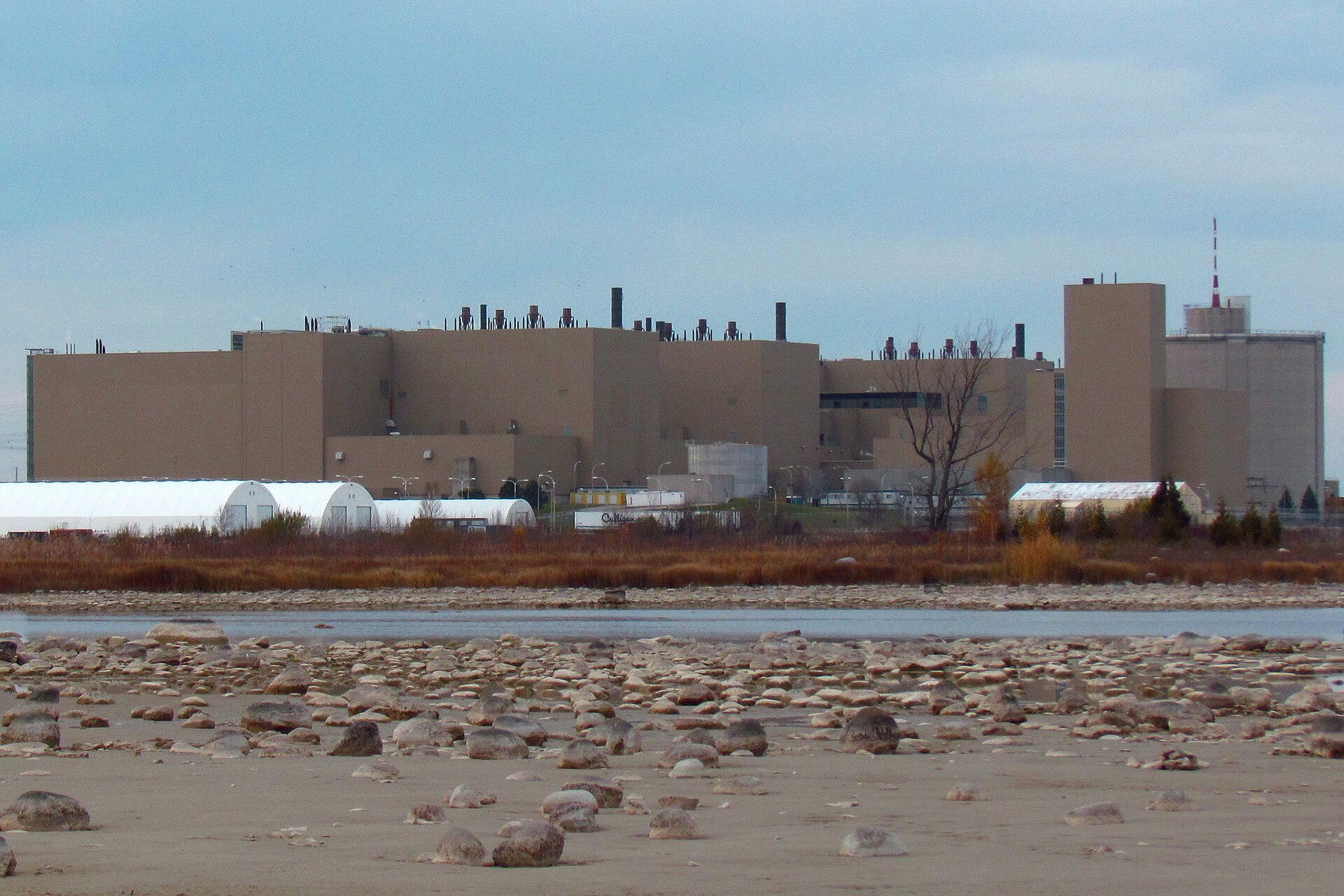
Bruce Power faces two federal Fisheries Act charges after millions of fish died in the cooling water intake system of the Bruce Nuclear Generating Station near Tiverton, Ont., in 2025.
The charges, laid last month, allege causing the death of fish through non-fishing industrial operations and violating the conditions of the plant’s environmental permit, CBC News reported. The permit limits the company to 6,600 kilograms of dead fish a year. The company is to appear in Ontario provincial court on Nov. 24. The charges have not been proven in court.
Fisheries and Oceans Canada estimates 3.3 million to 4.3 million fish died in February and March of 2025, more than 200 times the annual authorized limit by weight. An internal Bruce Power report estimated 8.1 million gizzard shad massed near the plant during a sudden cold snap on Feb. 13, 2025.
The cold-sensitive fish were drawn to warm water discharged into Lake Huron and became trapped against the intake screens. One reactor had to be shut down and another had to reduce power during a prolonged winter cold spell, CBC reported. The company’s own findings blamed an “organizational failure” to adapt to changing environmental conditions.
Megan Adams, Bruce Power’s director of corporate communications, said in an email that the company cannot comment on how it intends to plead because the matter is before the courts. In a news release, the company said it was transparent with regulators, nearby First Nations and municipalities about the fish kill.
Theresa McClenaghan, executive director of the Canadian Environmental Law Association, told CBC prosecutors do not have to prove the company meant to kill fish. She said fines for a first offence can range from a few thousand dollars to $200,000, and that fines go to the federal Environmental Damages Fund for conservation and restoration work.
Bruce Power has spent more than $10 million on mitigation since the fish kill, including nets, acoustic and strobe-light deterrents, sonar and cameras. Ryan Lauzon, a fisheries biologist who advises Saugeen Ojibway Nation, whose traditional territory includes the plant, said he saw gaps in the nets and deterrents during a visit last year. He said smaller die-offs also occurred at the plant in 1977 and 2023.
Gizzard shad are prey for trout, pike and walleye, and Lauzon said their loss is concerning because invasive mussels have already reduced the plankton that supports Lake Huron’s food web.
Federal Fisheries Act enforcement has also made news in Quebec, where Rio Tinto units were fined $3.2 million for water pollution.
Source: CBC News.
If you find reporting like this useful, consider supporting Canada News Media, an independent Canadian newsroom with no corporate parent.
Follow Canada News Media
Get the day's top Canadian stories and our two daily 60-second news videos wherever you scroll.
X Threads Facebook Instagram LinkedIn TikTok YouTube Pinterest Reddit Substack Flipboard Newsletter RSS