

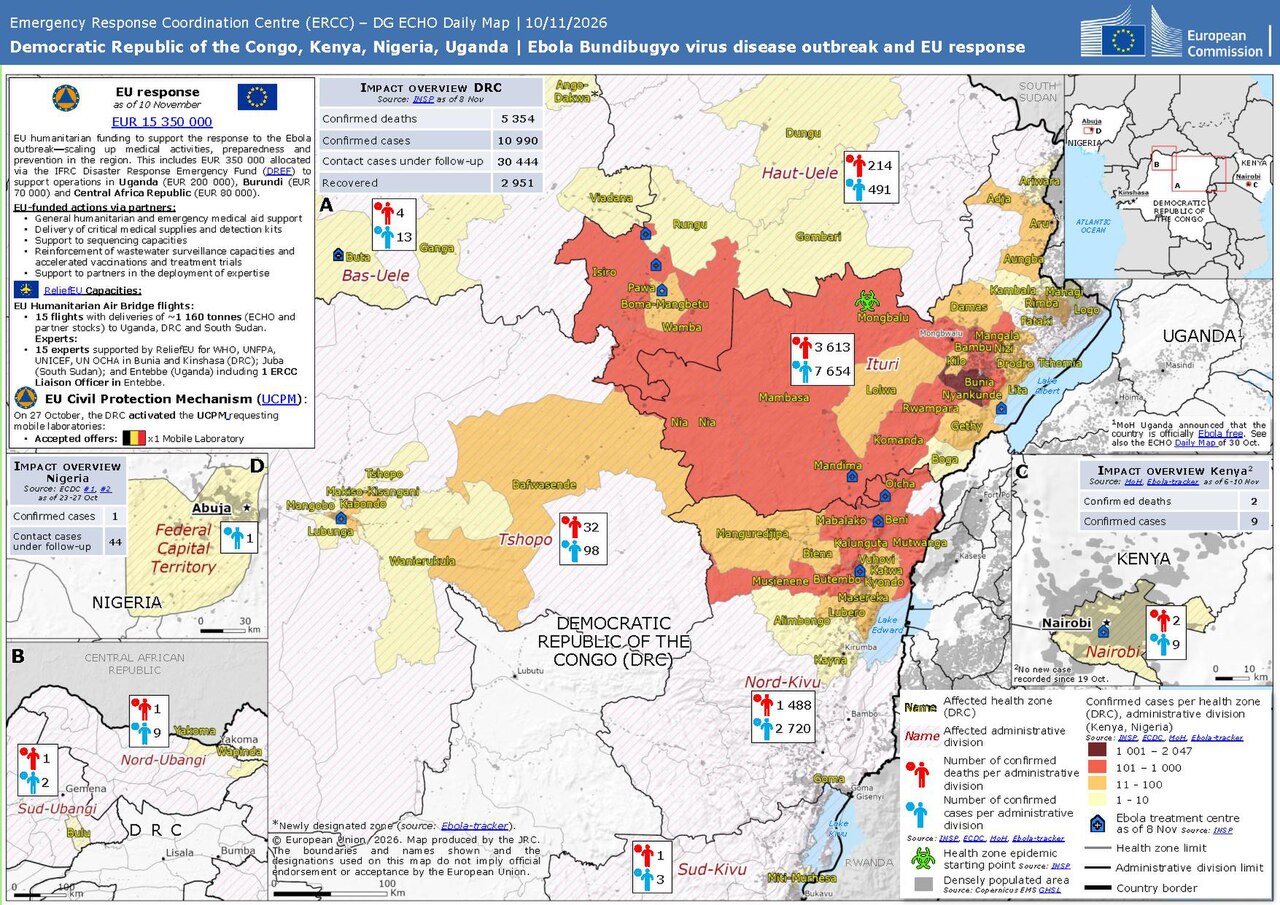
Ebola has killed 5,198 people in Congo among 10,668 confirmed cases as of Nov. 3, the World Health Organization said in a Disease Outbreak News update dated Nov. 6, and the Bundibugyo virus has reached a new health zone in the country’s northwest.
The WHO said 964 new cases and 511 deaths were confirmed since its previous update on Oct. 23, and 2,881 people have recovered. The outbreak now spans 67 health zones in eight provinces, 51 of which reported new cases in the 21 days to Nov. 3.
The newest affected zone is Yakoma, in Nord-Ubangi province, with three confirmed cases. Ituri remains the centre with 7,485 cases and 3,532 deaths, followed by Nord-Kivu with 2,593 cases and 1,422 deaths. Nord-Kivu has the highest provincial fatality rate, at 54.8 per cent, the agency said.
Many patients are dying before they reach care. Of the 512 deaths reported since Oct. 21, the WHO said 335 happened in communities rather than treatment centres, with a high share among young children. Over 14 days, an average of 86 per cent of contacts were checked each day, short of the 95 per cent target.
Kenya and Nigeria reported no new cases. Kenya has nine confirmed cases, four of them health and care workers, and two deaths, with no new case since Oct. 19, the WHO said. A 42-day countdown to declare its outbreak over starts once its last patient is discharged. Nigeria’s single imported case, confirmed Oct. 20 in Abuja, was flown to Geneva by Switzerland on Oct. 26, as we reported earlier.
The update records a second evacuation outside Africa. On Nov. 5, the United Kingdom reported flying a health and care worker with a confirmed infection from Congo to London for treatment.
There is still no approved vaccine or specific treatment for Bundibugyo virus disease. The WHO said a Phase 2/3 trial of candidate vaccines, called Tumaini, began Oct. 23 in Bunia, and its advisers recommended adding the Oxford and Serum Institute of India ChAdOx1 vaccine and Moderna’s mRNA-1469 once national approvals are in place. It gave no date for results.
The WHO’s risk assessment, last revised Aug. 14, rates the risk very high in Congo, high in neighbouring countries and low for the rest of Africa and the world. A new assessment is under way, but the agency did not give updated levels. It still advises against restricting travel to or trade with affected countries, and it did not put a dollar figure on the funding gaps it says the response faces.
Canada’s own measures go further. The Public Health Agency of Canada’s travel health notice for Congo, last updated Nov. 2, is at Level 3, avoid non-essential travel. Temporary orders under the Quarantine Act, extended to Nov. 27, bar foreign nationals who have been in Congo in the previous 21 days from entering Canada, the notice says. The federal list of travel health notices carried no separate Ebola notice for Kenya or Nigeria when checked Nov. 11.
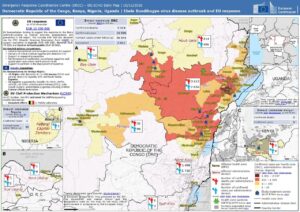
Newer national figures are already higher. A European Commission situation map dated Nov. 10, citing Congo’s national public health institute, put the toll at 5,354 deaths among 10,990 confirmed cases as of Nov. 8. Our Oct. 31 report noted that Ebola deaths had passed 5,000 in Congo.
If you find reporting like this useful, consider supporting Canada News Media, an independent Canadian newsroom with no corporate parent.
Source: World Health Organization.
Featured image: European Commission Emergency Response Coordination Centre situation map of the Ebola Bundibugyo outbreak, Nov. 10, 2026 (public domain, via Wikimedia Commons).
Follow Canada News Media
Get the day's top Canadian stories and our two daily 60-second news videos wherever you scroll.
X Threads Facebook Instagram LinkedIn TikTok YouTube Pinterest Reddit Substack Flipboard Newsletter RSS