


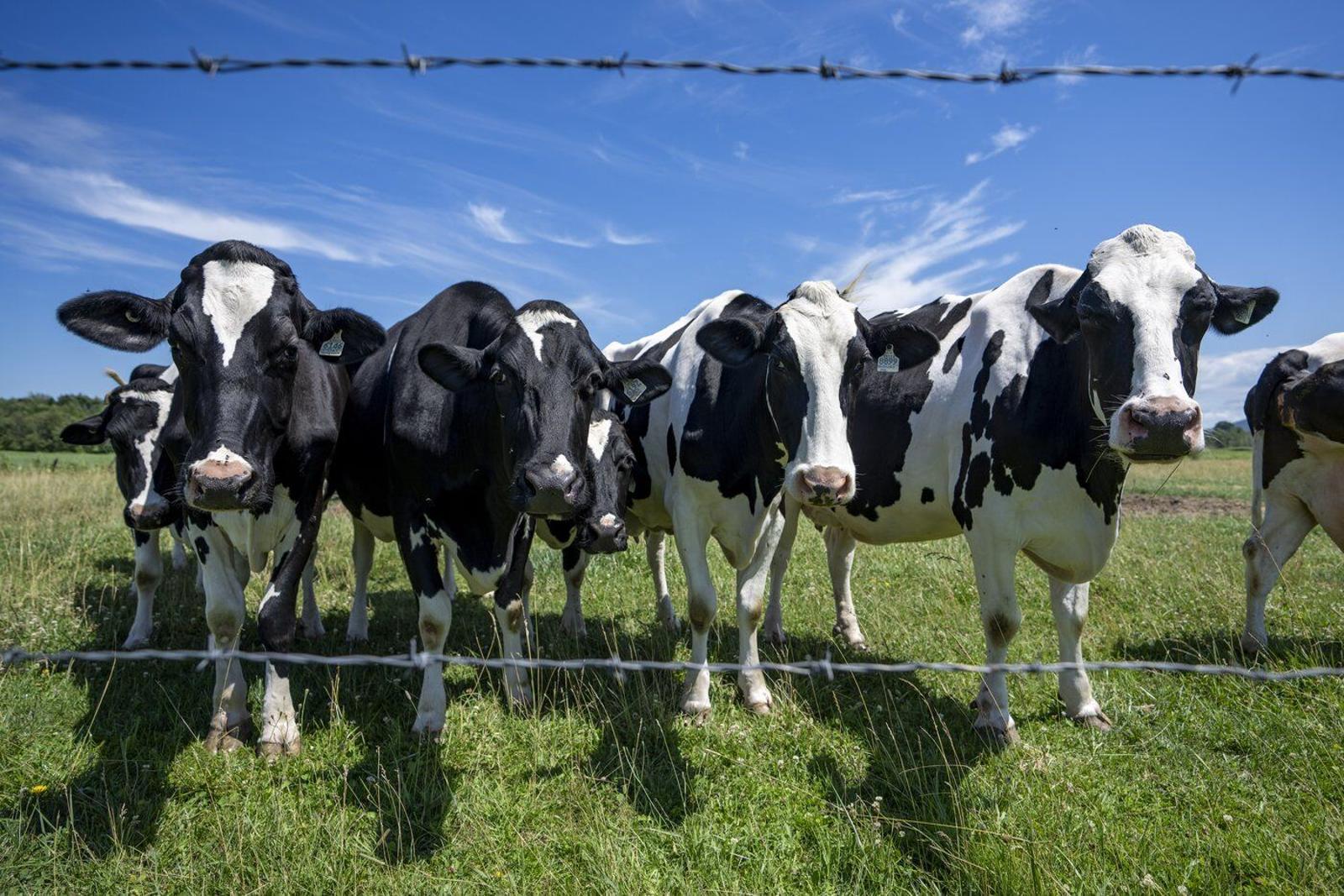
Quebec has confirmed its first case of raccoon rabies in a cow, a young unvaccinated heifer that died on a pasture in Coaticook, in the Eastern Townships, the province’s agriculture ministry said.
The ministry (MAPAQ) said in a Nov. 6 news release that signs of the disease appeared on Oct. 30 and the animal died the same day. The positive result was confirmed on Nov. 4, it said. The owner and the animal’s veterinarian have put control measures in place on the farm with the ministry’s support, it said.
It is the first cow found with the disease since the outbreak began in 2024, the ministry said. The Canadian Press reported that the province has confirmed 329 cases of the raccoon rabies variant this year, up from the 313 cases reported in late October. Most infections are in raccoons, but the virus has also been found in skunks and foxes, and in three cats in the Montérégie region over the summer.
Those cat cases include the province’s first rabid cat. Cases have risen sharply in the Montérégie since March, the province has said, and the move into livestock in Estrie shows the disease is no longer confined to wildlife and pets.
Rabies is a viral disease that can affect all mammals, including farm animals and people, and it spreads mainly through the saliva of an infected animal, usually through a bite, the ministry said.
To help producers, the ministry is covering the cost of vaccinating livestock against rabies. Registered farms in the Montérégie, Estrie and some municipalities in Centre-du-Québec that raise cattle, goats, sheep or pigs outdoors can claim the veterinarian’s travel and fees, supplies and vaccines for shots given since May 15, 2026. The program is voluntary.
The ministry also urged farmers to use biosecurity measures that limit contact between livestock and wild animals such as raccoons, and asked people to vaccinate pets and keep them indoors or supervised outside.
Residents of Estrie, the Montérégie and Centre-du-Québec are asked to report dead, injured, disoriented, paralyzed or unusually aggressive raccoons, skunks or foxes to the provincial wildlife department. Anyone bitten or scratched, or whose wound, eyes, mouth or nose came into contact with an animal’s saliva, should call Info-Santé 811, the ministry said.
Sources: Quebec Ministry of Agriculture, Fisheries and Food news release (Nov. 6, 2026); The Canadian Press (Nov. 7, 2026).
If you find reporting like this useful, consider supporting Canada News Media, an independently owned Canadian newsroom.
Follow Canada News Media
Get the day's top Canadian stories and our two daily 60-second news videos wherever you scroll.
X Threads Facebook Instagram LinkedIn TikTok YouTube Pinterest Reddit Substack Flipboard Newsletter RSS