


Statistics Canada’s price index for air transportation stood at 193.0 in October 2026, 21.6% above October 2025 (158.7), the largest 12-month increase since July 2022, our analysis of the agency’s consumer price index shows. Over the same twelve months all items rose 3.1%.
Air fares have now climbed faster year over year for five months in a row: up 7.4% in May, 9.6% in June, 12.0% in July, 15.0% in August, 19.4% in September and 21.6% in October. The index was down 1.9% in January and 0.6% in February, up 2.9% in March and down 1.7% in April. October’s level is 18.0% above October 2019 (163.5) but still below October 2022 (212.2), and below the August 2022 peak of 260.1. The index rose 1.6% from September (189.9) to October.
Other travel prices also rose faster than inflation. Travel tours were up 8.4% from October 2025 (132.3 against 122.0), after a 13.0% rise in September. Admission to spectator entertainment, excluding video and audio subscriptions, rose 7.0% (191.7 against 179.2), and rail, highway bus and other inter-city transportation rose 4.4% (169.8 against 162.7). Taxi and other local and commuter transportation services fell 2.2%.
Hotel and other traveller accommodation prices were 6.5% higher nationally (103.6 against 97.3), but the gains were uneven. Alberta and Nova Scotia were each up 13.7%, British Columbia 13.1% and Quebec 11.1%. Prices were lower than a year earlier in Newfoundland and Labrador (-7.0%), Manitoba (-2.0%), Saskatchewan (-2.0%) and Ontario (-0.9%). The index is not seasonally adjusted, and October is well below the summer peak in most provinces, so the comparison is with October a year earlier.
Statistics Canada’s release for October does not attribute the change in air fares to any cause. It said transportation prices rose 8.9%, a figure that includes gasoline, which was up 30.9%, and it did not discuss air fares in its text. The table does not separate fuel costs, demand, the timing of when tickets are bought or airline pricing decisions, and this analysis does not test any of them. The index tracks prices across all air travel Canadians buy, not any one airline, route or ticket, and no airline or hotel is accused of anything here. As we reported earlier, the December index has jumped 20% or more from November in most years since 2018, so holiday fares are already volatile in the data.
How we checked: We downloaded table 18-10-0004-01 (Consumer Price Index, monthly, not seasonally adjusted, 2002=100) on Nov. 19, 2026 and pulled the Canada series for air transportation (January 1961 to October 2026), travel tours, spectator entertainment, rail, highway bus and other inter-city transportation, taxi and other local and commuter transportation services, and traveller accommodation by province and territory. Each 12-month change is the October 2026 index divided by the October 2025 index, minus one; for example, 193.0 ÷ 158.7 − 1 = 21.6%. For air transportation we repeated this for every month back to 1962 and found no 12-month rise of 21.6% or more between August 2022 and September 2026 (the last was July 2022, +57.7%). Comparisons with The Daily’s October release (Nov. 16, 2026) use its published text. Figures are Statistics Canada’s index values and are subject to revision; the percentages and rankings are our calculations. No organization is accused of wrongdoing in this analysis.
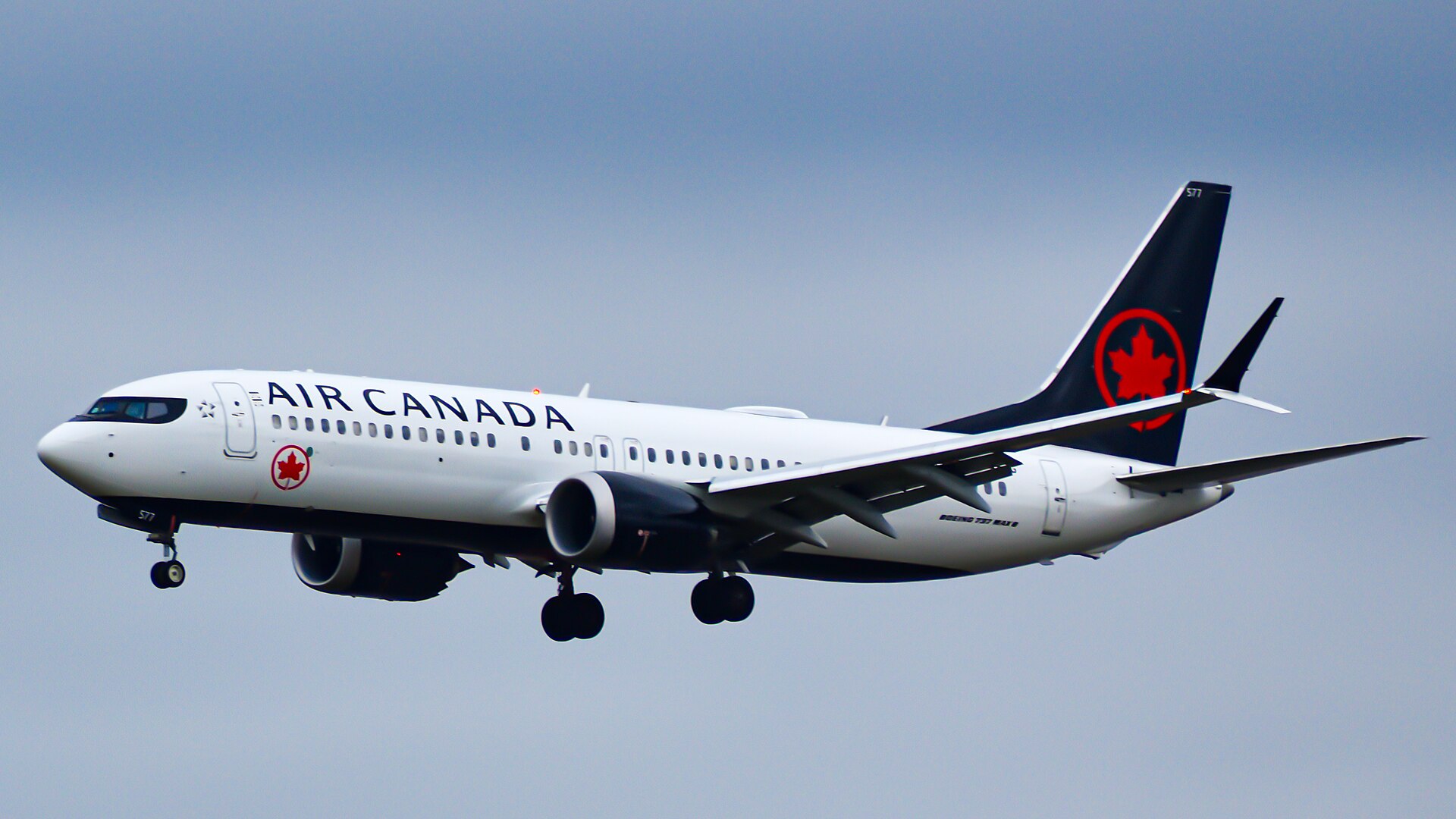
File photo: an Air Canada Boeing 737 MAX 8 on approach (AVA Navigate, CC BY-SA 4.0, Wikimedia Commons). The aircraft is not the subject of this story.
Follow Canada News Media
Get the day's top Canadian stories and our two daily 60-second news videos wherever you scroll.
X Threads Facebook Instagram LinkedIn TikTok YouTube Pinterest Reddit Substack Flipboard Newsletter RSS