


The Court of Appeal for Ontario has ruled that a $10-million sub-limit in the City of Thunder Bay’s insurance policy caps what its insurer must pay for building-code upgrades made while repairing the city’s wastewater plant after a 2012 flood.
In Thunder Bay (City) v. Ontario Municipal Insurance Exchange, 2026 ONCA 827, released Nov. 17, 2026, Justices B. Zarnett, P.J. Monahan and M. Rahman dismissed the city’s appeal. Justice Rahman wrote the reasons for the panel. The court ordered costs of the appeal of $25,000, all-inclusive, payable to the respondents.
The decision says a heavy rainstorm in 2012 flooded the Wastewater Pollution Control Plant, which was overwhelmed by wastewater in the sewer system, and that raw sewage flooded tunnels and affected many of the plant’s buildings. The plant was built in 1964 and expanded several times, and by 2012 parts of it did not meet current building codes and bylaws. While repairing the plant, the city made upgrades to bring it into compliance. The Ontario Municipal Insurance Exchange, known as Omex, acknowledged that the flood losses were covered but refused to pay all of the cost of the upgrades, which it said made up 55 per cent of the total repair costs. It took the position that the upgrades fell under a $10-million sub-limit in the policy.
The policy insured the plant against direct loss or damage, with a general limit of $300 million for any one loss. A chart of sub-limits includes $10 million for “Demolition and Increased Cost of Construction.” The reinsurers, Royal & Sun Alliance Insurance Company of Canada and Catlin Canada Inc., were also respondents. Both sides asked the Superior Court of Justice to interpret the policy. In a June 9, 2025 ruling (2025 ONSC 3412), Regional Senior Justice W. Danial Newton found the sub-limit applied to code upgrades. He wrote that the city had argued the insurers’ position would leave an uninsured loss of millions of dollars on a plant with an insured value of more than $180 million, and he ordered the city to pay the insurers $25,000 in costs.
On appeal, the city argued that the clause was an extension of coverage, not a limit, and that the policy was ambiguous in a way that should be read in its favour. It said it paid premiums based on the full replacement value of the plant, and that a municipality with many older buildings would be significantly underinsured if code upgrades were covered only up to the sub-limit.
The Court of Appeal disagreed. It found the policy clear and unambiguous when read as a whole, and said the clause’s opening words show it applies to loss or damage that triggers enforcement of a law or bylaw regulating how damaged facilities are repaired. Reading the clause as extra coverage on top of the $300-million limit, the court wrote, would make the $10-million sub-limit meaningless. It added that the policy’s purpose is to restore the insured to its position before the loss, not to improve on it, and that an insurer may limit what it pays for betterment, “particularly” for code upgrades to older buildings. Because the wording was clear, it said, there was no need to look at the parties’ intentions or to read the policy against the insurer.
The appeal was heard March 23, 2026. Lawrence G. Theall and Jeffrey A. Brown appeared for the city, and Marcus B. Snowden, Sébastien A. Kamayah and Dean P. Barlett for the respondents. The decision does not give the total repair bill or the amount the city has been paid, and it does not say whether the city will seek permission to appeal to the Supreme Court of Canada. We have not seen a statement from the city or from Omex.
For Ontario municipalities, the ruling is a reminder that a large headline limit does not guarantee coverage for every cost of rebuilding old infrastructure to current standards, and that sub-limits in a standard-form policy can govern even when most of a repair bill falls under them. It does not address whether any other municipality’s policy is worded the same way, and it makes no finding about the conduct of either side.
If you find reporting like this useful, consider supporting Canada News Media, an independently owned Canadian newsroom.
How we checked: we read the full reasons of the Court of Appeal for Ontario (file COA-25-CV-0922, released Nov. 17, 2026) and the motion judge’s reasons on CanLII, and took every date, name, dollar figure and quotation from them. We searched our site over the past 12 months for earlier coverage of this case and found none, and neither decision shows a publication ban or sealing order. The 55 per cent figure is Omex’s position as recorded by the court, and the $180-million insured value is the city’s submission as recorded by the motion judge. We did not contact the parties.
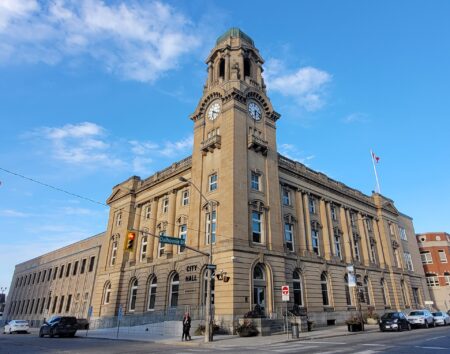
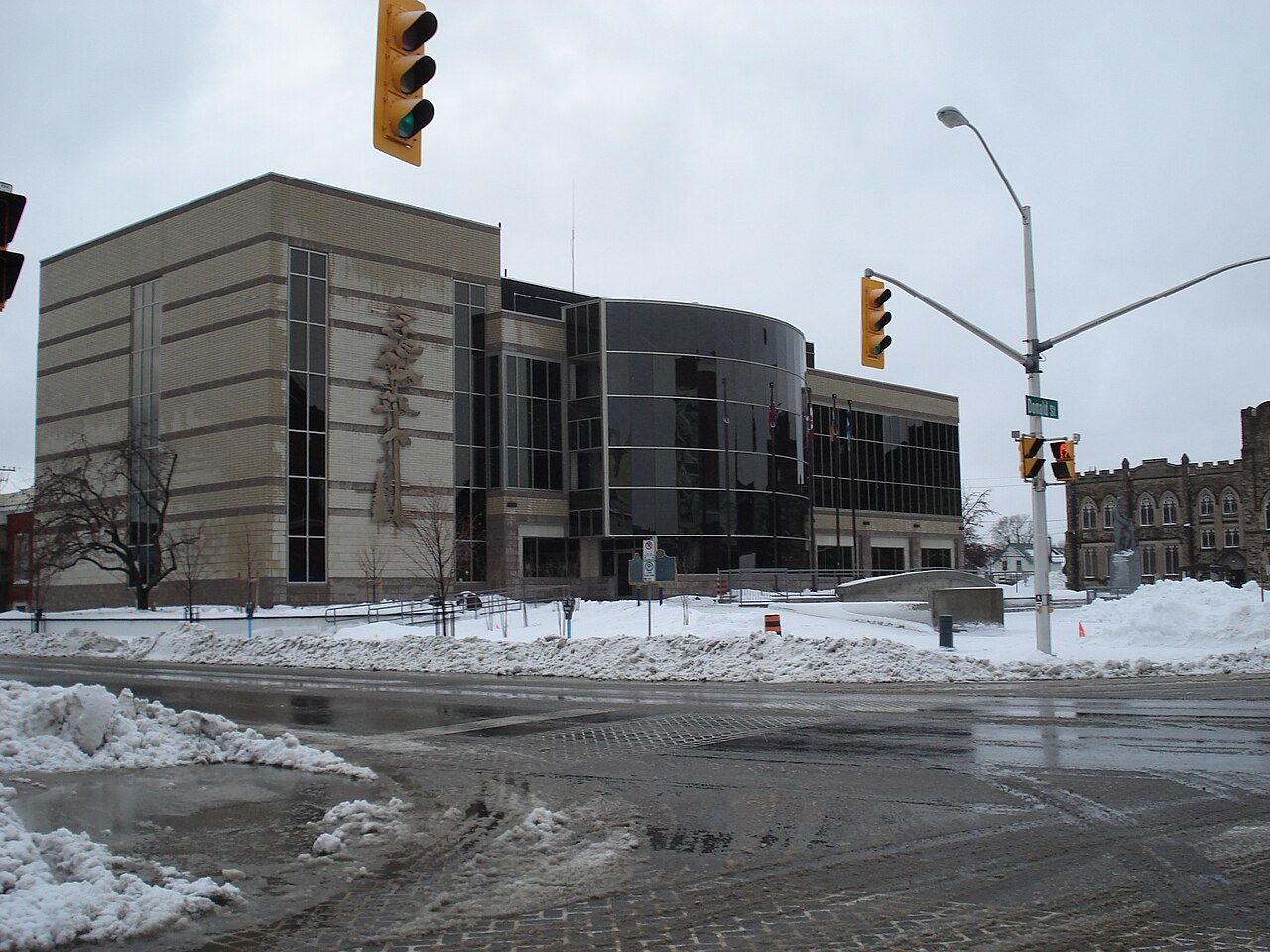
File photo: Thunder Bay City Hall (Eja2k, public domain, Wikimedia Commons).
Follow Canada News Media
Get the day's top Canadian stories and our two daily 60-second news videos wherever you scroll.
X Threads Facebook Instagram LinkedIn TikTok YouTube Pinterest Reddit Substack Flipboard Newsletter RSS