





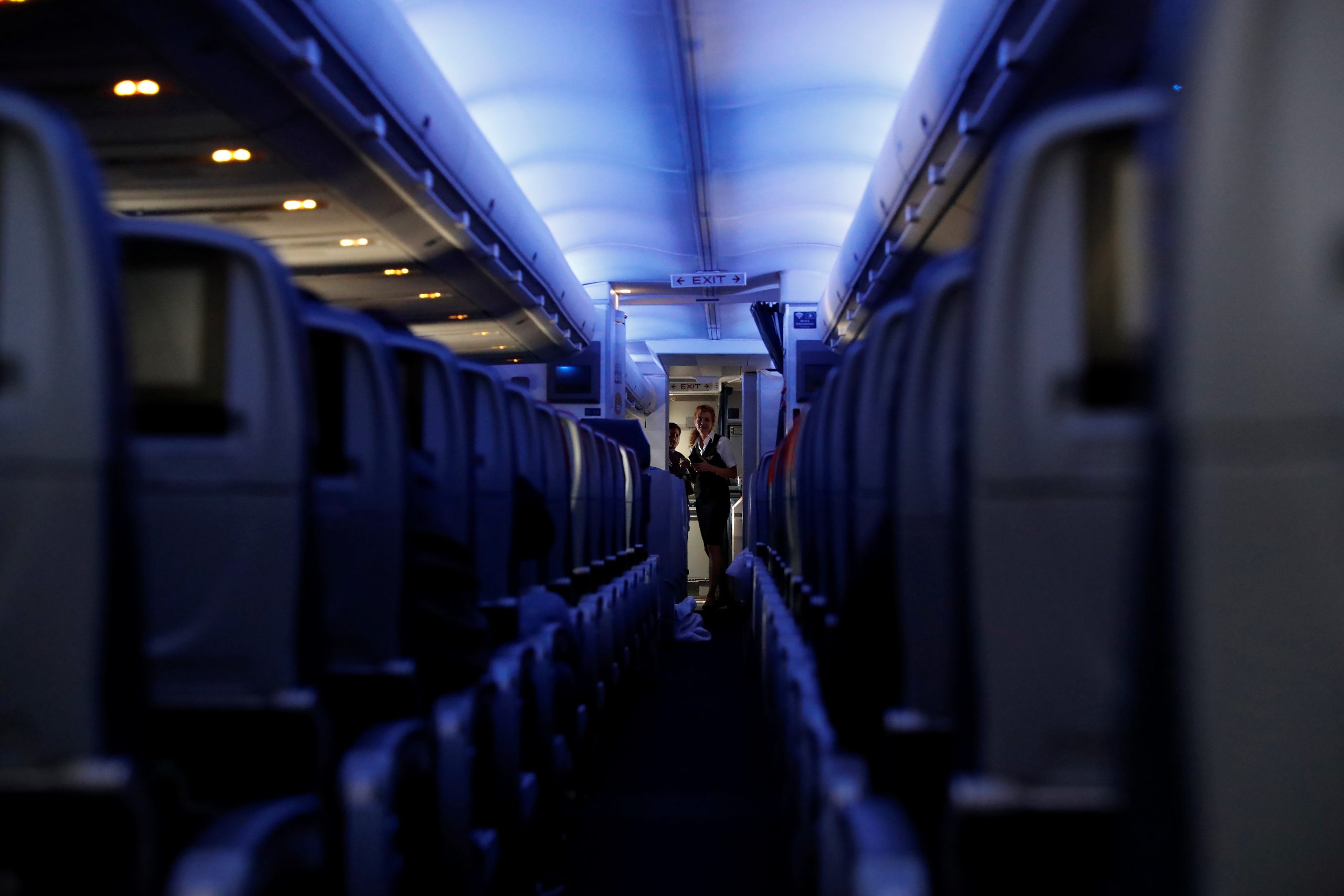
Airlines flying in Canada reported 159 cases in 2025 of a crew member becoming too ill or injured to keep working during a flight, the most since the board’s records begin in the 1980s and up 69 per cent from 94 in 2024, according to a Canada News Media count of Transportation Safety Board of Canada occurrence data. The pace has held in 2026, with 116 reports from January to September.
Under the federal Transportation Safety Board Regulations, operators of larger aircraft must report when a crew member whose duties are directly tied to the safe operation of the flight is unable to perform them because of a physical incapacitation. The board files these as “unable to perform” incidents. Before 2023 the yearly count had never gone above 87, the figure for 2019. It was 85 in 2023, 94 in 2024 and 159 in 2025.
The change came as a step rather than a slow climb. From January 2023 to October 2024, the database averages about seven of these reports a month. From November 2024 to September 2026, it averages about 13, roughly double, and no month since November 2024 has had fewer than eight.
Almost all of the increase involves cabin crew. In 2025, 137 of the 159 summaries describe a flight attendant or cabin crew member, against 80 in 2024 and 71 in 2019, while cases that do not mention cabin crew, which include pilots, numbered 16 in 2019, 14 in 2024 and 22 in 2025. A typical entry reads like the board’s July 2025 summary of a WestJet flight from Los Cabos to Vancouver: during cruise, a flight attendant became ill, and the remaining cabin crew took over the duties. Many entries say the duties were reassigned among the remaining crew; some note a call to a ground medical service or paramedics meeting the aircraft.
By operator, Air Canada mainline flights account for most of the jump, with 68 reports in 2025 against 23 in 2024 and nine in 2023. Air Canada Rouge had 16 in 2025 (19 in 2024), WestJet and its listed variants 29 (31), and Air Transat 28 (four). From January to September 2026, the board lists 33 for Air Canada, 20 for Rouge, 39 for WestJet and eight for Air Transat. The airlines fly very different numbers of flights and passengers, and the database holds no flight counts, so these are not rates.
The records cannot tell more illness apart from more reporting. A change in how an airline or the board classifies these events, new internal reporting rules, more flights, longer routes or changes in crew staffing could each push the count up, and none of that is visible in the data. Nothing in the records suggests any airline failed to report or broke a rule, and none is accused of anything here. Passenger traffic did not double over the period; Statistics Canada’s monthly figures, which we reported in October, showed air passengers up 3.7 per cent in August from a year earlier.
The board’s data for 2026 are preliminary and recent months tend to fill in as reports are processed, so the 2026 count may still rise. The board investigates only a small share of the occurrences it records, and all of these 2025 and 2026 reports are classed as incidents, not accidents.
How we checked: We downloaded the Transportation Safety Board’s aviation occurrence data (occurrence and aircraft files, 50,709 occurrences up to Oct. 8, 2026), kept one row per occurrence and counted those with the incident type “unable to perform” by year and month. We sorted them into cabin-crew cases by searching each summary for “flight attendant”, “cabin crew” or “cabin attendant”, and took the operator from the aircraft file’s organization field. The reporting rule is in section 2 of the Transportation Safety Board Regulations. Keyword counts are approximate because summaries are written in free text.
Follow Canada News Media
Get the day's top Canadian stories and our two daily 60-second news videos wherever you scroll.
X Threads Facebook Instagram LinkedIn TikTok YouTube Pinterest Reddit Substack Flipboard Newsletter RSS