


Personal bankruptcies in Alberta rose 14.6% in two years even though total consumer insolvency filings in the province barely moved, and two suburban postal areas, one in Edmonton and one in Calgary, had the second- and third-largest increases in the number of filings of any postal area in Canada, federal records show.
From January to September 2026, Albertans filed 2,297 consumer bankruptcies, up from 2,004 in the same months of 2024, according to monthly statistics by forward sortation area (the first three characters of a postal code) published by the Office of the Superintendent of Bankruptcy. Consumer proposals, the deal in which a person repays part of what they owe and which most filers choose, slipped 1.2% over the same two years, to 12,218 from 12,361. Together the two kinds of filing came to 14,515 this year, up 1.0% from 14,365 in 2024, compared with a 7.6% rise across Canada, to 111,393 from 103,519. Over five years Alberta’s total is up 38.4% from 10,488 in 2021, while the national count rose 64.6%.
The shift toward bankruptcy is sharper in Calgary. In the 34 postal areas that Canada Post assigns to the city, bankruptcies rose 21.3% over two years, to 694 from 572, and total consumer filings rose 8.3%, to 4,354 from 4,020. The debts declared by Calgary filers grew faster than the number of filers: $691.6 million this year, up 37.1% from $504.3 million in 2024, an average of about $158,800 per filing against about $125,400 two years ago. The national average this year is about $154,200.
Edmonton’s 39 postal areas, those beginning with T5 or T6, saw bankruptcies rise 16.6%, to 652 from 559, and total filings rise 4.7%, to 4,209 from 4,019. Edmonton’s count has stopped growing: it is down 1.2% from the 4,259 filed in the first nine months of 2025. Edmonton filers declared $689.1 million in debts, about $163,700 per filing, little changed from last year. Set against population, Edmonton had 4.16 filings for every 1,000 residents this year and Calgary 3.32, compared with 3.41 for Alberta and 3.01 for Canada, using 2021 census counts.
The increase is concentrated in a few fast-growing areas. Heritage Valley in southwest Edmonton, postal area T6W, recorded 399 filings this year, up 38.1% from 289 in 2024, the second-largest rise of any postal area in the country. T3N in northeast Calgary rose 65.5%, to 273 from 165, the third-largest. Only L7A in Brampton, Ont., rose more than T6W. In T6W, bankruptcies rose to 48 from 32 and proposals to 351 from 257; in T3N, bankruptcies rose to 31 from 18 and proposals to 242 from 147. A third Calgary area, T3P in the northwest, rose to 140 from 83, and Edmonton’s T5T, in the west end, to 443 from 390.
T3N’s 2021 population of 33,539 gives it 8.14 filings per 1,000 residents this year, nearly three times the national figure. That number is probably too high, because new housing has added residents to both T3N and T6W since the census, but the change from 2024 to 2026 does not depend on population. We reported earlier this month that consumer insolvencies are rising even in provinces where unemployment fell, and that Brampton’s filings are up 33% in two years. The Alberta numbers show a rise concentrated in bankruptcies and in a few suburbs rather than across the province.
The records do not say why people filed. Possible reasons include mortgage renewals at higher rates, job losses and longer job searches, larger debts in new suburbs where buyers took on big mortgages recently, and population growth, which adds filers even if the share of people in trouble is unchanged. The statistics do not break liabilities down by type, and they cannot show income, age or how long filers have lived in an area. No person, lender or institution is named or accused of anything here.
Albertans worried about debt can find a licensed insolvency trustee, the only professionals allowed to administer bankruptcies and consumer proposals, through the Office of the Superintendent of Bankruptcy, which also lists free and low-cost credit counselling options.
How we checked: We downloaded the Office of the Superintendent of Bankruptcy’s monthly insolvency statistics by forward sortation area, one spreadsheet per year from 2021 to September 2026, and added consumer bankruptcies and consumer proposals, and the liabilities declared for each, for every postal area for January to September of each year. Business insolvencies are excluded. Calgary means postal areas T1Y, T2A to T2Z and T3A, T3B, T3C, T3E, T3G, T3H, T3J, T3K, T3L, T3M, T3N, T3P and T3R, and Edmonton those beginning with T5 or T6; postal areas do not follow municipal boundaries exactly. Postal codes are as declared by the debtors when they file. Rates use Statistics Canada’s 2021 census population by forward sortation area (table 98-10-0019-01); for example, 4,354 ÷ 1,312,323 residents × 1,000 = 3.32. Averages are declared liabilities divided by the number of filings. Monthly figures can be revised.
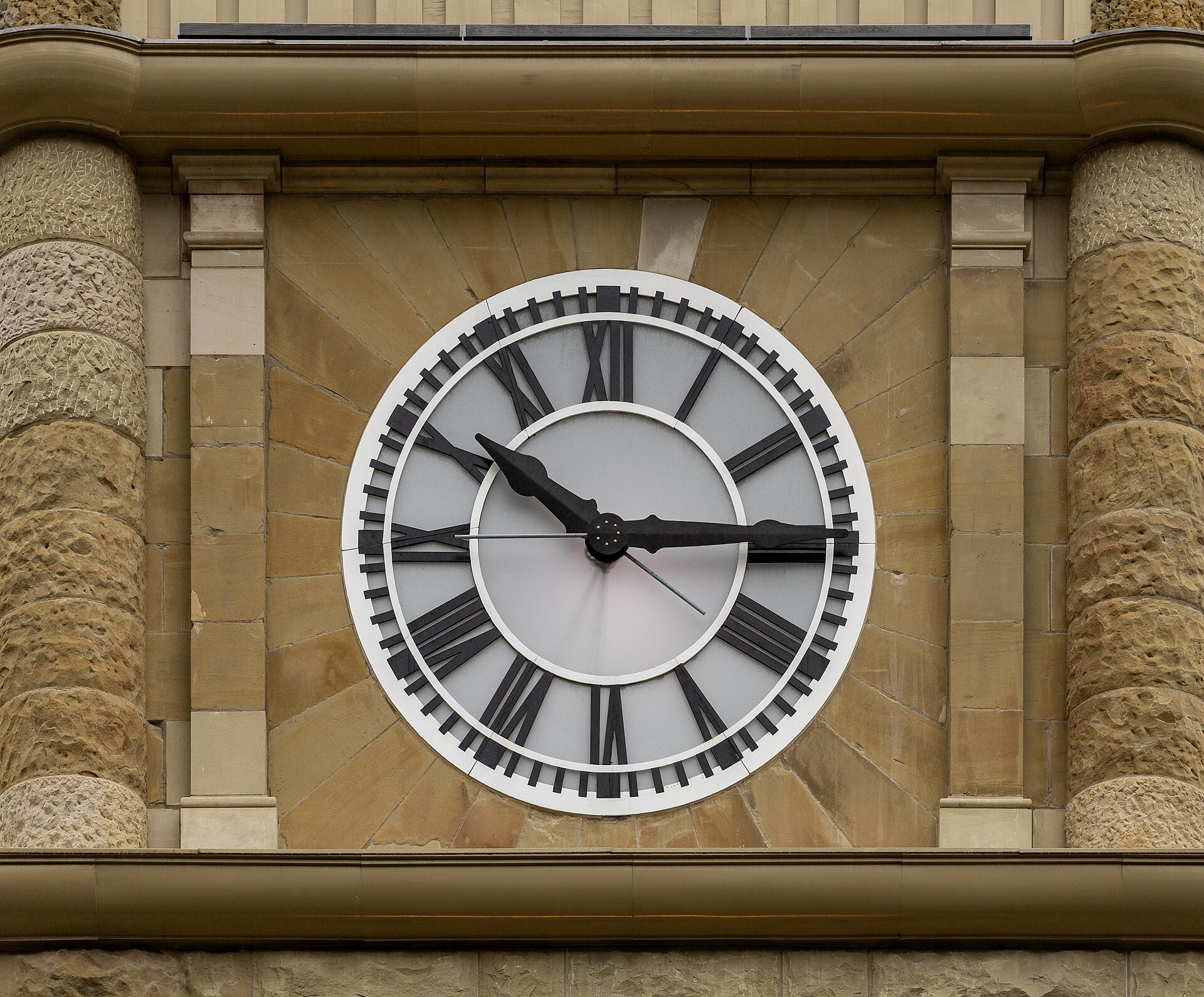
File photo: The clock tower of Calgary’s historic City Hall, July 14, 2025 (Chris Woodrich, CC BY-SA 4.0, via Wikimedia Commons).
Follow Canada News Media
Get the day's top Canadian stories and our two daily 60-second news videos wherever you scroll.
X Threads Facebook Instagram LinkedIn TikTok YouTube Pinterest Reddit Substack Flipboard Newsletter RSS