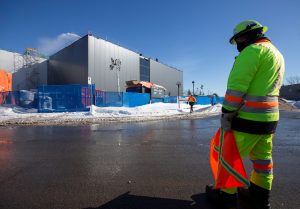




The National Research Council posted 54 notices saying it intended to award a contract to a supplier it had already picked from April 1 to Nov. 17, more than twice the 25 it posted over the same dates last year, federal tender records show.
The notices drove most of a government-wide increase. Canada News Media counted 229 advance contract award notices in the CanadaBuys tender notice files for that period, compared with 182 a year earlier, a rise of 26 per cent. The research council accounted for 29 of the 47 additional notices.
The government-wide total is not a high. Over the same dates, the files show 189 such notices in 2022, 270 in 2023, 248 in 2024, 182 in 2025 and 229 this year. Without the research council, this year’s total would be 175, compared with 157 last year and 182 in 2022.
The council’s own count is the largest in the five years examined. It posted seven of these notices over the period in 2022, then 20, 42, 25 and 54. They also made up a bigger part of what it advertised: 54 of its 180 notices of all types this year, or 30 per cent, compared with 25 of 164, or 15 per cent, last year. The share was 24 per cent in 2024, 22 per cent in 2023 and 12 per cent in 2022, when the files held only 60 council notices of any kind.
An advance contract award notice is public. As the council’s own wording in one notice explains, it tells suppliers that an agency intends to award a contract to a named business and lets others show they can also do the work by filing a statement of capabilities before the closing date. If no supplier files one that meets the stated requirements, the contracting officer may go ahead with the named business.
The Government Contracts Regulations generally call for bids but allow exceptions, including pressing emergencies, contracts under set dollar limits and cases where only one person is capable of doing the work. Posting an advance notice is a recognized federal procurement step, and nothing counted here shows that any notice broke a rule.
The council’s 54 notices carried 54 different solicitation numbers, although one title, for machine translation research services, appeared twice in July. All were marked expired in the file, meaning their posting periods had ended. They covered a wide range of work, much of it laboratory equipment, including lasers, a scanning electron microscope, a hail impact tester and an X-ray diffractometer.
Others were tied to drones. Notices posted for the council’s Centre for Drone Innovation named specific products, including a fuel-powered maritime drone posted in August and, on Sept. 2, a heavy-lift battery-electric aircraft, a long-endurance hybrid aircraft and a ground-based radar meant to help drones detect and avoid other traffic. In June, three notices sought instrument scientists to support the James Webb Space Telescope.
A separate field in the same files, which records the procurement method, points in the same direction. Entries marked as advance contract award notices there rose to 63 from 31 for the research council and to 240 from 192 across all buyers. The two fields do not match row for row, so the counts above use the notice type.
Some other large users also posted more. Correctional Service Canada’s count rose to 40 from 26, Public Services and Procurement Canada’s to 37 from 24 and National Defence’s to 26 from 16, the highest for Defence in the five periods. Fisheries and Oceans posted 13, down from 23. Public Services and Procurement Canada also buys on behalf of other departments.
The records have clear limits. The tender notice files have no contract value field, so they cannot show how much money these notices cover. This count does not show whether any other supplier filed a statement of capabilities, whether each contract was later awarded or why the council’s number rose. Many of the notice summaries in the file are short, and Canada News Media did not review attached documents for each stated justification. A higher count is not, on its own, evidence of less competition or of any problem. We did not seek comment from the agencies counted here, and this report makes no allegation against them.
For Canadian businesses, the notices are worth watching because the posting period is the window to respond. A company that believes it can meet the requirements can follow the instructions in the notice on CanadaBuys and file a statement of capabilities before it closes.
Canada News Media has also reported that federal contracts pile up just under $25,000 and that Ottawa signed large no-bid IBM and VMware deals in 2025.
How we checked: We downloaded the five CanadaBuys tender notice files for fiscal years 2022-23 through 2026-27 on Nov. 25. Because the newest notice in the current file was dated Nov. 17, we compared April 1 to Nov. 17 in each year, using publication dates. We counted rows whose notice type was Advance Contract Award Notice; each had a distinct reference number. We grouped the different spellings of each agency’s name, and kept the Natural Sciences and Engineering Research Council and the Social Sciences and Humanities Research Council out of the National Research Council count. The council’s share is its advance notices divided by all of its rows in the files for the same dates. We read the file summaries of the council’s 54 notices from this year. The files can be revised by the departments that post to them, so later downloads may differ.
Follow Canada News Media
Get the day's top Canadian stories and our two daily 60-second news videos wherever you scroll.
X Threads Facebook Instagram LinkedIn TikTok YouTube Pinterest Reddit Substack Flipboard Newsletter RSS