


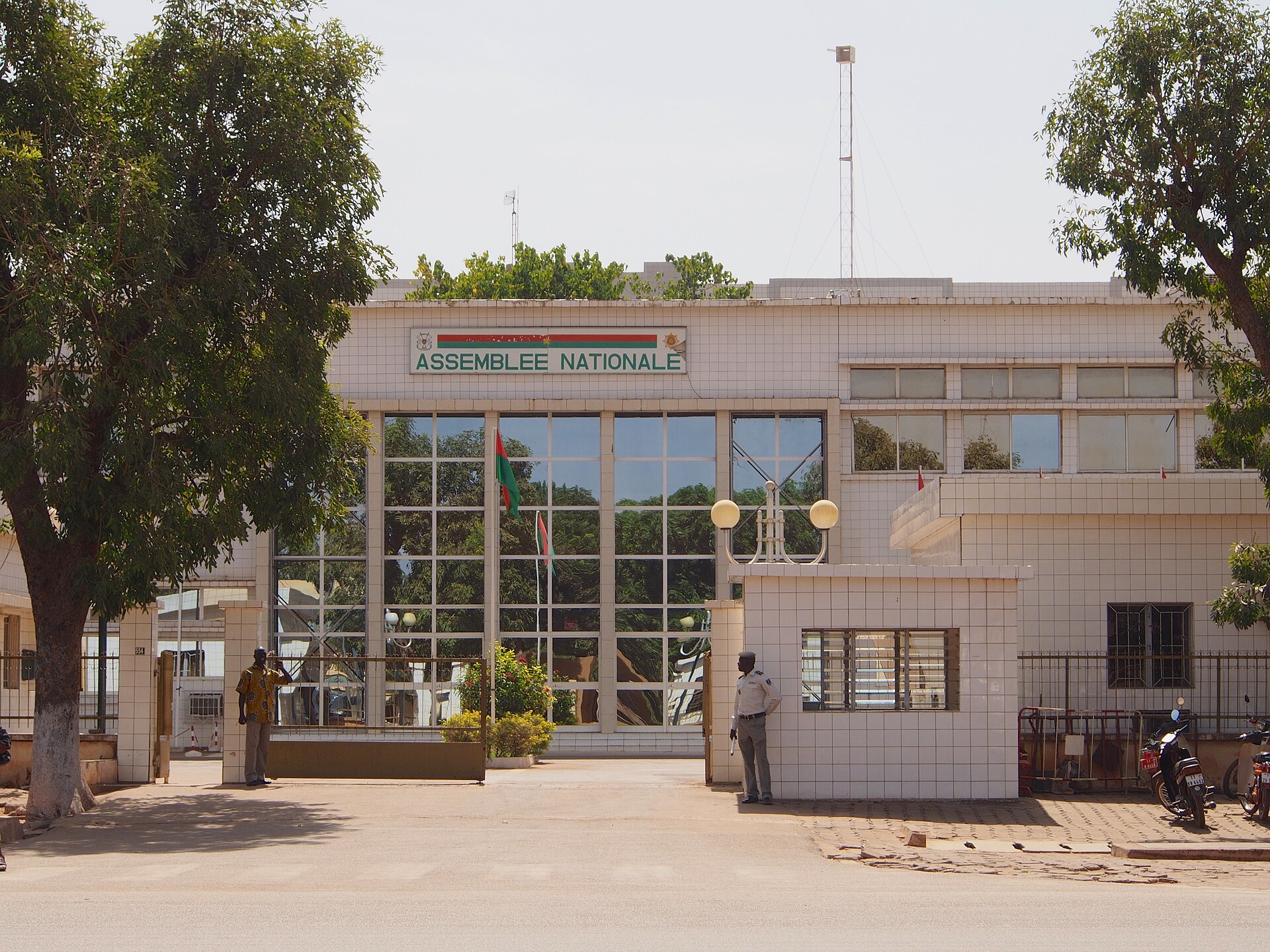
Burkina Faso’s transitional parliament, appointed under the country’s military government, voted unanimously on Oct. 20, 2026, to restore the death penalty for terrorism, treason, espionage and several other crimes, eight years after the West African country abolished capital punishment.
All 71 members of the legislature backed the revised penal code, The Associated Press reported. The vote reverses a 2018 reform in a country where the last known judicial execution took place in 1988, according to Human Rights Watch.
Under the new code, the death penalty applies to high treason, terrorism, espionage, parricide and the import of expired or prohibited products, Human Rights Watch said in an Oct. 21 dispatch. Reuters reported that the import provision covers products whose use results in death, according to Nigeria’s Tribune Online, which cited both wire services.
Justice Minister Edasso Rodrigue Bayala presented the code to lawmakers and defended it as a tool against armed groups. He said those groups had exploited the leniency of the old law by telling recruits the worst they would face if caught was life in prison, Human Rights Watch reported.
Burkina Faso has been run by a military government since a September 2022 coup that brought Capt. Ibrahim Traore to power. The Council of Ministers first adopted the bill to restore capital punishment in December 2025, and the transitional legislature’s approval was widely expected.
The country is fighting an insurgency by armed groups linked to al-Qaida and the Islamic State group. The violence has killed thousands of people and displaced millions across Burkina Faso and the wider Sahel, The Associated Press has reported. Neighbouring Mali faces a similar conflict, where Human Rights Watch this week accused the army, Russia’s Africa Corps and rebel groups of killing civilians.
Human Rights Watch, which opposes capital punishment in all cases, said the measure runs counter to repeated calls from the UN General Assembly and the African Commission on Human and Peoples’ Rights for a moratorium on executions and a steady reduction in capital offences.
The group also raised concerns about the courts that will apply the new penalties. All terrorism cases go to a specialized judicial unit created in 2017, and Human Rights Watch said it documented slow investigations and serious procedural failures there in April 2026. A former judge of that court told the organization that some judges kept suspects in detention despite weak evidence because they feared the military would kill the suspects if they were released.
Since taking power, the authorities have banned media outlets, suspended unions and civil society groups and abolished multiparty politics, Human Rights Watch said. Critics have faced arbitrary detention, enforced disappearances, forced conscription and torture, the group said.
For Canadians, the vote adds to an already severe warning. Global Affairs Canada tells Canadians to avoid all travel to Burkina Faso because of the threat of terrorism, the risk of kidnapping and the unstable political situation. The advisory, last updated Oct. 14, 2026, says kidnappings by criminal and terrorist groups, and by members of the country’s de facto authorities, occur regularly, and it reminds travellers that they must abide by local laws.
Canada itself abolished capital punishment for Criminal Code offences in 1976 and removed it from military law in 1998. Canadian business also has a stake in the country: Toronto-based IAMGOLD operates the Essakane gold mine in northeastern Burkina Faso. Burkina Faso’s ties with its West African neighbours remain strained, although the military-led Sahel states recently agreed to cooperation talks with the ECOWAS bloc.
The new code still has to be promulgated before it takes effect, and Canada News Media found no announced date for its publication in the official gazette. It is also not yet known whether courts will hand down death sentences under the new provisions, or whether any would be carried out after a gap of nearly four decades.
Via The Associated Press, Reuters, Human Rights Watch and Global Affairs Canada.
If you find reporting like this useful, consider supporting Canada News Media, an independent Canadian newsroom with no corporate parent.
Follow Canada News Media
Get the day's top Canadian stories and our two daily 60-second news videos wherever you scroll.
X Threads Facebook Instagram LinkedIn TikTok YouTube Pinterest Reddit Substack Flipboard Newsletter RSS