


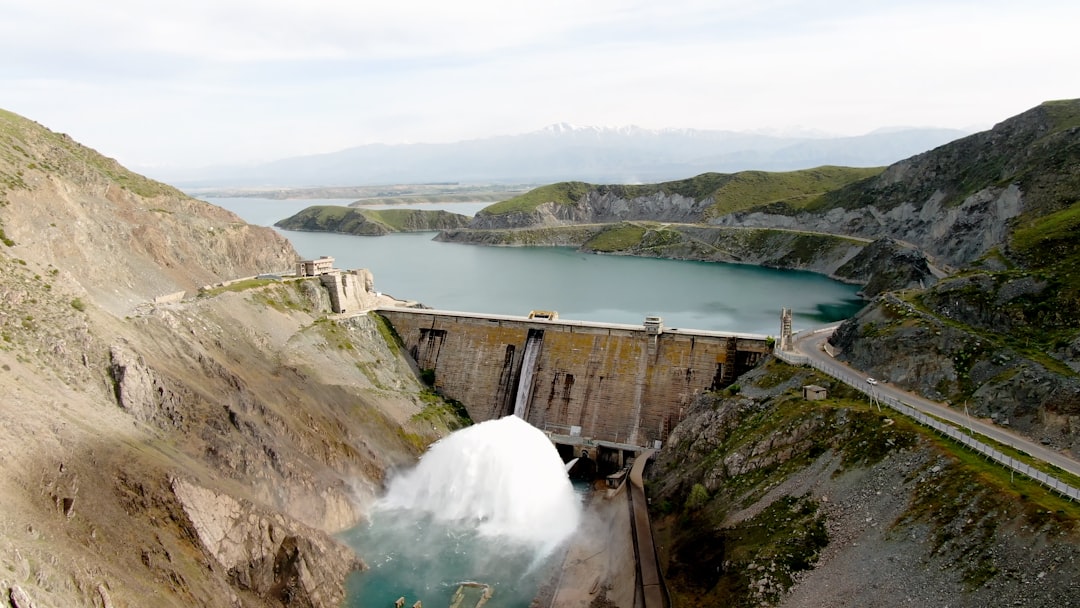
Prime Minister Mark Carney announced a $70-billion agreement Monday to redevelop Churchill Falls and build the massive Gull Island hydro project in Labrador, with Ottawa putting up $10 billion in financing. Most coverage out of St. John’s on Monday framed the deal around its size — the largest clean energy investment in North American history, 14,000 megawatts, 23,000 construction jobs — and around Premier Tony Wakeham’s line that Newfoundland and Labrador will “finally be the primary beneficiary” of its own power.
What that framing skips is why the deal had a real deadline behind it, one written into a contract signed 57 years ago.
The Clause That Was Set to Run Until 2041
The 1969 Churchill Falls contract sold Hydro-Québec roughly 31 billion kilowatt-hours a year for 40 years, starting at about three-tenths of a cent per kilowatt-hour and stepping down to roughly a quarter-cent by the final stretch. Buried in that contract was an automatic renewal clause — not subject to renegotiation, according to Newfoundland’s own provincial archives — that extended the deal for a further 25 years at an even lower rate of about two-tenths of a cent per kilowatt-hour. That renewal period runs to 2041.
Newfoundland tried twice to get out from under those terms: first seeking more “recall power” for the island’s own growing demand in the early 1970s, then passing legislation in 1980 to seize back the water rights outright. Both moves ended up in court, and Newfoundland lost both times. The contract held.
Monday’s deal replaces that automatic renewal before it can take effect. Under the new terms, according to a detailed summary published by St. John’s broadcaster NTV, Hydro-Québec will pay an effective 7.4 cents per kilowatt-hour for Churchill Falls power starting in 2027 — roughly 25 to 35 times the rate the 1969 contract would have locked in for another 15 years. That gap, not the headline dollar figures, is the real measure of what the original contract cost the province.
A Deal That Already Grew Once Since 2024
This isn’t the first time Quebec and Newfoundland and Labrador said they’d fixed this. The two provinces signed a framework memorandum of understanding in 2024 that both sides called historic at the time. According to the NTV summary of Monday’s agreement, that 2024 framework was worth an estimated $36 billion in net present value to Newfoundland and Labrador. The finalized 2026 version raised that to $49 billion in net present value — a $13-billion increase negotiated in the two years between framework and final agreement, on top of new federal financing that wasn’t part of the original MOU.
The new structure also gives Newfoundland and Labrador more raw electricity than the 2024 plan called for: 2,350 megawatts of hydro power instead of 1,990, plus 400 megawatts of wind, and the option to sell any unused portion of its Churchill Falls entitlement at a 150-per-cent premium rather than a fixed rate. That optionality — deciding year to year whether to use the power for Labrador’s mining industry or export it — is precisely the control Newfoundland lost when it signed away 40-plus years of pricing certainty to Hydro-Québec in 1969.
What Isn’t Actually Signed Yet
The announcement’s own fine print is more cautious than the podium language. Newfoundland and Labrador’s summary of the agreement lists “final agreements targeted completion 2026” as a forward-looking item, and notes that commercial arrangements for a feasibility study into further Churchill Falls expansion are “not in place.” In plain terms: Monday’s event announced a negotiated framework backed by government and utility boards on both sides, not a fully executed, binding contract. Given that the original 1969 deal took roughly three years between its own letter of intent and final signed terms, the gap between framework and finalized contract is the detail worth watching before this gets filed away as done.
via CBC News
Follow Canada News Media
Get the day's top Canadian stories and our two daily 60-second news videos wherever you scroll.
X Threads Facebook Instagram LinkedIn TikTok YouTube Pinterest Reddit Substack Flipboard Newsletter RSS