



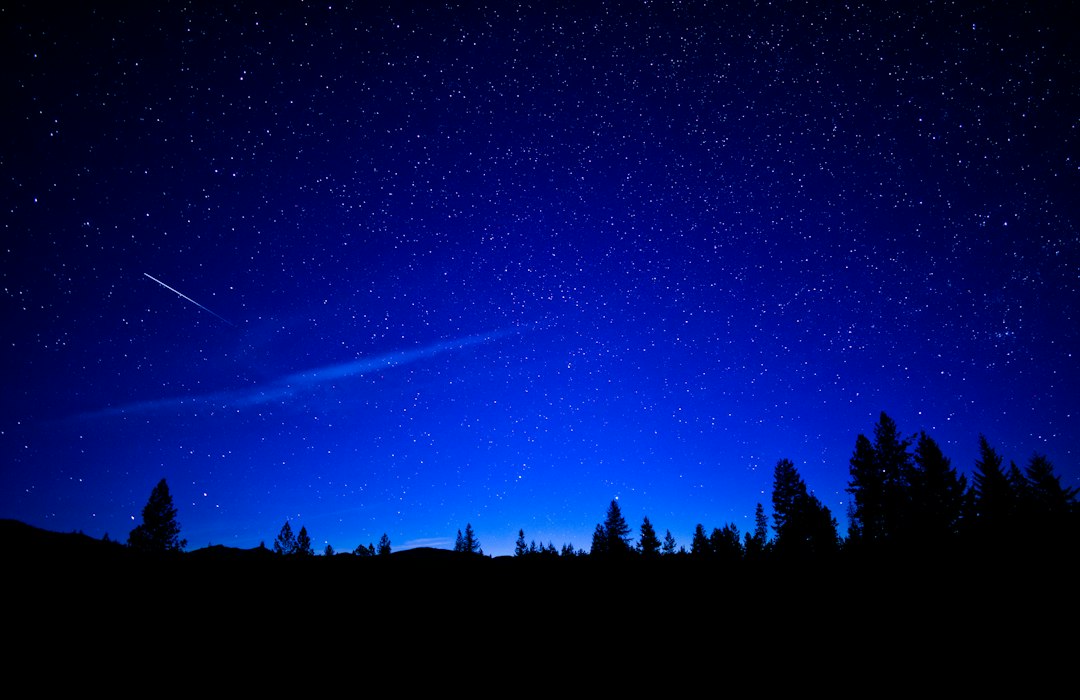
The Orionid meteor shower reaches its peak around Oct. 21, and skywatchers in Canada can expect the best views in the dark hours before dawn, when a bright moon is low or has set, according to the Royal Astronomical Society of Canada’s Observer’s Handbook and the American Meteor Society.
The peak is predicted for 18 UTC on Oct. 21, 2026, which falls at midday in Canada’s Mountain time zone, so the mornings of Oct. 21 and Oct. 22 are the likeliest times to see meteors. EarthSky, which cites the RASC handbook, says the Orionids have a broad, plateau-like maximum, which means several mornings around the peak can produce meteors. Some sources give slightly different peak dates between Oct. 21 and Oct. 23, and the shower is active from about Sept. 26 to Nov. 22.
The moon will get in the way this year. A bright waxing gibbous moon will be up for much of the night, and the full moon arrives at 4:12 UTC on Oct. 26, EarthSky said. The moon sets a few hours before dawn, which leaves the darkest sky in the early-morning hours. Moonlight washes out fainter meteors, so viewers should expect to see fewer than the textbook rates.
Under a dark sky with no moon, the Orionids typically produce about 10 to 20 meteors an hour, EarthSky said. The American Meteor Society noted that in exceptional years, such as 2006 to 2009, peak rates reached 50 to 75 meteors an hour, but it said “recent displays have produced low to average activity.”
The meteors appear to radiate from a point near the upraised club of the constellation Orion, north of the reddish star Betelgeuse. That point, called the radiant, rises before midnight and is highest in the sky around 6 a.m. local time. Viewers do not need to face any particular direction, because meteors can appear across the whole sky. They often become visible about 30 degrees away from the radiant, so a wide-open, dark viewing area works best.
The Orionids are fast. Meteors enter the atmosphere at about 66 kilometres a second, and about half of them leave persistent glowing trains behind them. The shower also occasionally produces bright fireballs. Most Orionids look white or faintly yellow, though some show green or orange tints.
The shower’s source is Halley’s Comet. Dust particles shed by the comet on the inbound leg of its orbit burn up in Earth’s atmosphere each October to produce the Orionids, while debris from its outbound leg produces the Eta Aquariids in May. Halley’s Comet was last seen in 1986 and returns in 2061.
Weather will decide who sees what. Viewers can check local cloud forecasts and give their eyes about 20 to 30 minutes to adjust to the dark, and they should dress warmly for the late-October chill.
The search term “orionid meteor shower” was trending in Canada on Google Trends on Oct. 19, with more than 2,000 searches.
If you find reporting like this useful, consider supporting Canada News Media, an independent Canadian newsroom with no corporate parent.
Follow Canada News Media
Get the day's top Canadian stories and our two daily 60-second news videos wherever you scroll.
X Threads Facebook Instagram LinkedIn TikTok YouTube Pinterest Reddit Substack Flipboard Newsletter RSS