



Updated Nov. 23, 2026
Clear, new ice should be at least 10 centimetres (four inches) thick for one person to walk on, according to the Lifesaving Society. The Canadian Red Cross gives a higher figure: 15 centimetres (six inches) for walking or skating, 20 for groups and 25 for snowmobiles. Neither group calls ice safe at any thickness.
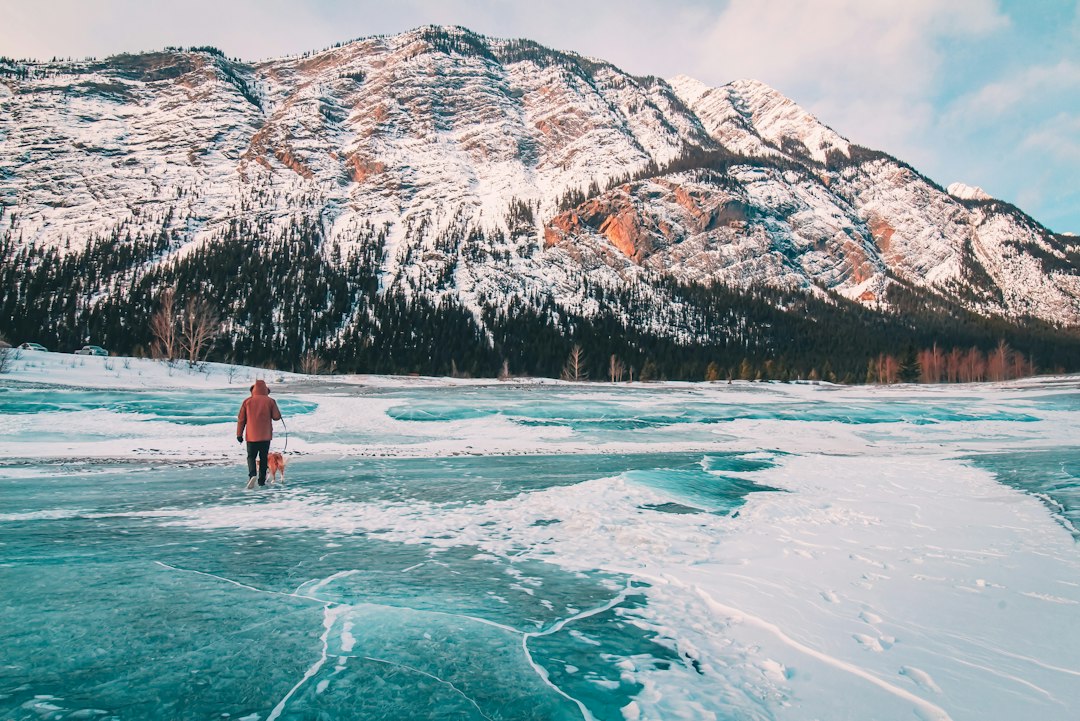
File photo: a person walks across a frozen lake. Photo by Darby P. via Unsplash.
Key facts: safe ice thickness in Canada
| Activity | Lifesaving Society | Canadian Red Cross |
|---|---|---|
| One person on foot (walking, skating, skiing, fishing) | 10 cm (4 in) | 15 cm (6 in) |
| Group skating or games | Not listed | 20 cm (8 in) |
| Snowmobile or ATV | 12 cm (5 in) | 25 cm (10 in) |
| Single car | 20 to 30 cm (8 to 12 in) | Not listed |
| Full-size pickup truck | 30 to 38 cm (12 to 15 in) | Not listed |
| Ice colour | Not addressed | Clear blue is strongest; white is half as strong; grey is unsafe |
The figures come from the Lifesaving Society’s cold water and ice page, its B.C. and Yukon branch and two Red Cross posts, “Is that ice safe?” and “Reality check: ice safety myths.” The web addresses of the Red Cross posts show 2014 and 2016, and the pages carry no visible date, so check with the organization for any newer guidance.
How thick does ice need to be to walk on in Canada?
The Lifesaving Society recommends a minimum of 10 centimetres for a single person to walk, ice fish or cross-country ski, according to its B.C. and Yukon branch. The branch adds that the recommendation is “for new, clear ice under ideal conditions.”
The Red Cross sets the bar higher. Its 2014 post gives a minimum of 15 centimetres for skating, walking or skiing in small groups, and its 2016 post says the same figure applies to walking or skating alone.
The two figures differ by five centimetres, and the pages we read do not explain the gap. The difference matters most on marginal ice, the first cold snap of the season or a lake that has frozen and thawed. A person who wants a single number to work from has a stated 10-centimetre floor from one group and a 15-centimetre figure from the other.
How thick does ice need to be for skating, fishing or a snowmobile?
For a person on foot, both groups give one figure for walking, skating and skiing. The Lifesaving Society applies its 10-centimetre minimum to ice fishing as well.
For groups, the Red Cross says 20 centimetres for larger groups, such as skating parties or games. The Lifesaving Society page we read does not list a group figure.
For motorized travel, the Lifesaving Society lists 12 centimetres (five inches) for a snowmobile or ATV, 20 to 30 centimetres for a single car and 30 to 38 centimetres for a full-size pickup. The Red Cross says 25 centimetres for snowmobiles or ATVs. That is more than double the Lifesaving Society’s figure for the same machine.
What do clear, white and grey ice mean?
Thickness is not the only test. The Red Cross says clear blue ice is strongest, that white opaque or snow ice is half as strong as blue ice, and that grey ice is not safe. Its 2014 post adds that the strongest ice is clear black, blue or green.
The Red Cross also says floating ice on open water, such as ponds, rivers and lakes, is never considered 100 per cent safe, regardless of thickness. The Lifesaving Society advises checking the weather and avoiding ice on warm or stormy days.
Is 12 centimetres of ice safe? A worked example
Take a pond with 12 centimetres of clear ice. For one person walking, that is two centimetres above the Lifesaving Society’s 10-centimetre minimum and three centimetres below the Red Cross figure of 15.
For four friends playing shinny, the Red Cross figure is 20 centimetres, so the ice is eight centimetres short. For a snowmobile, 12 centimetres exactly meets the Lifesaving Society’s number and is less than half of the Red Cross’s 25 centimetres.
Now suppose the same 12 centimetres is white, snow-covered ice. Using the Red Cross rule that white ice is half as strong as blue, it would be roughly equal to six centimetres of clear blue ice, below every walking figure in the table. The same measurement can pass or fail depending on colour, activity and which guideline you follow.
What should you carry and who should go with you?
The Lifesaving Society says to never go on the ice alone, so a buddy may be able to rescue you or go for help. It also says to carry ice picks, an ice staff, a rope and a cellphone. Its B.C. and Yukon branch recommends a thermal protection buoyant suit to improve your chances of survival if you go through.
The ice-thickness figures are minimums for new, clear ice, not a guarantee.
What should you do if you fall through the ice?
The Lifesaving Society says not to panic, because the clothes you are wearing will trap air and keep you buoyant. Turn toward the direction you came from. Spread your arms across the unbroken ice, kick your legs and push forward, then spread your weight out as you slide onto the surface.
Once you are out, the Society says not to stand up. Roll, crawl or shimmy away from the break until you reach solid ice or land.
The Society’s 1-10-1 rule describes the time available. You have one minute to control your breathing, 10 minutes to get yourself out of the water before you lose the ability to move your body effectively, and, with a lifejacket on and in the right conditions, up to one hour before hypothermia sets in.
How many people die on the ice in Canada?
The Lifesaving Society says about 35 per cent of drownings in Canada occur from October to April. Its page says more than eight in 10 unintentional ice-related deaths are males, almost two in five happened on thin ice, half happened when the person was alone and alcohol was a factor in about one in three. The page does not say which years those figures cover.
Do provinces set their own ice thickness rules?
We did not find a provincial or territorial government standard for safe ice thickness that we could verify for this guide, so we are not publishing a province-by-province table. The two national figures above are the ones we could confirm. If your province or city has published a thickness table or closure notice, check it before going out.
For more winter preparation, see our winter storm prep checklist, our guide to preventing frozen pipes and the date and time of the first day of winter in 2026.
If you find reporting like this useful, consider supporting Canada News Media, an independently owned Canadian newsroom.
Sources: Lifesaving Society, Cold Water and Ice; Lifesaving Society B.C. and Yukon Branch, Ice Safety (page modified March 17, 2025); Canadian Red Cross, “Is that ice safe?” and “Reality check: ice safety myths.” Figures were checked Nov. 23, 2026.
Follow Canada News Media
Get the day's top Canadian stories and our two daily 60-second news videos wherever you scroll.
X Threads Facebook Instagram LinkedIn TikTok YouTube Pinterest Reddit Substack Flipboard Newsletter RSS