


The latest:
Most provinces and territories are advising people not to travel to cottages or hold gatherings on this holiday weekend during the COVID-19 pandemic.
Cottage life is something people are longing for these days, for its spiritual and mental health benefits, Terry Rees, executive director of the Federation of Ontario Cottagers’ Associations, told CBC News earlier in the week.
He said travelling to the cottage is not illegal, but people visiting their vacation properties need to be mindful to the fact that people living in those communities have legitimate worries.
B.C. Health Minister Adrian Dix has asked British Columbians to avoid travel around the province unless it’s absolutely necessary, and if they do hit the road, they should pack their own food and not visit stores in other communities.
Police checkpoints set up last month to slow the spread of the novel coronavirus are coming down on Monday in various parts of Quebec, including between Gatineau and Ottawa, which will allow Ontario residents to go to cottages in the Gatineau Hills.
WATCH | Dr. Theresa Tam urges caution over May long weekend:
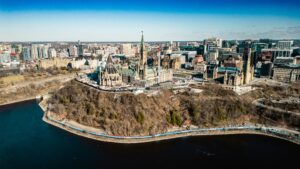
Prime Minister Justin Trudeau is to start his Saturday with what has become his routine daily briefing on the pandemic outside Rideau Cottage, a 22-room heritage
home on the grounds of Rideau Hall, the governor general’s estate.
However, he’ll give no updates Sunday or Monday, when he’s expected to join his family at his official country residence at Harrington Lake, Que.
Trudeau’s travel between the two locations caused something of a furor when he posted an Easter weekend photo of him posing with his wife, Sophie Gregoire Trudeau, and their three children at Harrington Lake.
But the way Trudeau sees it, he’s simply travelling between his work in Ottawa and his family’s home 30 minutes away, across the river in Quebec — just like many other Quebecers.
“Since I work at the residence in Ottawa and I do press conferences every day, it was not ideal for the children to stay there, so they went to the other official residence (at Harrington Lake),” he told popular Quebec television talk show Tout le monde en parle a couple of weeks ago.
“And I spend several nights a week with the family, then I go down to work in the city like many Quebecers who live in the Outaouais.”
He added: “I think people understand that I have to work in Ottawa even if I live a lot with my family in Quebec.”
At Saturday’s daily briefing, Trudeau is expected to focus on a one-time boost to the Canada Child Benefit, which goes into effect next week, to help families cope with the economic devastation wrought by the pandemic.
WATCH | At Issue: The politics of pandemic spending:
Families that were entitled to the benefit in April and still have an eligible child in their care this month will get up to $300 extra per child as part of their regular monthly payment.
Trudeau is also expected to highlight various federal measures aimed at helping charities and women’s shelters weather the crisis.
Ahead of the long weekend, Alberta’s Chief Public Health Officer Dr. Deena Hinshaw announced the province is increasing the limit on outdoor gatherings. Up to 50 people can now gather, raised from the previous limit of 15. Still, Hinshaw warned, Albertans must continue to practise physical distancing.
WATCH | Summer camps face cancellations and uncertainty:
“In well-ventilated, open spaces, there can be less of a risk in those contexts as long as people are following the guidelines,” Hinshaw said at a Friday briefing

New Brunswick, Nova Scotia and Newfoundland and Labrador are similarly allowing families to slightly relax their physical distancing measures over the holiday weekend thanks to recently implemented “double bubble” rules in which two households can agree to spend time together exclusively. Nova Scotia additionally announced public beaches will be opened, though physical distancing will need to be observed and groups can be no larger than five people.
Emergency wage subsidy extended until end of August
The federal government’s emergency wage-subsidy program will be extended until the end of August to help employers keep their workers on the payroll during the coronavirus pandemic, Prime Minister Justin Trudeau said on Friday.
The $73 billion wage-subsidy program, which covers 75 per cent of an eligible company’s payroll up to a maximum of $847 per week per employee, was originally set to expire next month.
WATCH | Some good news from around the world this week:
Statistics Canada’s Labour Force Survey data estimates that more than three million jobs have been lost during the COVID-19 crisis.
Heading into the weekend, Air Canada said it will lay off about 20,000 of its employees, more than half its total workforce, by June 7. The company says even with the now-extended federal wage subsidy program, it does not see the industry returning to normal in time to save those jobs.
Air Canada has been forced to ground some 225 airplanes and slash flight capacity by 95 per cent due to border shutdowns and a sharp drop in demand for travel.
As of early Saturday, Canada had 74,613 confirmed and presumptive coronavirus cases, with 36,908 of those considered recovered or resolved. A CBC News tally of COVID-19 deaths based on provincial health data, regional information and CBC’s reporting stood at 5,664.
While most cases of coronavirus are mild or moderate, some people — particularly the elderly or those with underlying health issues — are at higher risk of severe disease or death. There are no proven vaccines or treatments for the novel coronavirus, which causes an illness called COVID-19.
Here’s what’s happening in the provinces and territories:
On Friday, Newfoundland and Labrador marked its eighth straight day without new cases. “This is no small feat, and serves as a good reminder of what we can achieve by working together,” Chief Medical Officer of Health Dr. Janice Fitzgerald said at Friday’s daily briefing. Read more about what’s happeneing in N.L.
Nova Scotia is entering the second phase of reopening, Chief Medical Health Officer Dr. Robert Strang announced Friday. The province is introducing an immediate-family bubble, which would let two households come together without physical distancing.
Friday also marks the opening of lobster season. But fishermen are setting their traps amid concerns that COVID-19 has depressed the market through decreased demand and reduced capacity of plants to process lobster where physical distancing on the line could cut into how much they can produce. On Thursday, the federal government pledged close to $470 million to support fish harvesters.
WATCH | Obesity could cause more severe COVID-19 illness:
New Brunswick‘s chief medical officer of health has announced that another person has recovered from COVID-19 in the province. It has been nine days since the province has reported any new cases. But Dr. Jennifer Russell is reminding the public to protect themselves over the upcoming long weekend by keeping to their respective two-family-household bubbles and following physical distance guidelines. Read more about what’s happening in New Brunswick.
P.E.I.’s plan to launch Phase 3 of its ease-back plan will be expedited to an expected start of June 1 from June 12, said Premier Dennis King during an afternoon media briefing Friday. Read More about what’s happening in P.E.I.

The Quebec government is donating one million masks to the greater Montreal region and $6 million in funding for public transit in the region, Premier François Legault announced Friday. Meanwhile, four Canadian soldiers serving in Quebec long-term care homes have tested positive for COVID-19, as did one soldier assisting with long-term care homes in Ontario. Prime Minister Justin Trudeau confirmed news of the infections at his Friday morning media availability but did not provide details.
“There are always risks in what they do and they go into that knowingly and willingly, and that is why we offer them our deepest gratitude every day,” Trudeau said. Read more about what’s happening in Quebec.
WATCH | Lobster fishermen must learn how to physically distance on a small boat:
Ontario‘s Health Minister Christine Elliott reported a “glitch” in the province’s COVID-19 reporting Friday, which caused some new cases to be missed in yesterday’s update. At the province’s daily news briefing Friday afternoon, Elliott said the problem arose when cases out of Toronto weren’t uploaded into Ontario’s system. That finding comes a day after the province announced plans for the first phase of reopening. Read more about what’s happening in Ontario, including how Toronto extended the cancellation of major festivals and called off all city-run summer camps and recreation programs on Friday.
WATCH | Why the pandemic is sparking so many first-time gardeners:
No new cases were reported in Manitoba on Friday for the fourth day in a row. While the numbers remain low in the province, there is still a worry about re-importation of the virus, especially if people start travelling this long weekend, said Dr. Brent Roussin, Manitoba’s chief public health officer.
He is urging everyone to be “COVID careful” and continue to stay at home despite the warm weather that’s moving in. Read more about what’s happening in Manitoba, including what’s expected for restaurant visits in the province.

First Nations residents of northern Saskatchewan say highway bans and checkpoints put in place to try to prevent the spread of COVID-19 between different areas of the province has created a double standard and alienated them. Some residents say that although they’re supposed to be allowed to leave their communities for essentials such as shopping, that hasn’t happened — leaving them unable to access affordable groceries and supplies only available at larger stores in southern towns and cities.
Eight more cases of COVID-19 were reported in the province on Friday, all of them in the far north region. Read more about what’s happening in Saskatchewan.
Alberta is relaxing restrictions around outdoor gatherings, Chief Medical Officer of Health Dr. Deena Hinshaw announced Friday. Outdoor gatherings can now consist of as many as 50 people, as long as members of different households stay two metres apart.
Earlier, Hinshaw said the province should know within a week if yesterday’s reopening of bars, restaurants and some other businesses in most areas will lead to a surge in new cases. Read more about what’s happening in Alberta.
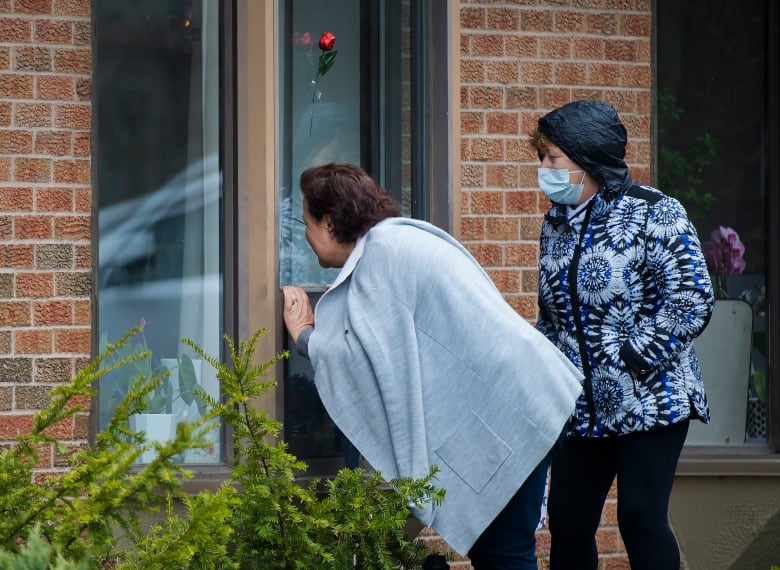
A new COVID-19 outbreak has been detected at a British Columbia food facility, officials said Friday afternoon. The outbreak is at the Oppenheimer Group, a fruit and vegetable processing plant in Coquitlam. According to the statement, there are two cases connected to the facility. Read more about what’s happening in B.C.
The Northwest Territories is entering the first phase of its COVID-19 recovery plan, affecting both indoor and outdoor gatherings, as well as the reopening of some businesses. Read more about what’s happening across the North, including Yukon’s announcement that they will also begin to ease restrictions.
Here’s a look at what’s happening around the world:
As of Friday night, there were more than 4.5 million confirmed cases of coronvirus around the world, according to a database tracking system maintained by the coronavirus resource centre at Johns Hopkins University. A quarter of those cases (more than 1.4 million) were in the United States.
According to the tracking system, COVID-19 has killed roughly 307,000 people globally. It says the 10 most affected countries at this time, based on the reported number of deaths, are the U.S., the U.K., Italy, France, Spain, Brazil, Belgium, Germany, Iran and Canada.