


Spanish Prime Minister Pedro Sánchez has called an early general election for Nov. 29, months ahead of schedule, after his minority government lost parliamentary votes on emergency housing measures.
The vote puts a housing crisis of rising rents and evictions at the centre of Spanish politics. Recent polls reported by the Boston Globe show the conservative Popular Party (PP) leading with more than 30 per cent, the Socialist Party (PSOE) at about 26 per cent and the far-right Vox at about 18 per cent. The report did not name the pollsters.
Sánchez announced the election on Monday, Oct. 5. The Boston Globe said the government’s emergency housing measures were defeated the previous Friday, Oct. 2, and that his left-wing coalition does not hold a majority in parliament. KRDO reported that the government had lost votes on two proposed housing laws in the days before.
Sánchez said Spain must mobilize to win a much larger progressive majority in parliament, according to both reports. The Boston Globe said he cast the choice as one between Spain as “a bastion of social justice” and “the far-right wave.”
The campaign follows nationwide housing protests. KRDO reported that they followed the eviction of an 87-year-old woman in Madrid whose rent, the outlet said, had risen from €500 to €2,650. The Boston Globe said Sánchez’s popularity has also been hurt by corruption accusations against his inner circle and by the arrival in July of tens of thousands of migrants from Morocco into Ceuta, a Spanish territory in North Africa.
PP leader Alberto Núñez Feijóo said “Finally, the Spanish people will decide,” and described housing as “out of reach,” the Boston Globe reported. Vox leader Santiago Abascal said his party was “ready” for the vote. Both parties focus heavily on immigration. The Boston Globe and KRDO both said a PP-led government backed by Vox is the most likely outcome in current polling.
Pablo Simón, a political science professor at Carlos III University of Madrid, said Sánchez will likely argue that a right-wing coalition would threaten social rights, including housing, and called a renewed left-wing government unlikely, the Boston Globe reported.
On the economy, the Boston Globe reported that Goldman Sachs expects Spain to grow 2.1 per cent this year, about three times its forecast for the eurozone, and that unemployment is just below 10 per cent, the lowest since 2008. Euronews reported on Oct. 10 that Sánchez has opened his campaign with housing as its central theme.
For Canadians, the federal travel advisory for Spain, as read on travel.gc.ca on Oct. 11, advises normal security precautions. It says demonstrations may occur, can turn violent and can disrupt transport, including flights and rail. The page carried no update date and no mention of the election. We found no comment on the vote from the Canadian government.
In another European election story this week, Italy’s parliament passed Prime Minister Giorgia Meloni’s election law on Oct. 9, as we reported.
Spaniards vote on Nov. 29. Polls from named pollsters will show whether the PP lead holds as the campaign gets under way.
If you find reporting like this useful, consider supporting Canada News Media, an independent Canadian newsroom with no corporate parent.
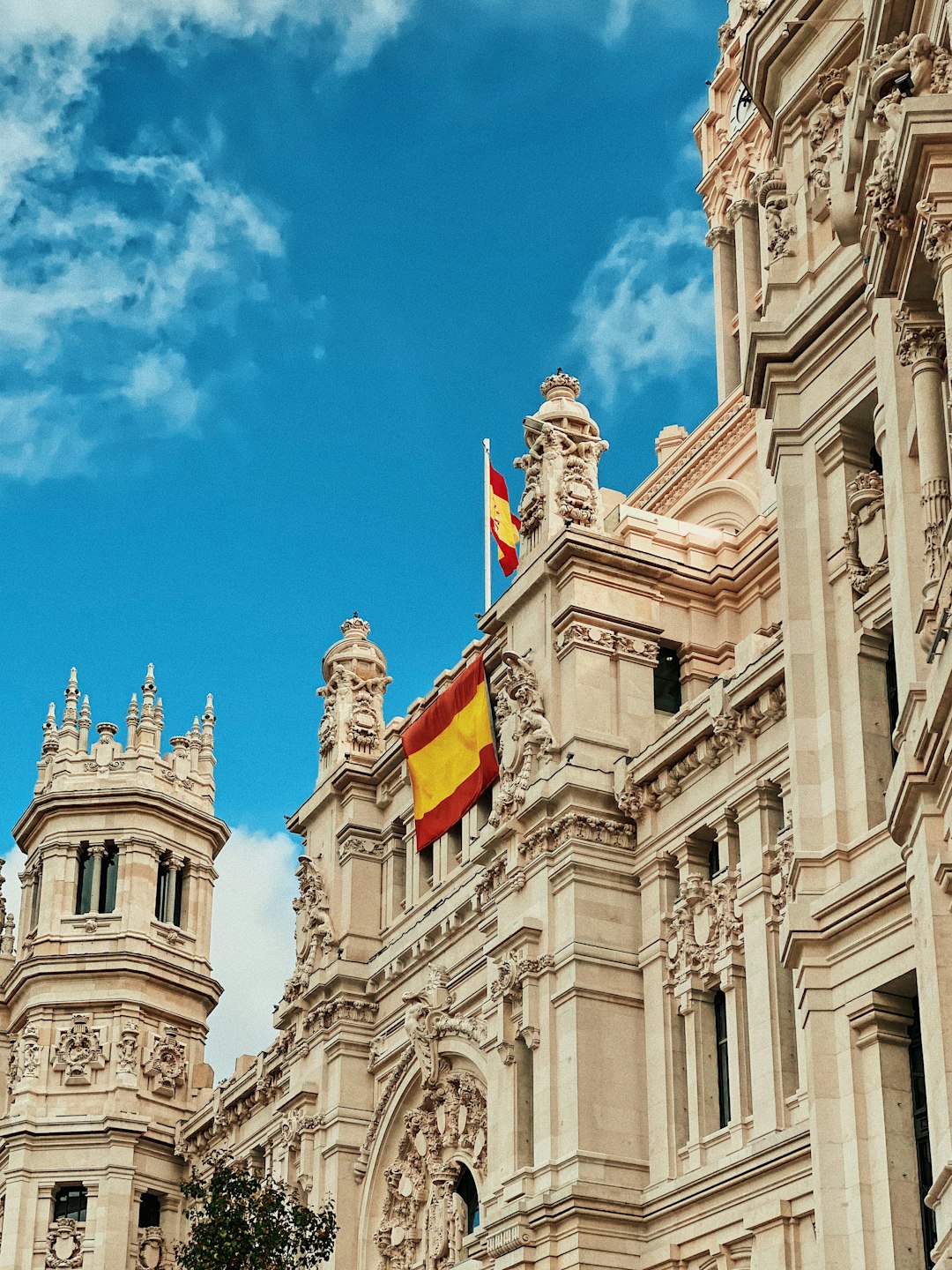
Via the Boston Globe and KRDO, with additional reporting from Euronews. Canadian travel advice from travel.gc.ca. The photo is a file image of a Spanish flag on a building, by Álvaro Bernal via Unsplash, and does not show the campaign or the vote.
Follow Canada News Media
Get the day's top Canadian stories and our two daily 60-second news videos wherever you scroll.