

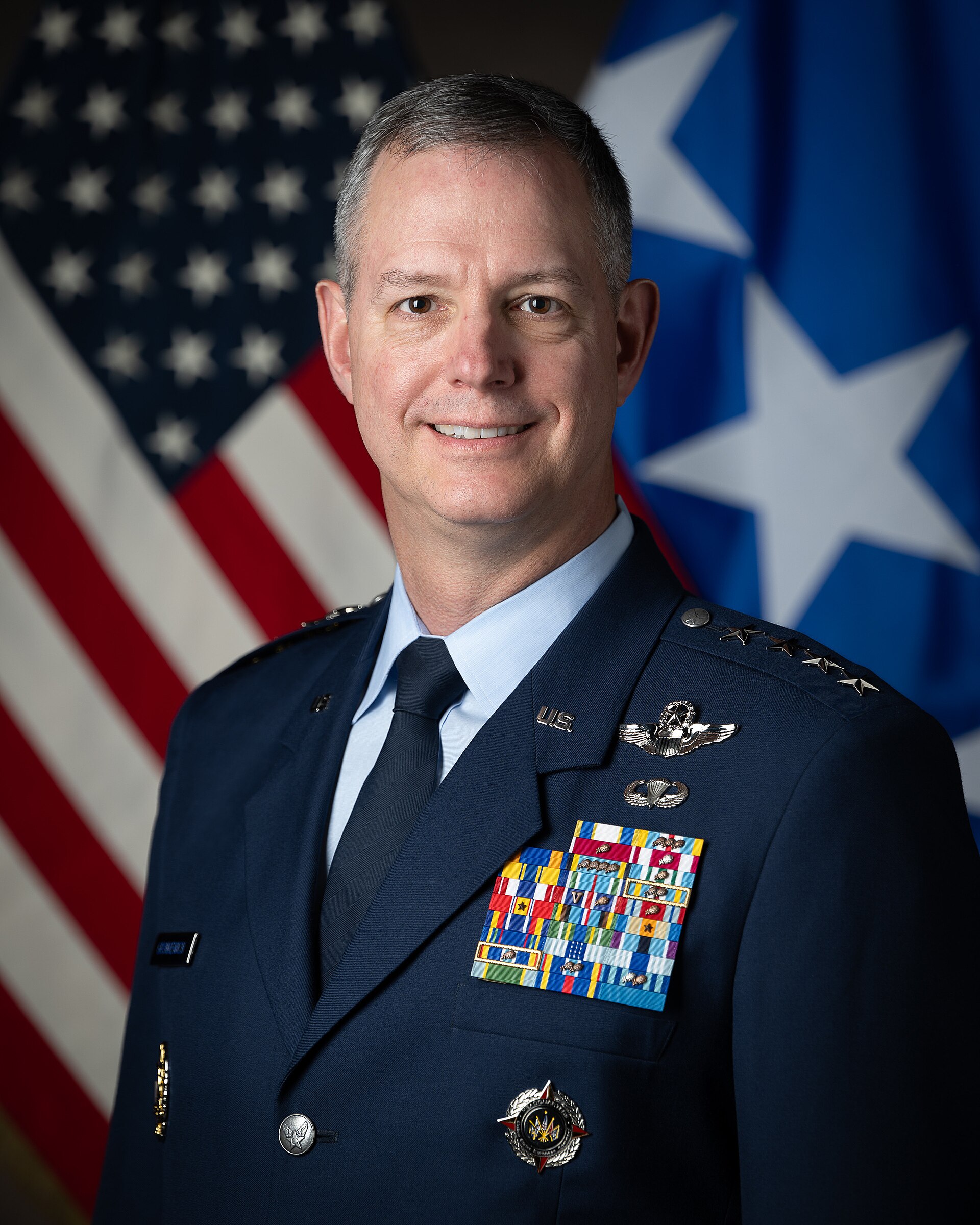
NATO’s supreme allied commander in Europe, U.S. Air Force Gen. Alexus Grynkewich, made public the core of the alliance’s classified war plan on Monday, Oct. 12, 2026, describing a three-step response to any attack: block it, blunt it and break the force behind it.
Grynkewich said the plan, which NATO calls its “theory of victory,” was finalized in classified form about three months ago and was released to reassure the alliance’s 32 member countries, Stars and Stripes reported. Speaking at the Warsaw Security Forum, he said: “What I want to do is assure the 1 billion citizens of our alliance that we’ve got this,” according to the Boston Globe.
In the first phase, NATO ground forces would stop an invasion at the point of attack to prevent a fait accompli, Stars and Stripes reported. In the second, air and naval forces, backed by space and cyber capabilities, would use sensors, drones and coordinated strikes to halt an attacker’s momentum. In the third, NATO would dismantle the logistics, communications and command systems supporting the assault.
Grynkewich did not name Russia, but Reuters reported that the remarks were clearly aimed at Moscow. He said an attack on any member would prove “utterly futile” and that NATO would destroy the forces, support systems and command and control behind it, even beyond the area attacked.
He also said NATO does not seek a strategic defeat of Russia and does not see a military clash as “imminent or inevitable,” according to Stars and Stripes and the Boston Globe. The Boston Globe reported that the plan pairs precision weapons with what he called “affordable mass,” meaning large numbers of drones, autonomous systems and electronic warfare assets.
“Implementing the theory of victory I’ve described today would require me to issue orders that I hope to never give,” Grynkewich said in Warsaw, the Boston Globe reported.
The disclosure comes as European governments accuse Moscow of sabotage, drone incursions and cyberattacks, Reuters reported. It also said Russia warned last month it would use nuclear weapons if NATO tried to cut off its Kaliningrad exclave. The Boston Globe reported that Michal Koudelka, director of the Czech Security Information Service, told his parliament on Oct. 12 that Russia could escalate “in a matter of months rather than years to a significantly riskier and more serious operation.”
Russian officials have dismissed such warnings. Foreign Minister Sergey Lavrov told a UN General Assembly meeting in September: “We have no intention to fight Europe, to engage in warfare with Europe; that is utter nonsense,” the Boston Globe reported. He also said that “Europe is preparing for war with us,” which he said could become “a self-fulfilling prophecy.” Claims on both sides could not be independently verified, and the classified plan itself has not been published in full.
For Canada, the plan bears directly on its largest overseas military mission. Canada is the framework nation for the NATO Multinational Brigade in Latvia, which has about 3,000 personnel from 14 allies, according to an Aug. 26, 2025, release from the Prime Minister’s Office. The release said Canada would finish fully implementing the brigade’s persistent capabilities by 2026, bringing up to 2,200 Canadian Armed Forces members to NATO’s forward land forces and supporting elements in Latvia.
In that release, Prime Minister Mark Carney said: “To secure lasting peace in Ukraine and Europe, we must deter and fortify.”
Grynkewich also pointed to U.S. troops stationed in Poland and across the eastern flank, and said NATO must be ready for a European conflict even if U.S. forces are engaged elsewhere, including the Indo-Pacific, Stars and Stripes reported. He rejected doubts about Article 5, the alliance’s mutual-defence clause, citing its reaffirmation by all 32 allies at a recent summit in Turkey.
The war plan lands in the same week as a European Union leaders’ summit set for Oct. 15 on energy prices, the budget and Ukraine, which Canada News Media previewed on Oct. 12. On Oct. 13, Ukraine said allies had given no warning of missile strikes on Kyiv.
Via Reuters, Stars and Stripes and the Boston Globe.
If you find reporting like this useful, consider supporting Canada News Media, an independent Canadian newsroom with no corporate parent.
Follow Canada News Media
Get the day's top Canadian stories and our two daily 60-second news videos wherever you scroll.
X Threads Facebook Instagram LinkedIn TikTok YouTube Pinterest Reddit Substack Flipboard Newsletter RSS