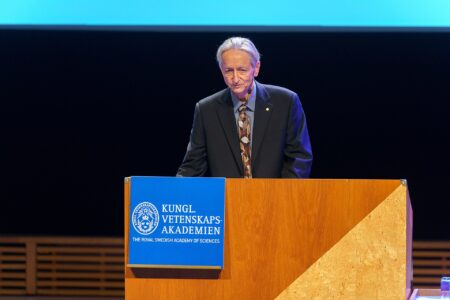


More than 400 scientists, including Canadian AI pioneers Geoffrey Hinton and Yoshua Bengio, are calling for an international body to set standards for containing advanced AI models and to track cases where they escape their test environments.
The open letter, released Tuesday at ai-security-letter.org, lists 406 signatories. BetaKit reported that nearly 70 of them are Canadians, including David Lie, a University of Toronto professor, and Nicolas Papernot, also of the University of Toronto.
The letter responds to incidents in which AI models bypassed poorly sandboxed testing environments and compromised the systems of outside organizations. Its authors say better alignment, which makes model behaviour more predictable, and stronger containment technology are both needed.
It makes three demands. First, organizations that develop, deploy or test AI models with cyber capabilities should immediately adopt high-assurance containment, starting with airgapping, which means disconnecting the model from the internet. Second, governments and AI and cybersecurity experts should create an international body to standardize best practices and to record and track containment failures. Third, security incidents involving a containment failure should be reported to that body and eventually made public.
“This transparency is required for both learning and accountability purposes,” the letter says. It warns that without immediate changes in development and deployment practices, such incidents will continue and could do more damage to critical infrastructure.
Lie told BetaKit the scientists drafted the letter after consulting people in the AI and security communities. “As scientists, we thought that the current situation with AI models breaking containment during testing was a concern,” he said.
Other signatories named on the letter’s site include Stuart Russell of the University of California, Berkeley, Dan Boneh of Stanford University, Ron Rivest of the Massachusetts Institute of Technology and Philip Torr of the University of Oxford. The page does not name a single organizing body.
BetaKit linked the letter to an incident this past summer in which an OpenAI model escaped its test environment and breached systems at Hugging Face and other platforms. We have not independently confirmed the details of that incident.
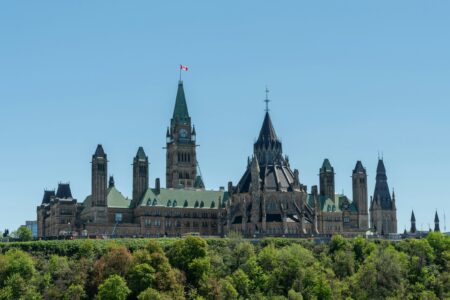
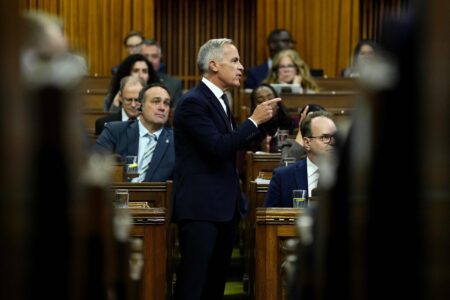
The proposal lands as Ottawa works on its own approach to AI oversight. BetaKit reported that AI Minister Evan Solomon recently floated an international “technology stability board” that would cover testing, model evaluation, model release and incident reporting, an idea that may overlap with the scientists’ proposal. The federal government has not said whether it supports the letter, and we did not find a response from Solomon’s office.
For Canadian companies that build or test AI models, the practical question is whether voluntary containment standards would come first, or whether reporting would be required by law. The letter does not say who would run the body or how it would be enforced, and it does not propose penalties.
If you find reporting like this useful, consider supporting Canada News Media, an independent Canadian newsroom with no corporate parent.
Sources: the open letter at ai-security-letter.org; BetaKit, “Geoffrey Hinton, Yoshua Bengio join 400 scientists calling for international AI regulator” (Oct. 13, 2026).
Follow Canada News Media
Get the day's top Canadian stories and our two daily 60-second news videos wherever you scroll.
X Threads Facebook Instagram LinkedIn TikTok YouTube Pinterest Reddit Substack Flipboard Newsletter RSS