


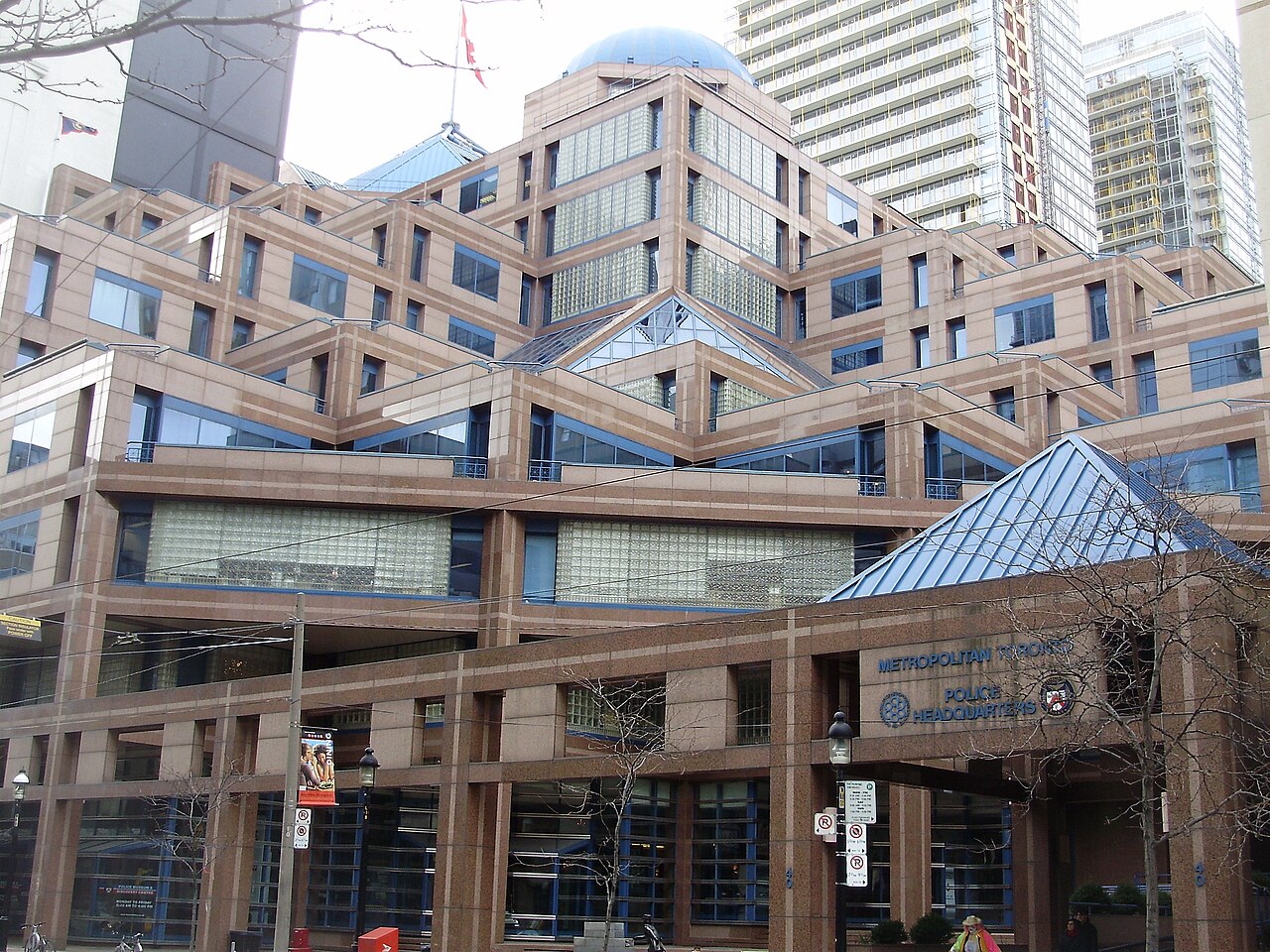
The Ontario Human Rights Commission found in August 2020 that Toronto police charged Black people at 3.9 times the rate of white people, according to the second interim report of its inquiry into the Toronto Police Service, titled A Disparate Impact.
The commission analyzed Toronto Police Service charge and arrest data from 2013 to 2017, and lower-level use-of-force data from 2016 and 2017. Black people made up 8.8 per cent of Toronto’s population in the 2016 census but received 32.4 per cent of charges, the report said. Their charge rate was 7.1 times that of people from other racialized groups.
The gap varied by offence. Black people were 37.6 per cent of those involved in cannabis possession cases and were 4.3 times more likely to be charged. They were 42.5 per cent of those involved in obstruct justice cases, or 4.8 times their population-predicted share. For other drug possession, they were 28.5 per cent of those involved and 3.2 times more likely to be charged. Black males were 29.1 per cent of charges while making up about four per cent of the population, and their charge rate was 4.5 times that of white males.
The data also showed what happened to the charges. Across all people, 49.7 per cent of charges were withdrawn, 5.7 per cent were dismissed or stayed, and 20.2 per cent ended in a conviction. The report said Black people were over-represented among withdrawn charges and less likely than white people to be convicted.
On force, the report found Black people were involved in 38.9 per cent of lower-level use-of-force cases in 2016 and 2017. Relative to their share of the population, they were 2.7 times more likely to suffer broken bones, 4.7 times more likely to have a Taser-related injury and 6.6 times more likely to experience chest pain from force. The research team, which included Dr. Scot Wortley and colleagues, wrote that “the data suggest that race is a stronger predictor of police use of force than either crime rate or median household income.”
The 2020 report followed an interim report the commission released on Dec. 10, 2018, which examined cases investigated by the province’s Special Investigations Unit from 2013 to 2017. That report found a Black person was nearly 20 times more likely than a white person to be involved in a fatal police shooting in Toronto. Black people accounted for about 70 per cent of fatal shootings, the commission said.
“Our interim findings are disturbing and call for immediate action,” Renu Mandhane, then the commission’s chief commissioner, said in the 2018 release.
The Toronto Police Service and the Toronto Police Services Board said in a joint statement at the time that they accepted the commission’s five interim recommendations, Global News reported. They said collecting race-based data on stops, searches and use of force would require study and consultation, and that the commission’s methodology should be scrutinized, though they did not identify specific flaws. Police spokeswoman Meaghan Gray said the force was working to build trust with the Black community and that the discussion should also address poverty, social inequality and the root causes of crime, Global News reported.
In 2020, the commission made two main recommendations. It asked the police service, the police board and the City of Toronto to work with Black communities, organizations and the commission on legally binding remedies for systemic anti-Black bias in policing. It asked the Ontario government to create a legislative and regulatory framework requiring every police service in the province to collect and analyze race-based data across all policing activities, with accountability processes that effectively discipline officers who engage in racial profiling or discrimination.
The commission’s figures compare each group’s share of police activity with its share of the population. They describe disparities in the data. They do not, on their own, establish why any individual stop, charge or use of force occurred.
The reports are part of a longer record of Black Canadians seeking equal treatment from public institutions. We have previously reported on Judge Corrine Sparks and Canada’s first race bias case, and on how Black groups are pushing for a binding UN declaration on rights.
If you find reporting like this useful, consider supporting Canada News Media, an independent Canadian newsroom with no corporate parent.
Follow Canada News Media
Get the day's top Canadian stories and our two daily 60-second news videos wherever you scroll.
X Threads Facebook Instagram LinkedIn TikTok YouTube Pinterest Reddit Substack Flipboard Newsletter RSS