


Heat killed an estimated 50,391 people in 854 European cities between June and August 2026, and about two-thirds of those deaths were due to human-caused climate change, according to a study released Oct. 23 by researchers at Imperial College London and the London School of Hygiene and Tropical Medicine.
The authors estimate that climate change accounted for 65 per cent of the deaths, or 32,619 people. That leaves roughly 17,800 deaths that would have occurred in a summer without human-caused warming, a figure Canada News Media calculated by subtracting the study’s two published totals.
The New York Times reported the findings on Oct. 22, saying the toll was more than three times what it would have been without warming. The estimates are modelled from temperature and mortality records. They are not counts from death certificates.
The report, published by the Grantham Institute and the London School of Hygiene and Tropical Medicine, covers 854 urban areas in 30 countries: the 27 EU members, the U.K., Switzerland and Norway. It covers almost 173 million people. The authors said that is almost 40 per cent of the population of those countries, so the toll across all of Europe, including rural areas, is higher and was not estimated.
Italy had the most modelled deaths, at 13,303, followed by France at 7,268, Spain at 6,824, Germany at 6,340 and the U.K. at 4,354. Adjusted for age and population, the highest rates per million people were in Malta (716), Italy (561), Hungary (537) and Croatia (461). Estonia, Bulgaria and Finland had the highest share of heat deaths attributed to climate change, at 80 per cent or more, although the uncertainty ranges for those countries are wide.
The heat hit the oldest people hardest. The study estimated 22,502 deaths among people aged 85 and older, and about 833 among those aged 20 to 44. Southern Europe had the highest rate, at 380 deaths per million people, against 129 per million in northern Europe.
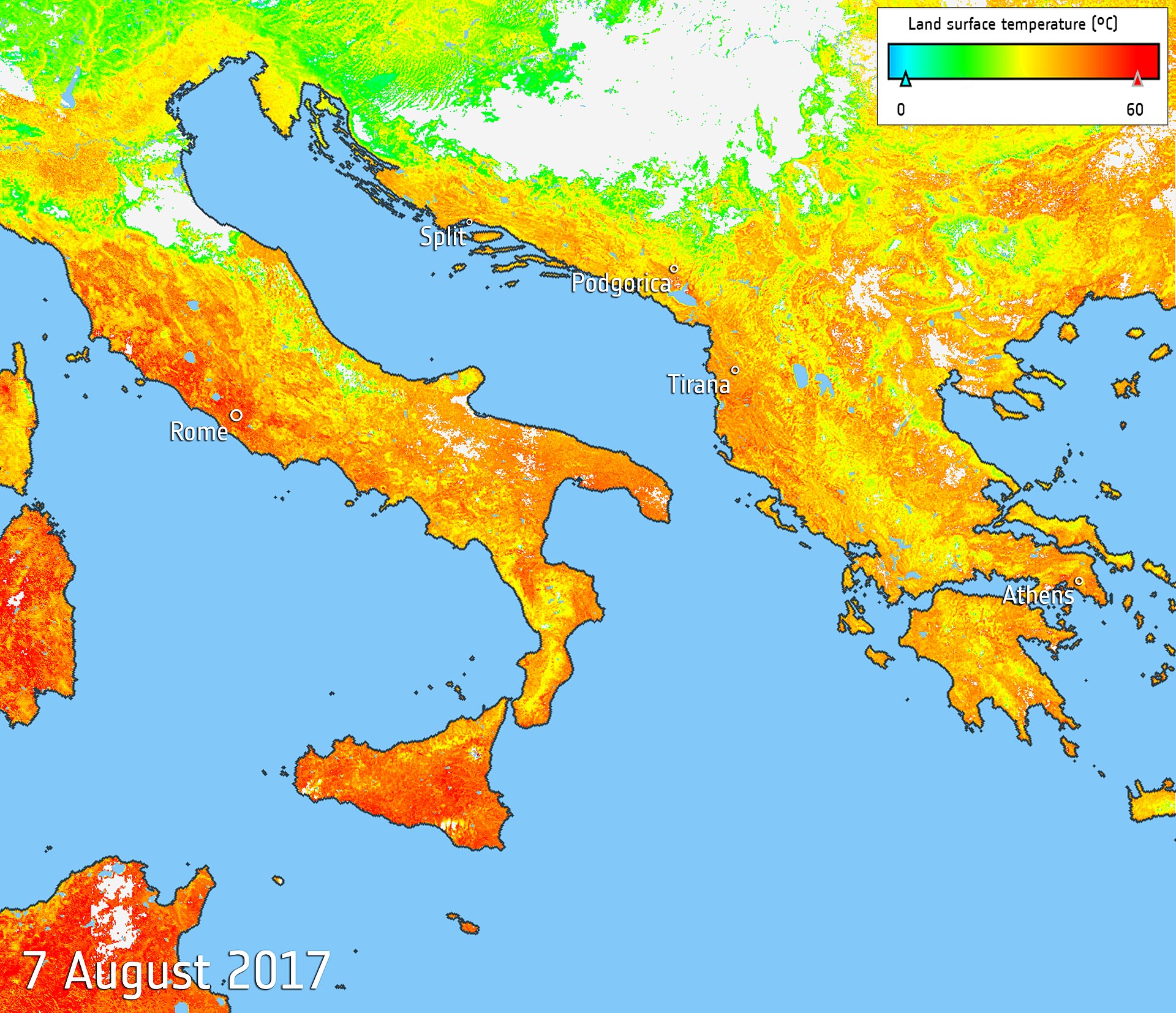
The authors said Europe is about 2.5 C warmer than it would be without human-caused warming. Across the 854 cities, the summer averaged about 2.4 C above the 1991-2020 norm. The paper describes its attribution method as likely to underestimate the effect of warming.
Using the same method, the team estimated 29,480 heat deaths in the summer of 2022, 28,462 in 2003 and 24,572 in 2025. This summer’s estimate is the highest of the four. A 2025 study by the same group found about 24,400 heat deaths in the same 854 cities, with climate change responsible for 68 per cent.
National health agencies have published lower counts, which the authors said are hard to compare because they cover different periods. Santé Publique France reported 5,764 deaths from June 17 to July 2. The U.K. Health Security Agency reported 2,124 for England and Wales from June 21 to 28. Germany’s Robert Koch Institute estimated about 16,000 over weeks 15 to 36, and Spain’s MoMo monitoring system recorded 5,123 from June to August.
The study carries a caution on timing. The copyright line on the Imperial record reads 2025, and the authors build on a methods paper accepted by the journal Nature Health. Canada News Media has not confirmed whether the 2026 report itself has been peer reviewed.
For Canadians, the findings bear on summer travel and on family ties. Canada’s official travel advice site, travel.gc.ca, publishes country-by-country advisories, and the countries with the highest modelled death rates, Italy, Malta, Hungary and Croatia, are popular destinations. Large Canadian communities with roots in Italy and Croatia have relatives in the hardest-hit countries. For related coverage, see our earlier reports on dangerous heat days added by climate change in 2024 and of wildfire smoke deaths linked to climate change.
The authors said the summer was the third hottest on record for Europe as a whole, citing the EU’s Copernicus climate service, and the hottest on record for western Europe. Canada News Media has not independently checked that ranking. The full report and its data tables are available from Imperial College’s repository.
Via The New York Times. Study: Barnes et al., Grantham Institute and London School of Hygiene and Tropical Medicine, Oct. 23, 2026.
If you find reporting like this useful, consider supporting Canada News Media, an independent Canadian newsroom with no corporate parent.
Follow Canada News Media
Get the day's top Canadian stories and our two daily 60-second news videos wherever you scroll.
X Threads Facebook Instagram LinkedIn TikTok YouTube Pinterest Reddit Substack Flipboard Newsletter RSS