


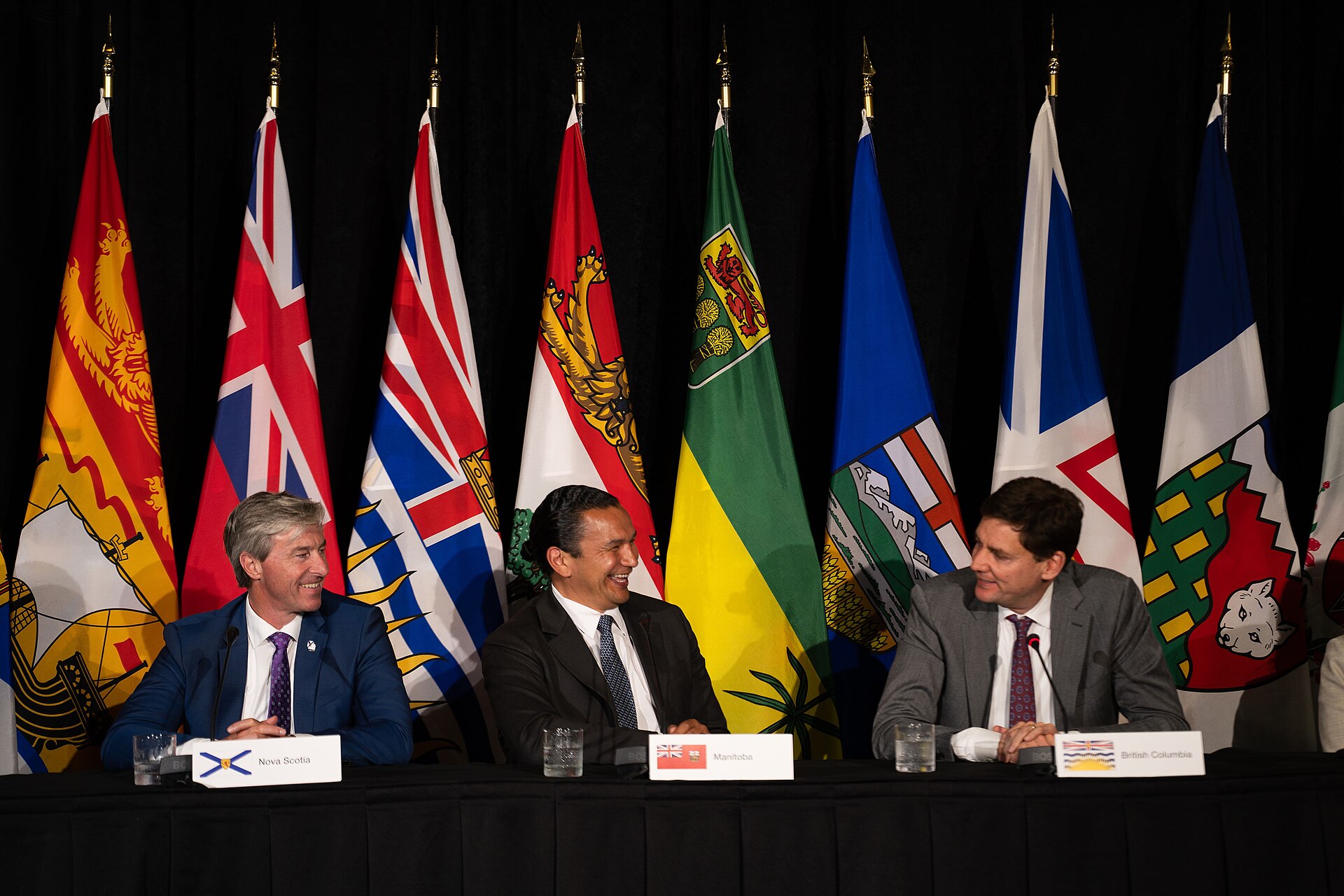
Manitoba Premier Wab Kinew told Prime Minister Mark Carney on Monday that Canada should abolish the Indian Act, and Carney said he shares the view and is committed to a process that moves the country beyond it.
Kinew made the case in Ottawa during a meeting between Carney, premiers and First Nations leaders, according to reports from CBC, CTV News and APTN News. He held up his own status card to make the point, saying it identifies him as an Indian within the meaning of the act.
Kinew said any change must be done with First Nations people and First Nations governments, not imposed on them. He later described the reception from his fellow premiers and the prime minister as open-minded.
Carney responded the same day. He said he agrees with Kinew and is committed to a process that moves Canada beyond the Indian Act, according to reporting by CTV News and The Canadian Press. The Canadian Press also reported that Carney clarified a new review process will not necessarily lead to the legislation being scrapped.
That distinction matters. A commitment to a process is not a commitment to repeal, and no timeline, bill or consultation structure had been announced in the coverage reviewed by Canada News Media.
The Indian Act came into effect in 1876. It consolidated earlier colonial laws and gave the federal government control over almost every aspect of First Nations life, including how communities were governed, who counted legally as an Indian and how reserve land could be used. It also underpinned the residential school system and, for decades, banned ceremonies such as the potlatch and the sun dance.
Parliament has amended the act many times, including to remove some of its harshest provisions and, in recent years, to address sex-based discrimination in how Indian status is passed down. It nonetheless remains the main legal framework governing First Nations in Canada, which is why calls to abolish it have come up in Indigenous politics for generations.
Some First Nations leaders have long argued that scrapping the act without a replacement in place could strip away protections, treaty-related obligations and programs that depend on it. Others say it should be replaced with recognition of First Nations self-government. Kinew’s call, made in front of the prime minister and the chiefs, is notable because he is Manitoba’s first First Nations premier.
The meeting comes as Ottawa is also dealing with First Nations emergency management and funding. Carney on Monday pledged $2.5 billion for First Nations emergencies, a separate announcement from the Indian Act discussion. Quebec’s premier is also set to meet First Nations leaders on Wednesday.
Searches for the Indian Act were trending in Canada on Tuesday, according to Google Trends. The federal government had not published details of the review process Carney referred to as of Tuesday morning.
If you find reporting like this useful, consider supporting Canada News Media, an independent Canadian newsroom with no corporate parent.
Sources: CBC News, CTV News, APTN News and The Canadian Press.
Follow Canada News Media
Get the day's top Canadian stories and our two daily 60-second news videos wherever you scroll.
X Threads Facebook Instagram LinkedIn TikTok YouTube Pinterest Reddit Substack Flipboard Newsletter RSS