

The Bank of Canada’s quarter-point rate hike on Wednesday adds about $68 a month, or roughly $816 a year, to the payment on a $500,000 variable-rate mortgage with a 25-year amortization, according to a worked example published by Yahoo Finance Canada.
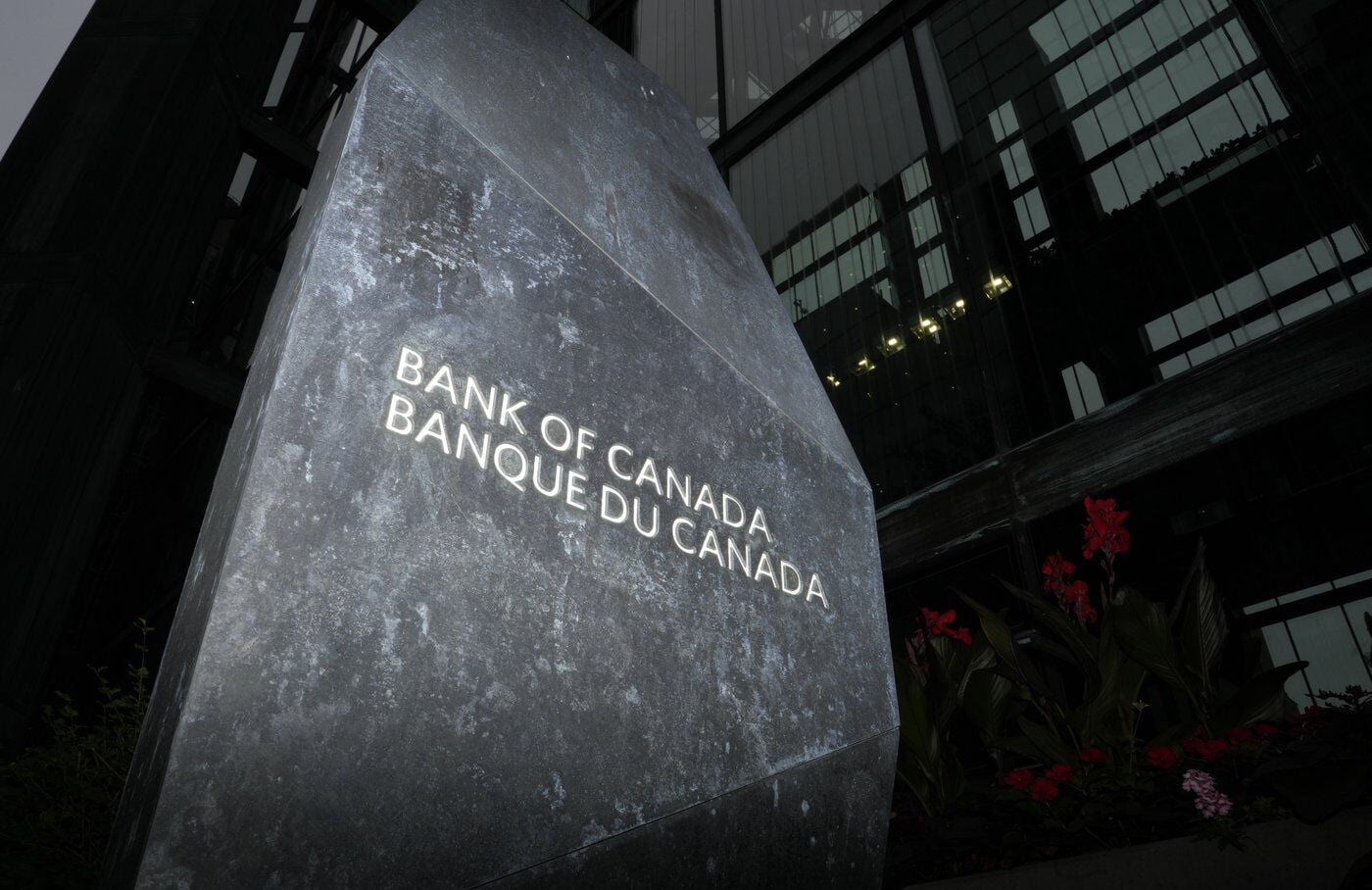
The Bank of Canada raised its key policy rate to 2.5 per cent on Oct. 28, its first increase since July 2023, as we reported. Governor Tiff Macklem said further increases could follow, but that the Bank would “proceed carefully.”
Prime was 4.45 per cent before the decision, according to Ratehub. A matching quarter-point move would lift it to 4.70 per cent, Yahoo Finance Canada said, but the article did not confirm that any bank had yet changed its prime rate. Banks typically adjust within days. Canada News Media has not seen a bank announcement confirming the new prime rate.
Yahoo Finance Canada used a $500,000 mortgage at prime minus 0.50 per cent, which would take the rate from 3.95 per cent to 4.20 per cent. It put the monthly payment at about $2,617 before the hike and $2,685 after, a difference of about $68.
Canada News Media checked the arithmetic. Using semi-annual compounding, the standard convention for Canadian fixed-rate mortgages, the payments come to $2,616.57 and $2,684.59, a gap of $68.02. With monthly compounding, which some lenders use on variable products, the gap is closer to $69. Actual payments depend on each lender’s contract and whether the variable mortgage has a fixed payment or an adjustable one.
That distinction matters. A holder of an adjustable-rate mortgage sees the payment rise immediately, REMAX said in its guide to the decision. A holder of a fixed-payment variable mortgage keeps the same payment, but more of it goes to interest and the principal is paid down more slowly.
Yahoo Finance Canada also calculated the effect on a home equity line of credit. On a $50,000 balance at prime plus 0.50 per cent, interest-only payments rise from about $206 to about $217 a month.
TD Economics said one more hike would bring the policy rate to 2.75 per cent, the middle of the Bank’s neutral range. If that happened and banks passed on both increases in full, the same $500,000 variable mortgage would move to 4.45 per cent. By Canada News Media’s calculation, using semi-annual compounding, the payment would be about $2,753 a month, roughly $137 more than before Wednesday’s decision. That is a scenario, not a forecast: Macklem did not commit to a path.

Borrowers with fixed rates are shielded for now. TD said fixed-rate mortgages are locked in for their term, and REMAX said fixed-rate borrowers are insulated until renewal. Lenders price fixed rates off bond yields rather than the overnight rate, which is why several big banks had already raised fixed rates by about 0.20 percentage points in late September and October. A C.D. Howe analysis has also warned that higher bond yields will lift payments for homeowners renewing.
The hike lands as the housing market is already softening. The Canadian Real Estate Association has cut its 2026 sales forecast a third time, and Oxford Economics sees prices sliding into 2027.
Sources: Bank of Canada decision of Oct. 28, 2026 as reported by Reuters via BNN Bloomberg and TD Economics; Yahoo Finance Canada (Oct. 28); REMAX Canada; Ratehub prime rate page. Figures labelled as ours are Canada News Media calculations.
If you find reporting like this useful, consider supporting Canada News Media, an independent Canadian newsroom with no corporate parent.
Follow Canada News Media
Get the day's top Canadian stories and our two daily 60-second news videos wherever you scroll.
X Threads Facebook Instagram LinkedIn TikTok YouTube Pinterest Reddit Substack Flipboard Newsletter RSS