


VANCOUVER – An environmental economist called by the federal government told Canada’s first youth-led climate trial on Monday that the country has limited ability to shape its own climate because outcomes are largely set by the choices of other countries.
David Anthoff, a professor at the University of California, Berkeley who studies climate change and environmental policy, was the first witness for the Crown in the Federal Court trial in Vancouver, The Canadian Press reported. He said Canada contributes about 1.4 per cent of global emissions.
“So Canada can have an impact on the global climate and an impact on Canada’s climate by changing its own emissions, but it’s relatively small compared to the overall size of the problem,” Anthoff said.
He told the court it was not his view that “what Canada does doesn’t matter,” but said the country would fare better by leading a co-ordinated effort among several countries than by relying on domestic cuts alone. Mitigation policies that cut greenhouse gas emissions require international co-ordination, he said, while adaptation policies can be carried out within one jurisdiction, such as a single province.
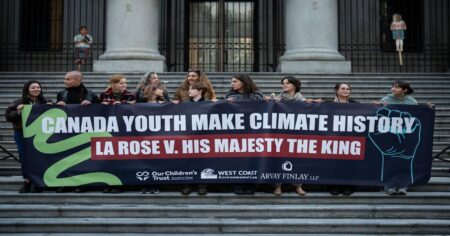
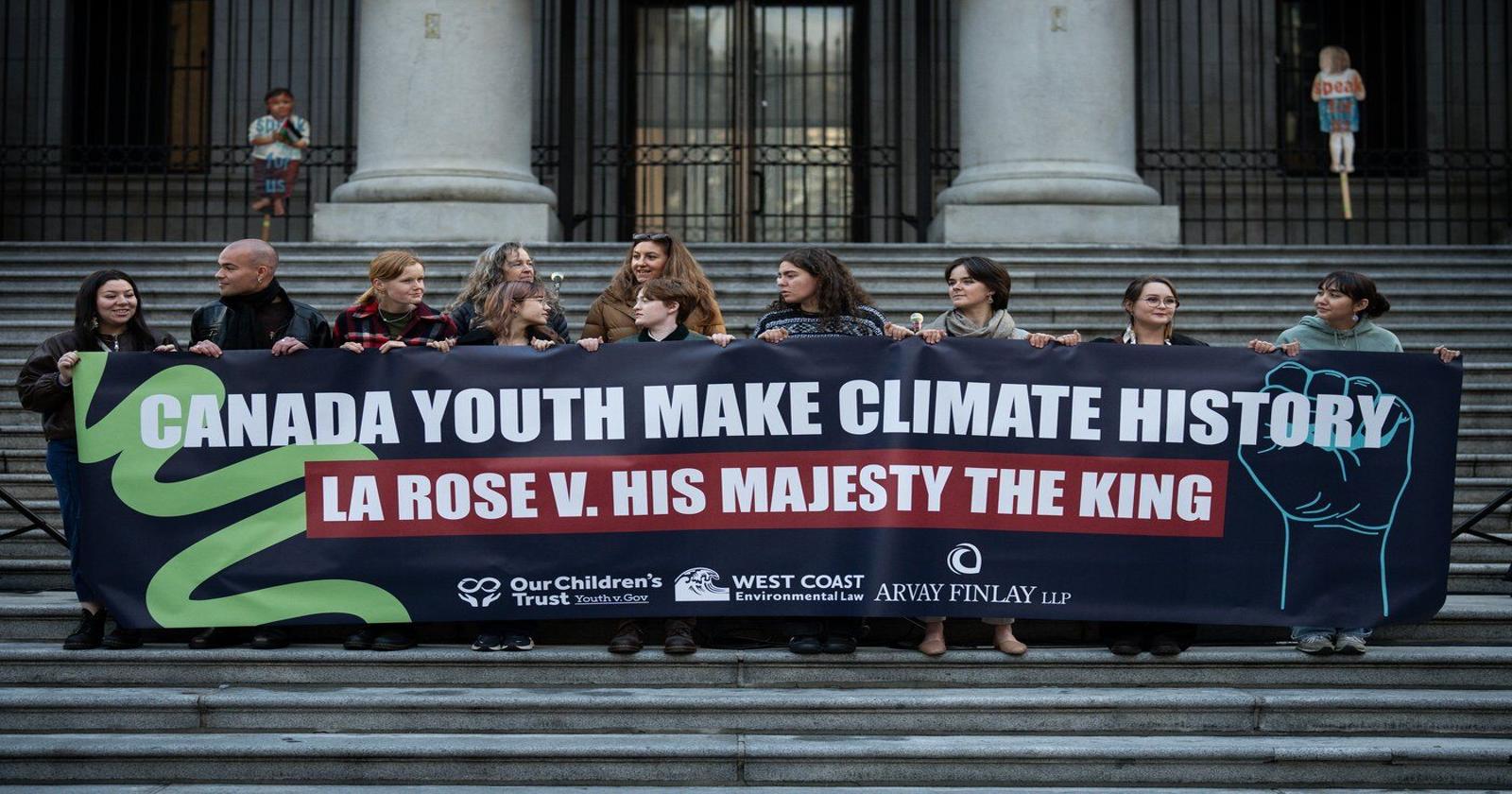
The case was brought by 15 young plaintiffs who argue federal legislation violates their constitutional rights by continuing Canada’s trajectory of greenhouse gas emissions. Their lawyer, Catherine Boies Parker, told the court in her opening statement that the case is not about whether climate change exists, but about whether the government is “constitutionally required to stop making it worse.”
BJ Wray, counsel for the federal Department of Justice, told the court in opening arguments that the Charter was “never intended to solve existential crises” and that providing a safe climate system is not something Canada can do on its own.
The plaintiffs’ case was heard first, with testimony from youth from seven provinces and two territories. We reported on the trial’s opening in Vancouver and on a doctor who told the court children face unique harm. The case was first filed in 2019. The trial is expected to continue into late November, with closing arguments scheduled for February.
The testimony comes as the UN’s own assessment, covered in our report that the 1.5 C target is out of reach, puts pressure on governments to deepen emissions cuts.
If you find reporting like this useful, consider supporting Canada News Media, an independent Canadian newsroom with no corporate parent.
Source: The Canadian Press, Nov. 9, 2026.
Follow Canada News Media
Get the day's top Canadian stories and our two daily 60-second news videos wherever you scroll.
X Threads Facebook Instagram LinkedIn TikTok YouTube Pinterest Reddit Substack Flipboard Newsletter RSS