

Latvia’s border guard has asked the government for powers to use force without a prior warning against people damaging border infrastructure, after Latvian officials said armed, masked men pushed a group of 20 migrants toward the Belarus border on Oct. 5.
The request matters beyond Latvia: it is a NATO and European Union frontier, and Canada leads the alliance’s multinational brigade there with about 2,000 Canadian Armed Forces members, according to the Department of National Defence.
Interior Minister Janis Dombrava said the migrants were led by armed, masked escorts who threatened Latvian soldiers, Euronews reported on Oct. 9. Soldiers stopped the group from crossing, the Latvian army and Dombrava said in posts on X, as relayed by Meduza.
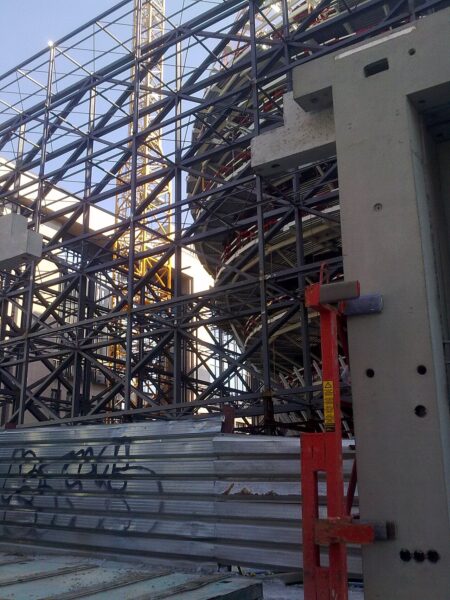
Several hours later, masked people entered Latvian territory, damaged an electrical distribution panel and took surveillance cameras before returning to Belarus ahead of a border guard unit, Dombrava said, according to the Swiss news agency Keystone-SDA. State Border Guard chief Guntis Pujats said two cameras were stolen.
Dombrava called the episode “a security threat, not simply a migration-management problem,” and warned of the risk of violent confrontation, Euronews reported. Every detail of the incident comes from Latvian officials. None of the reports reviewed offers independent confirmation, video or documents, and none includes a response from Belarus.
The border guard sent its proposal to the Interior Ministry on Thursday, Oct. 8, Euronews reported. It would let guards use force in certain circumstances without first issuing a warning and use all available means to stop and “neutralise” people damaging border infrastructure. Similar powers would extend to police and military personnel supporting border operations.
Dombrava said he will propose amendments giving those protecting the border clearer powers and greater discretion, and said they should not face unjustified criminal prosecution for lawful use of firearms. Pujats did not know how long approval would take. Asked when he wanted the changes, he said “Yesterday, or the day before yesterday,” Euronews reported.
Pujats said the completed fencing and surveillance along Latvia’s 173-kilometre border with Belarus is making people-smugglers more aggressive, including throwing stones and displaying what looked like a weapon. He said the situation “is not going to decrease,” according to Euronews.
Pujats also said he suspected the masked group were organized criminals rather than members of Belarusian security services, Keystone-SDA reported. Latvia, Lithuania and Poland have repeatedly accused Belarus of systematically moving migrants from crisis regions to the EU’s external border.
Border guards say nearly 12,000 people have been stopped from crossing illegally this year, Keystone-SDA reported. Latvia has run a security operation on its eastern border that brings together border guards, police, the armed forces and intelligence agencies, and the government has extended it to the end of the year.
For Canadians, the connection is the troops. Canada has been the framework nation for NATO’s Latvia battlegroup since it was established on June 19, 2017, and the formation was placed under a Canada-led brigade on Oct. 17, 2024, according to National Defence’s Operation Reassurance page, which was last updated Aug. 17, 2026.
Prime Minister Mark Carney confirmed in August 2025 that Canada would keep leading the brigade for another three years, Latvian public broadcaster LSM reported. The reports reviewed say Latvian soldiers and border guards handled the Oct. 5 incident and do not say Canadian personnel were involved.
Whether the proposed rules take effect depends on the Interior Ministry and the Latvian government, and no timetable has been announced. Dombrava said he would bring forward amendments, Euronews reported.
Via Euronews, Meduza and Keystone-SDA.
If you find reporting like this useful, consider supporting Canada News Media, an independent Canadian newsroom with no corporate parent.