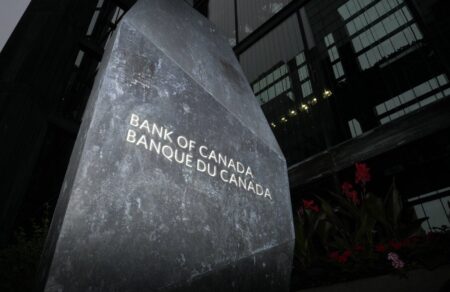





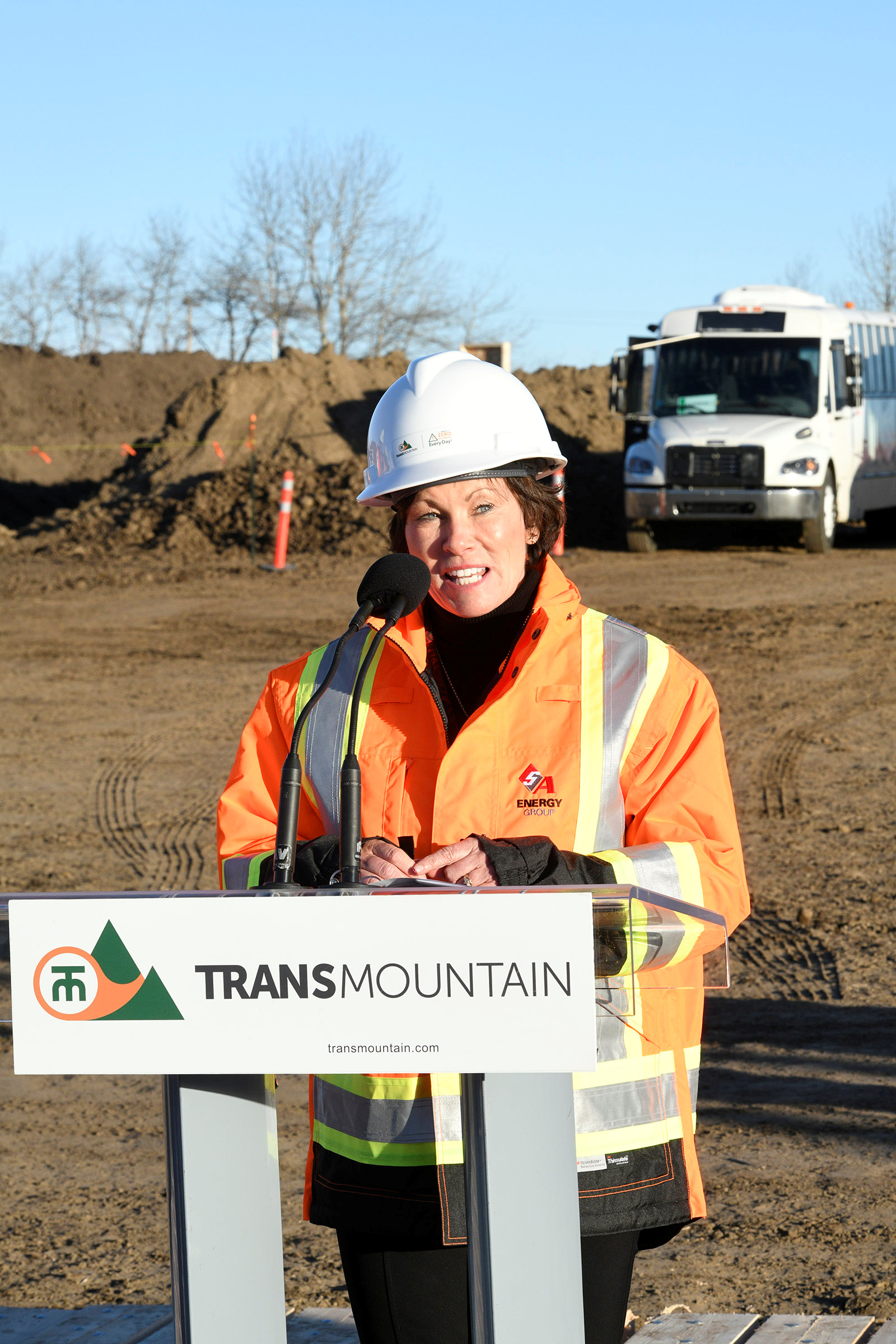
Ottawa named a new oilsands pipeline to the West Coast its first-ever project of national interest on Wednesday, and in doing so put Canadian taxpayers back into the pipeline business only two years after the Trans Mountain expansion finished at more than six times its original estimate.
Prime Minister Mark Carney made the announcement in Fort McMurray, Alta., alongside Premier Danielle Smith. The project, now called Pacific Link, would carry an extra one million barrels of oil a day roughly 1,200 kilometres from Bruderheim, Alta., to Delta, B.C., mostly for Asian buyers, according to The Canadian Press. It is the first project listed under the Building Canada Act.
Under the plan released by the Prime Minister’s Office, Canada and Alberta would own the line in equal shares. Indigenous communities would be offered at least 10 per cent, financed through federal and provincial loan guarantee programs. Trans Mountain Corp., the federal Crown corporation, would lead development, with Calgary-based Pembina Pipeline Corp. as a private investor.
“The Canadian taxpayer is going to make a lot of money off this pipeline,” Carney said, according to The Canadian Press. He also said 90 per cent of Alberta’s oil goes to the United States today and that Pacific Link “will materially reduce that dependence.”
The government’s case rests on big numbers: 140,000 jobs, more than $20 billion a year in GDP and $100 billion in government revenue by 2060, according to the PMO release. The Canadian Press reported construction investment of $70 billion to $80 billion, about $4 billion in pre-approval work in 2027 split between Ottawa and Alberta, and completion in 2032 or 2033.
Canada’s last publicly owned pipeline is the obvious test of those promises. Ottawa bought the Trans Mountain system in 2018 for $4.5 billion. The expansion was estimated at $5.4 billion in 2013 and $7.4 billion in 2017. It finished at about $34.2 billion when oil started flowing in May 2024. The Parliamentary Budget Officer later estimated the system was worth $29.6 billion to $33.4 billion, less than it cost to build, and warned of a net loss for the federal government. The International Institute for Sustainable Development has put potential taxpayer losses at $9 billion to $19 billion, depending on what tolls shippers end up paying.
None of that means Pacific Link will repeat the pattern. But the same Crown corporation is leading the project, it is again partly a public bet, and the release does not say who absorbs cost overruns. Those questions were not answered on Wednesday.
The designation itself also changes how the line gets reviewed. The PMO says it replaces separate ministerial permits, including Fisheries Act authorizations and Species at Risk Act permits, with a single federal process run by the Major Projects Office and the Canada Energy Regulator. The regulator will hold public hearings, and final conditions are due by Sept. 1, 2027. Reporting by The Canadian Press describes some authorizations as effectively pre-approved, which shifts the debate from whether the line is built to how.
That worries some First Nations. “I don’t think it’s necessarily an empowering situation to feel the fix is in on a project of such significant interest,” Merle Alexander told The Canadian Press. The PMO says more than 130 Indigenous communities were consulted on possible routes. CBC has reported the line could cross the territories of 90 to 125 First Nations, and that the Roberts Bank terminus would cross Tsawwassen First Nation treaty lands. Tsawwassen has not taken a position and has said consent “does not constitute support for the project.”
B.C. Premier David Eby has said the province will not go to court over the project, after Ottawa committed $1.2 billion to marine protection, which we covered on Sept. 29. The north coast tanker ban stays in place. Environmental Defence called the project “reckless,” and NDP Leader Avi Lewis called it “an offence to Canadian science.” Conservative MP Carol Anstey said that “just putting a project on the list is not construction.”
For now, the detailed cost estimates, the final route and the cost-sharing terms will come only when the proponent files in early 2027.
If you find reporting like this useful, consider supporting Canada News Media, an independent Canadian newsroom with no corporate parent.
Via The Canadian Press (CP24). Additional sources: Prime Minister’s Office, CTV News, Parliamentary Budget Officer (via CBC and Castanet), The Hub, The Energy Mix (IISD), CBC.
Follow Canada News Media
Get the day's top Canadian stories and our two daily 60-second news videos wherever you scroll.
X Threads Facebook Instagram LinkedIn TikTok YouTube Pinterest Reddit Substack Flipboard Newsletter RSS