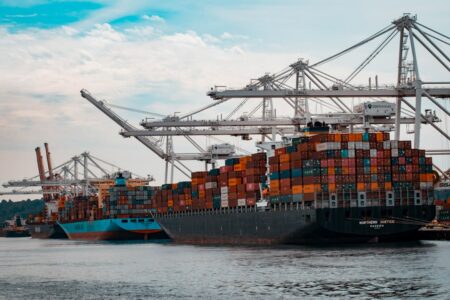

Trade talks between Canada and the United States collapsed late Friday, and just after midnight Saturday, Washington’s 50 percent tariffs on roughly $20 billion of Canadian goods took effect. Prime Minister Mark Carney says Canada will retaliate dollar-for-dollar starting September 8, targeting US steel, dairy, appliances, agricultural equipment, pulp and paper, and electronics. Most of the coverage since Friday has focused on the political breakdown — accusations traded between Carney and US Trade Representative Jamieson Greer over who walked away from the table. Less examined is the legal tool Washington used to get here, and why it matters more than the 50 percent headline number.
A Law Left Dormant Since the Smoot-Hawley Era
On July 20, President Trump signed three proclamations — 11046, 11047 and 11048 — invoking Section 338 of the Tariff Act of 1930 against Canada. It’s a Depression-era provision that lets a president impose duties of up to 50 percent to offset “unequal” or “discriminatory” treatment of US commerce by a foreign country. According to legal trackers at White & Case and Morrison Foerster, no US president had ever actually used it before; it had sat untouched since the 1940s, deployed at most as a negotiating threat. There are no implementing regulations on the books and no court precedent explaining how it’s supposed to work — which is part of why Volokh Conspiracy legal commentators, along with some trade scholars, argue the authority may not even still be valid, having been effectively superseded by trade legislation Congress passed in 1962 and 1974. That dispute is expected to land in the US Court of International Trade.
The tariffs were originally scheduled to take effect August 19, then got a three-day reprieve to August 22 while last-ditch talks played out in Washington. When those talks fell apart Friday, the reprieve simply expired and the duties kicked in as planned.
Why “Motor Vehicles” Doesn’t Mean Cars — and Why CUSMA Doesn’t Help
The three proclamations are named for alcoholic beverages, dairy, and — confusingly — “motor vehicles.” That last one doesn’t actually tax cars or auto parts, which are already covered under separate Section 232 tariffs. Instead, according to trade-compliance trackers including FreightFigures and Thomson Reuters, its annex is the broadest of the three, sweeping in cement, plywood, furniture, apparel, consumer electronics, machinery, wine, hockey sticks, fishing rods, seeds and even swimming pools.
Here’s the part that changes the calculation for Canadian exporters: under the Canada-United States-Mexico Agreement, properly certified goods normally clear the border duty-free — CUSMA covers more than 98 percent of tariff lines and over 99.9 percent of bilateral trade. Non-compliant goods have historically faced a fallback 10 percent tariff. Section 338 doesn’t work that way. Trade lawyers note this is the first major US tariff action where CUSMA-origin certification simply doesn’t exempt a shipment — a company doing everything right on paperwork gets hit with the 50 percent rate anyway if its product falls inside one of the three annexes. That’s a meaningfully bigger exposure than the “Canada only sends about 5 percent of its US-bound exports through this list” framing used when the first proclamations landed in July.
What Ottawa’s September 8 Retaliation Will Actually Hit
Carney’s promised response mirrors the targeted-list approach Canada used during the 2018-19 softwood lumber and steel disputes: rather than broad tariffs, dollar-for-dollar duties aimed at politically sensitive US sectors — steel, dairy, appliances, agricultural equipment, pulp and paper, and electronics. The dairy-for-dairy and steel-for-steel symmetry looks deliberate, aimed at the same industries now squeezed on the Canadian side.
What’s still unresolved is bigger than any one product list. Section 338 has no regulatory framework, no established process for exemption requests, and an open legal question about whether it’s still valid at all. Businesses on both sides of the border are being asked to plan around a tariff regime that even trade lawyers say hasn’t been tested in court. Whether the Court of International Trade curtails it before Canada’s own September 8 retaliation lands — or whether both rounds of tariffs simply stack on top of each other for months while litigation plays out — is the question the political headlines haven’t answered yet.
via CBC News (cbc.ca)
Follow Canada News Media
Get the day's top Canadian stories and our two daily 60-second news videos wherever you scroll.