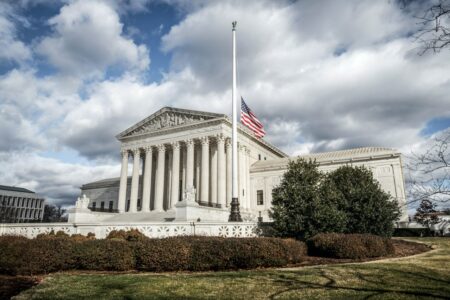


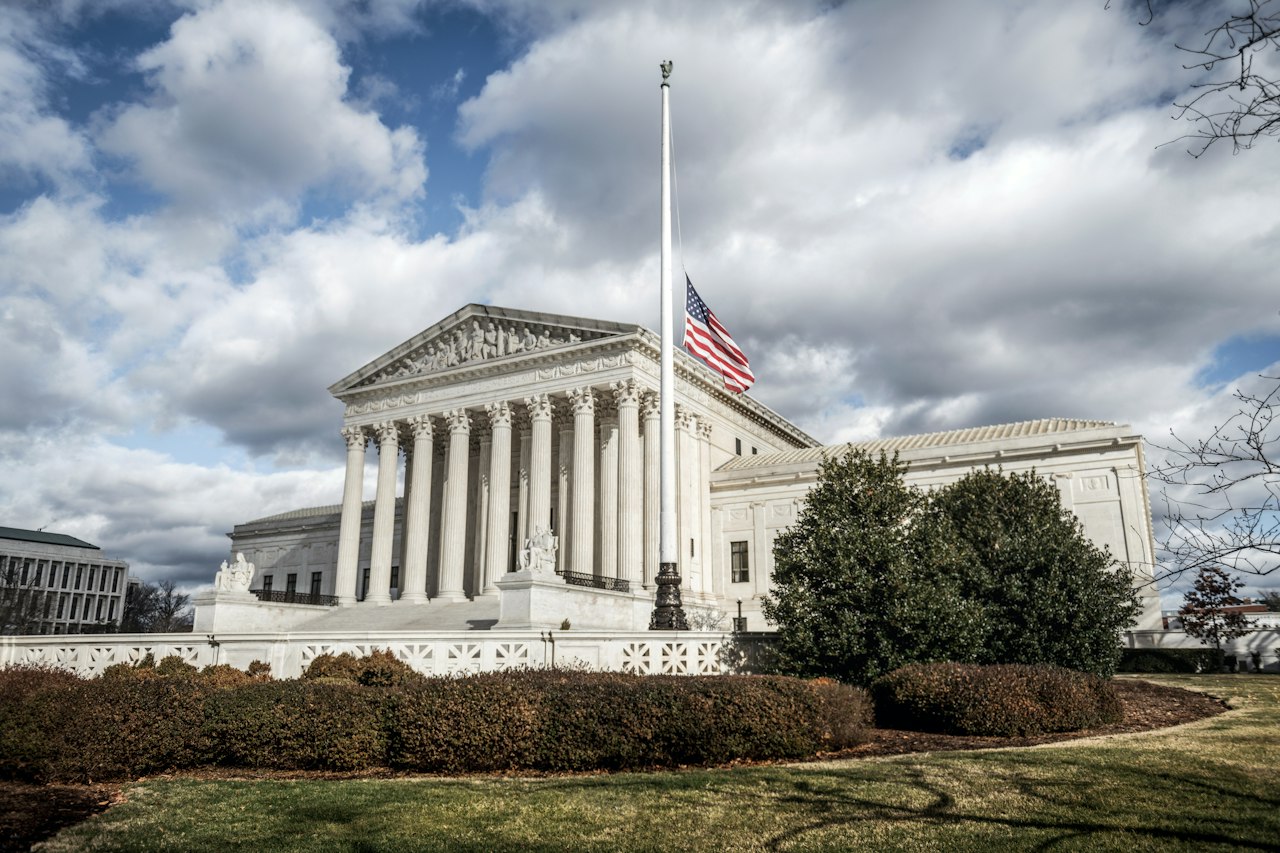
The U.S. Supreme Court is weighing an emergency request from the Federal Communications Commission and Republican Party committees over whether party-linked political ads qualify for the lowest TV rates, after Chief Justice John Roberts on Oct. 8, 2026, paused a lower-court order on the dispute.
The fight matters because the general election is on Nov. 3, and federal law gives candidates the lowest available station rates in the 60 days before it. That window opened Sept. 4, Inside Radio reported.
The case is FCC v. Brown. Solicitor General D. John Sauer filed a 15-page application for the FCC on Oct. 8, SCOTUSblog reported. The National Republican Senatorial Committee and the National Republican Congressional Committee filed their own stay requests the same day.
Roberts issued an administrative stay, which pauses the lower-court order while the court considers the requests, and set a response deadline of 5 p.m. EDT on Saturday, Oct. 10. An administrative stay is temporary and is not a ruling on the merits.
The dispute started with a March 30 public notice from the FCC’s Media Bureau. It said political parties and joint fundraising committees should receive the same favourable rates as candidates. Roll Call reported that the policy extends the low rates to party-coordinated advertising and joint fundraising committees.
Sen. Jon Ossoff of Georgia, former Sen. Sherrod Brown of Ohio, former Gov. Roy Cooper of North Carolina and Rep. Kristen McDonald Rivet of Michigan, all Democrats, challenged the notice. They asked the full commission to review it on April 29 and went to court about six weeks later, SCOTUSblog reported, when the FCC had not acted.
A divided panel of the 4th U.S. Circuit Court of Appeals sided with the candidates. Judge Robert King wrote that the statute is unambiguous and gives the preferential rates only to a candidate’s own use, not to a “mere authorization of someone else’s use.”
The Supreme Court paused that ruling on Sept. 4 in a four-page unsigned opinion. It said the committees were likely to succeed in arguing that the appeals court lacked statutory jurisdiction, because the candidates’ application was still pending at the FCC. Justice Ketanji Brown Jackson publicly dissented.
The current round began on Oct. 7, when the 4th Circuit panel, again divided, ordered the FCC to decide the candidates’ petition by noon on Oct. 9. Roll Call reported that the panel accused the agency of “dragging its feet.”
Sauer told the justices the appeals court “seriously erred in trying to short-circuit the Commission’s deliberations” and called the order an “egregious intrusion into the nation’s electoral process,” SCOTUSblog reported. He wrote that it is “entirely reasonable to refrain from issuing a decision on campaign-finance rules in the middle of the election season,” according to Roll Call.
He also asked the court to bar the 4th Circuit from issuing further orders on the notice until after this year’s elections. The FCC is still awaiting public comment on a parallel application, he said, so the delay is not unreasonable.
The candidates filed their opposition on Oct. 10, SCOTUSblog reported. Their lawyer, David Fox, wrote that the FCC is seeking to “engage in blatant procedural trench warfare” to delay judicial review. They argue that any uncertainty over the rates is a reason for courts to step in, and that the stay question turns on a fact-specific issue the court is unlikely to take up.
Republican committees have said some stations were withdrawing rates they had expected to offer for coordinated ads, Inside Radio reported on Sept. 3. The Democratic candidates replied then that broadcasters must decide for themselves whether to offer the lowest rate to party committees.
The sources do not give dollar figures for the rate difference, and the court’s own filings were not reviewed directly for this article. The accounts also differ slightly on when the 4th Circuit first ruled, which Roll Call and Inside Radio placed in August.
The justices have not yet said how they will rule. The court is closed Monday for Columbus Day, and orders are next expected Tuesday at 9:30 a.m. EDT, SCOTUSblog reported. This story is developing.
The case has no direct Canadian element. Canada News Media has also reported on the court’s docket in its coverage of the no-bond detention case.
If you find reporting like this useful, consider supporting Canada News Media, an independent Canadian newsroom with no corporate parent.
Via SCOTUSblog, Roll Call and Inside Radio.
Follow Canada News Media
Get the day's top Canadian stories and our two daily 60-second news videos wherever you scroll.