
Hurricane Hazel hit the Toronto area on Oct. 15, 1954, and the flooding that followed killed 81 people in Canada, according to The Canadian Encyclopedia. It remains the deadliest storm in modern Ontario history.
Heavy rain began around 4:30 p.m. that Friday, the encyclopedia said, and the first deaths were reported at 11 p.m. The ground was already saturated from several days of rain, and much of the Humber River basin had been cleared of trees, so water ran quickly into the rivers and creeks.
Rainfall totals varied sharply across the region. According to the Wikipedia summary of the storm’s effects in Canada, which draws on weather records, the highest total was 214 millimetres at Snelgrove, near Brampton, while Malton Airport recorded 137 millimetres. Winds reached 124 kilometres an hour, the Canadian Encyclopedia said.
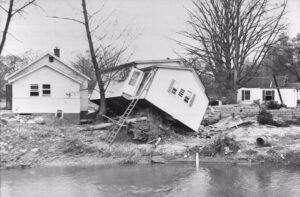
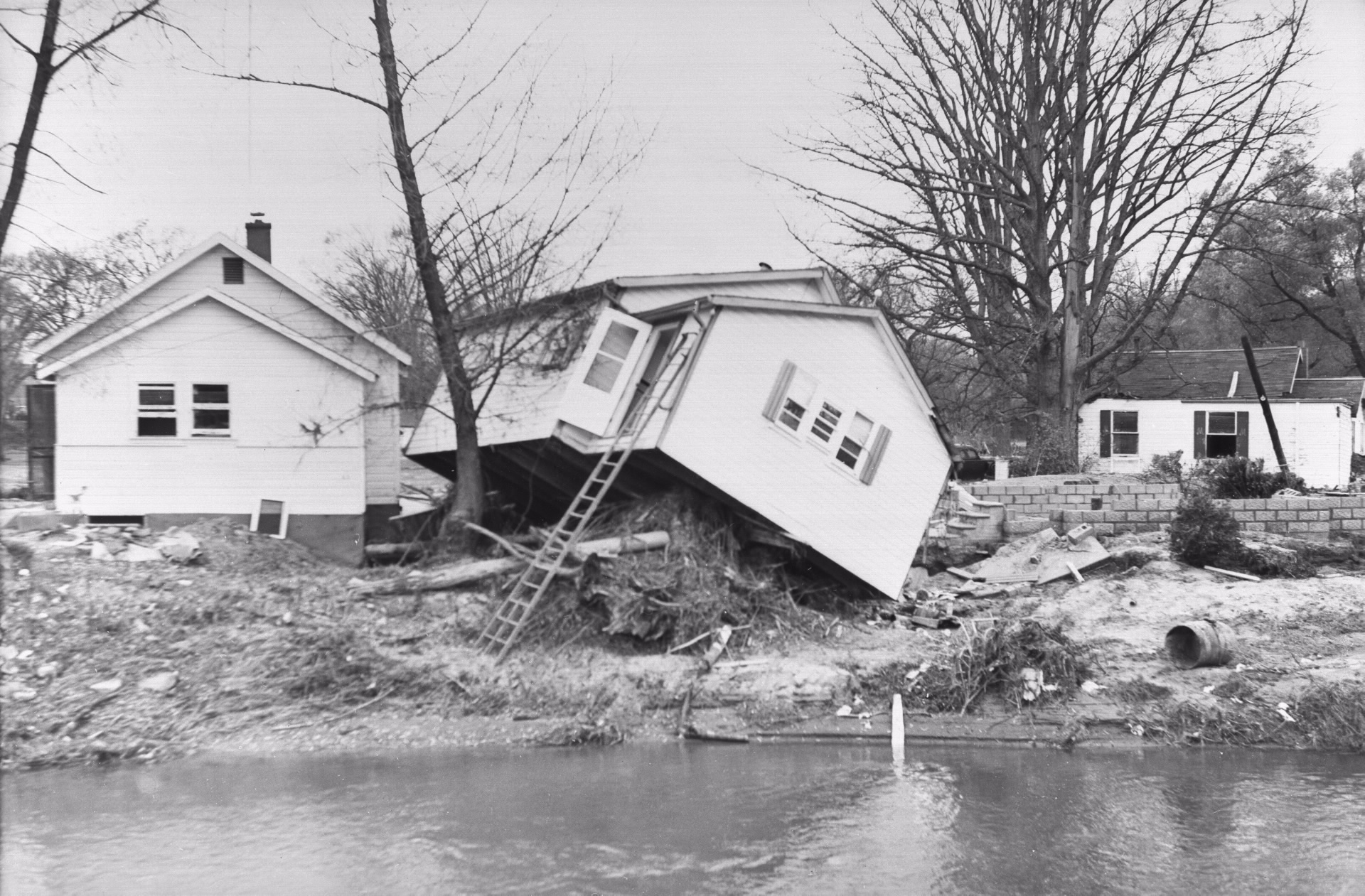
The worst losses came along the Humber River. On Raymore Drive, in what is now Toronto’s west end, the river tore homes from their foundations, and the encyclopedia said more than 30 of the 81 deaths happened on that one street. The Wikipedia summary reports that 14 houses were swept away and two infants’ bodies were never recovered.
In Woodbridge, nine people died and several hundred were left homeless, according to the Canadian Encyclopedia. The Wikipedia summary says an earthen dam collapsed into a trailer park there.
Five firefighters from the Kingsway-Lambton Fire Station also died when their truck overturned on a flooded street as they tried to rescue people from a car, the encyclopedia said. In Weston, off-duty police officer Jim Crawford and contractor Herb Jones took a small boat into the water and rescued about 50 people by daybreak, it said.
Chief meteorologist Fred Turnbull, quoted in a 1979 book by Betty Kennedy, warned that night that “the worst is yet to come.” Volunteer firefighter Bryan Mitchell later told the Toronto Star, on the storm’s 30th anniversary in 1984, “I felt so helpless, but there was nothing I could do, nothing anybody could do.”
The physical damage was widespread. The encyclopedia said 40 highways and main roads were submerged and 40 bridges were destroyed or damaged. It put the cost at between $25 million and $100 million at the time, and more than $1 billion in modern terms. Sources differ on how many people lost their homes: the encyclopedia said nearly 1,900 families were left homeless, while the Wikipedia summary says more than 4,000 families in the Toronto area.
The Wikipedia summary reports that about 800 troops were sent to Toronto, the navy provided boats and 100 personnel, and the federal and Ontario governments each gave $1 million to a relief fund that raised about $5.3 million in total. It also notes that Holland Marsh, north of the city, was flooded, with damage of up to $10 million, though no deaths.
The disaster changed land-use policy. According to the Canadian Encyclopedia, conservation authorities, municipalities and the province developed a joint flood control and water conservation plan, and Ontario amended the Conservation Authorities Act so authorities could acquire and regulate vulnerable land, including the former Raymore Drive. In 1959, the Metropolitan Toronto and Region Conservation Authority began planning dams, reservoirs, flood-control channels and an erosion-control program, it said.
Regulations now restrict new development in floodplains, the encyclopedia said. Much of the expropriated land along the Humber, Don and other waterways became parkland, which is why many of Toronto’s ravine trails sit where homes once stood.
This account relies on The Canadian Encyclopedia and the Wikipedia article on the storm’s effects in Canada. Figures for rainfall, homelessness and cost vary between sources, and the totals above are attributed accordingly.
If you find reporting like this useful, consider supporting Canada News Media, an independent Canadian newsroom with no corporate parent.
Follow Canada News Media
Get the day's top Canadian stories and our two daily 60-second news videos wherever you scroll.
X Threads Facebook Instagram LinkedIn TikTok YouTube Pinterest Reddit Substack Flipboard Newsletter RSS