
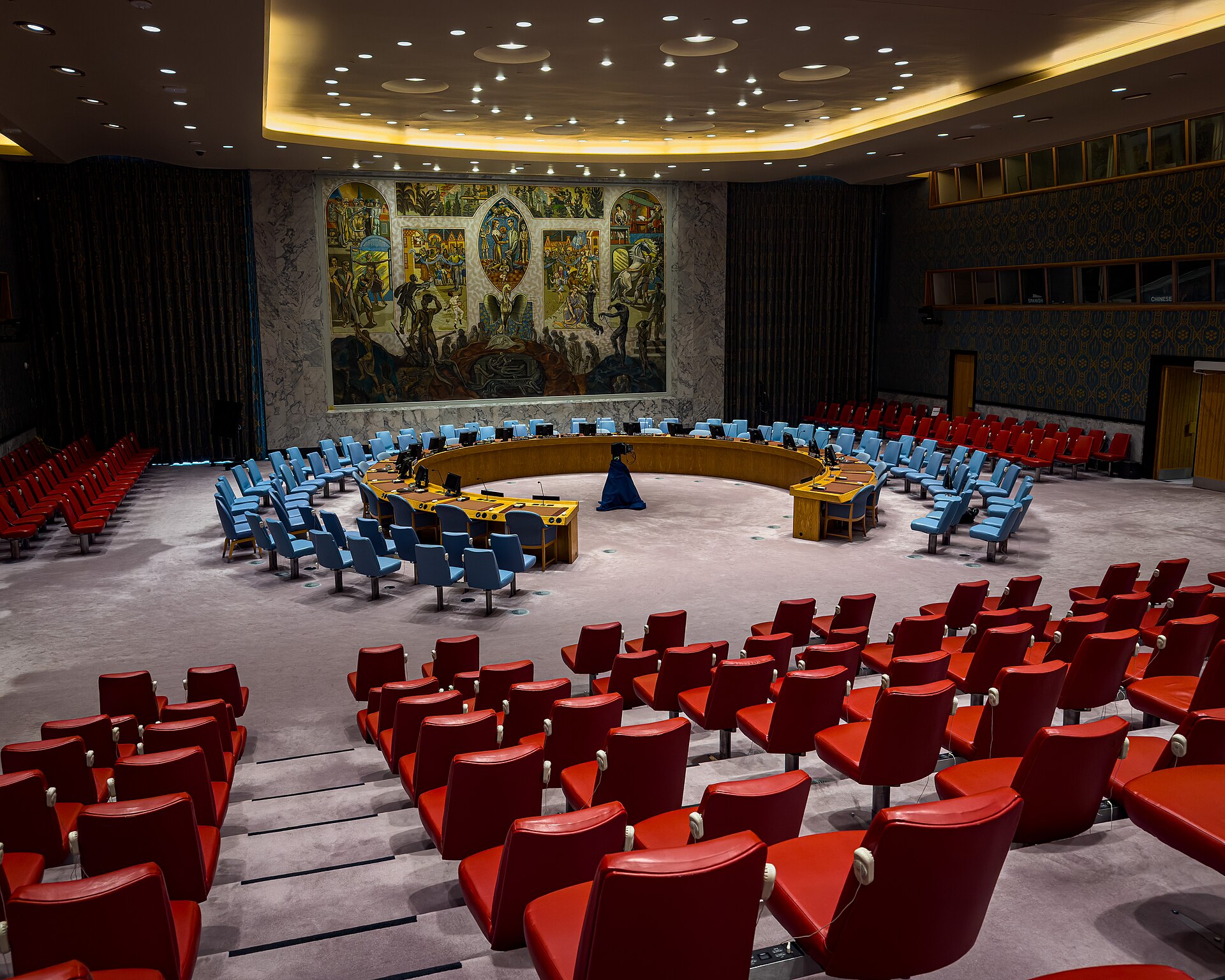
Costa Rica’s Rebeca Grynspan received nine “encourage” votes and six “discourage” votes in the UN Security Council’s fifth informal straw poll on Oct. 7, 2026, keeping her at the front of the race to succeed Secretary-General António Guterres, according to The National.
Updated Oct. 15, 2026.
Nine is the minimum a candidate needs, but her six discourage votes are up from three in the Sept. 29 poll, when she had 10 encourage votes, The National reported. A candidate also needs to avoid a veto from any of the five permanent members, and Guterres’s term ends Dec. 31, which leaves about 11 weeks to settle the question.
The Council does not publish straw poll results. Greece’s UN ambassador, Aglaia Balta, whose country holds the Council presidency for October, said only that “the fifth round of straw polls has taken place,” Xinhua reported on Oct. 8. The numbers have leaked after each vote, as Security Council Report, an independent monitor of the Council, noted in its Oct. 6 preview of the poll.
The full results come from GWL Voices, which reported the results on Oct. 8 and which we could not match to an official count. Each ballot offers three choices: encourage, discourage or no opinion. GWL Voices reported Grynspan at 9-6-0, Argentina’s Rafael Grossi at 6-7-2 and Guyana’s Carolyn Rodrigues-Birkett at 5-9-1. It put Senegal’s Macky Sall at 5-10-0, Ecuador’s María Fernanda Espinosa at 3-9-3, Uganda’s Olara Otunnu at 3-12-0 and Ecuador’s Ivonne A-Baki at 0-14-1.
Grynspan, Grossi and Rodrigues-Birkett’s encourage totals were also reported by China Daily, which said the other four candidates each drew more discourage than encourage votes. Grossi and Rodrigues-Birkett each had eight encourage votes in the previous poll, so both lost ground.
The next poll is scheduled for Friday, Oct. 16, and will use colour-coded ballots, PassBlue, an independent UN news site, reported on Oct. 14. The five permanent members (Britain, China, France, Russia and the United States) would vote on red ballots and the 10 elected members on white ones, so a permanent member’s discourage vote would become visible. PassBlue also reported, citing unnamed sources, that the United States and five elected members cast Grynspan’s six discourage votes on Oct. 7. That claim is not confirmed by the Council or any government.
Washington has not named a preferred candidate. On Oct. 13, Paolo Zampolli, described by The National as U.S. President Donald Trump’s special envoy for global partnerships, wrote on social media that the next secretary-general should be chosen on merit and not by regional rotation or gender. “The world should choose the best person for the job, based on merit, reform and results,” he wrote. The National said the Trump administration has kept its preferences private, so his post does not establish an official U.S. position.
No woman has led the United Nations in its 81 years, and a 1997 General Assembly resolution asked that regional rotation and gender be considered, The National reported. Daniel Forti of the International Crisis Group told the outlet those conventions do not bind the Council, though they “weigh heavily” in public opinion. The seven candidates come from Ecuador, Argentina, Costa Rica, Uganda, Guyana and Senegal.
The timetable has precedent. In 2016, the last straw poll was held on Oct. 5 and the Council adopted the resolution recommending Guterres the next day, Security Council Report noted. In 2006, the final poll was held on Oct. 2 and the resolution recommending Ban Ki-moon followed on Oct. 9. Balta said in comments reported by China Daily: “I do not believe that we will arrive on Dec. 31 and not have a recommendation.”
For Canadians, the outcome matters mainly through the institution itself, since the secretary-general leads the UN system Canada funds and works through on peacekeeping, humanitarian aid and health. None of the seven candidates is Canadian, and we found no public Canadian government statement on the race.
What happens next: after the Council settles on a candidate, it recommends one name by resolution in a private meeting, and the General Assembly then makes the appointment, Security Council Report said. The Oct. 16 poll is the first to show whether a permanent member stands against any of the seven.
Via The National, PassBlue, GWL Voices and China Daily. Vote counts are unofficial and based on leaked results.
If you find reporting like this useful, consider supporting Canada News Media, an independent Canadian newsroom with no corporate parent.
Follow Canada News Media
Get the day's top Canadian stories and our two daily 60-second news videos wherever you scroll.
X Threads Facebook Instagram LinkedIn TikTok YouTube Pinterest Reddit Substack Flipboard Newsletter RSS