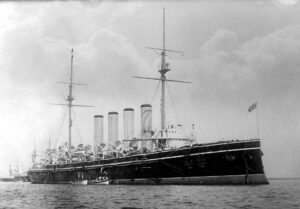


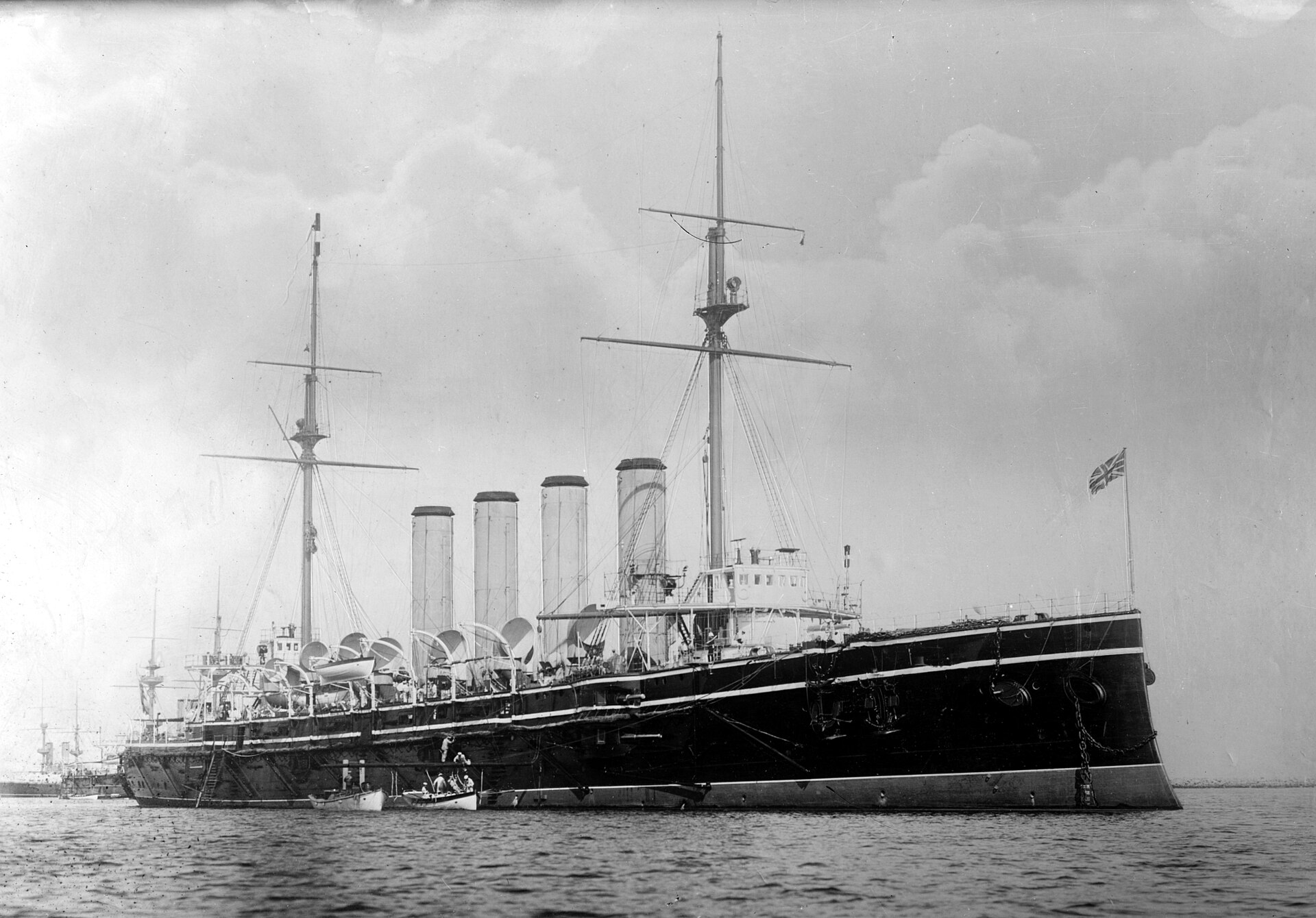
The cruiser Niobe arrived in Halifax harbour on Oct. 21, 1910, according to the account of the ship’s career on Wikipedia, becoming the first large warship of Canada’s new naval service. Another Wikipedia article, on the Naval Service Act, gives the arrival date as Oct. 17, and the sources do not agree on the exact day.
The Oct. 21 date carries weight in naval tradition. Wikipedia reports that the ship’s entry into the harbour was timed to coincide with Trafalgar Day, the anniversary of Lord Nelson’s victory in 1805. It also says the federal government announced in October 2014 that Oct. 21 would be marked as Niobe Day.
The ship had a long history before she reached Nova Scotia. Niobe was a Diadem-class protected cruiser built for the Royal Navy, and she served in the Boer War, according to Wikipedia. The class displaced about 11,000 long tons and carried 16 six-inch guns, figures that Wikipedia gives for the class as a whole rather than for Niobe alone.
Her sale to Canada followed from the Naval Service Act, which received royal assent on May 4, 1910, according to the Canadian Encyclopedia. Historian Roger Sarty writes in the encyclopedia that the Act was introduced on Jan. 12, 1910, and that it set up a Canadian naval service. The encyclopedia says Canada acquired two British cruisers crewed by experienced Royal Navy personnel, Niobe for Halifax and Rainbow for Esquimalt, B.C., and that both arrived at their new homes in the fall of 1910.
Wikipedia says Niobe was in the Royal Navy’s Home Fleet at Devonport, England, before she was paid off in September 1910. It gives the price as £215,000 and says the formal transfer of the ship took place on Nov. 12, 1910, once she had been paid for. That means the cruiser was already in Halifax before the paperwork was finished.
The naval service did not yet carry the name it has today. The Canadian Encyclopedia says King George V approved the title Royal Canadian Navy on Aug. 16, 1911. Niobe was therefore the centrepiece of a service that was still new and, in political terms, still contested.
Her early years were not smooth. Wikipedia reports that Capt. W.B. MacDonald was found negligent at a court martial after the ship ran aground in July 1911.
The First World War gave the ship her most active service. Wikipedia says that in September 1914 Niobe travelled to Newfoundland to pick up 107 sailors from the Newfoundland Royal Naval Reserve to complete her crew. Photographs held by the National Archives of Canada and reproduced on Wikimedia Commons show her boarding party inspecting a passenger liner for contraband in 1914 or 1915. Those same days saw the first Canadian troops cross the Atlantic, a story told in our On This Day look at the arrival of the first Canadian troops in England in 1914.
Niobe was paid off on Sept. 6, 1915, and became a depot ship at Halifax, according to Wikipedia. She was in the harbour when the Halifax Explosion struck on Dec. 6, 1917, and Wikipedia says members of her crew were killed. The same source says she was disposed of in 1920 and broken up in 1922 at Philadelphia.
Halifax has remained the Atlantic home of the Royal Canadian Navy ever since, and the harbour has appeared in other chapters of our history features, including the Saxby Gale of 1869. The navy’s fleet is still in the news today, as when the Royal Canadian Navy announced plans to retire eight warships in 2025.
The Canadian government’s own navy history pages were not available to this newsroom when this article was prepared, so the exact arrival date should be treated as reported by secondary sources.
If you find reporting like this useful, consider supporting Canada News Media, an independent Canadian newsroom with no corporate parent.
Follow Canada News Media
Get the day's top Canadian stories and our two daily 60-second news videos wherever you scroll.
X Threads Facebook Instagram LinkedIn TikTok YouTube Pinterest Reddit Substack Flipboard Newsletter RSS