

A six-day local ceasefire around the Russian-occupied Ukrainian city of Oleshky held through its first 30 hours, Ukraine’s and Russia’s human rights ombudspersons said Wednesday, as an aid operation began for about 2,000 remaining residents.
If the truce lasts until Sunday, Nov. 1, it would be the first significant ceasefire between Russia and Ukraine since Russia’s full-scale invasion more than 4½ years ago, the Associated Press reported. Earlier attempts failed or collapsed quickly amid deep mistrust.
Dmytro Lubinets, Ukraine’s human rights ombudsman, and Yana Lantratova, Russia’s human rights ombudsperson, both said there had been no violations of the ceasefire in the 30 hours since it began on Tuesday, Oct. 27, according to the AP report.
Negotiators said doctors, medicines, food and water would be delivered before any evacuation corridors open. Residents who want to leave can choose whether to go to Ukraine or Russia, LaPresse reported, citing AP.
Lubinets said in an interview with the Ukrainian channel 1+1 that once the road to Oleshky is cleared and aid delivered, representatives of “the three countries” will be “present on the ground.” A U.S. representative is to join Russian and Ukrainian civilian officials entering the city.
Independent confirmation is limited. Russian occupying forces strictly limit who can enter Oleshky, and there was no public information on how the aid operation was progressing, the AP said. Corridor openings, evacuation numbers and the truce’s full duration have not been confirmed.
The White House said U.S. First Lady Melania Trump brokered the humanitarian mission, as we reported when the deal was announced. Russian and Ukrainian officials have thanked her. Pope Leo XIV spoke with Ukrainian President Volodymyr Zelenskyy and Russian President Vladimir Putin earlier this month, urging aid access and safe evacuation of civilians, according to the Vatican.
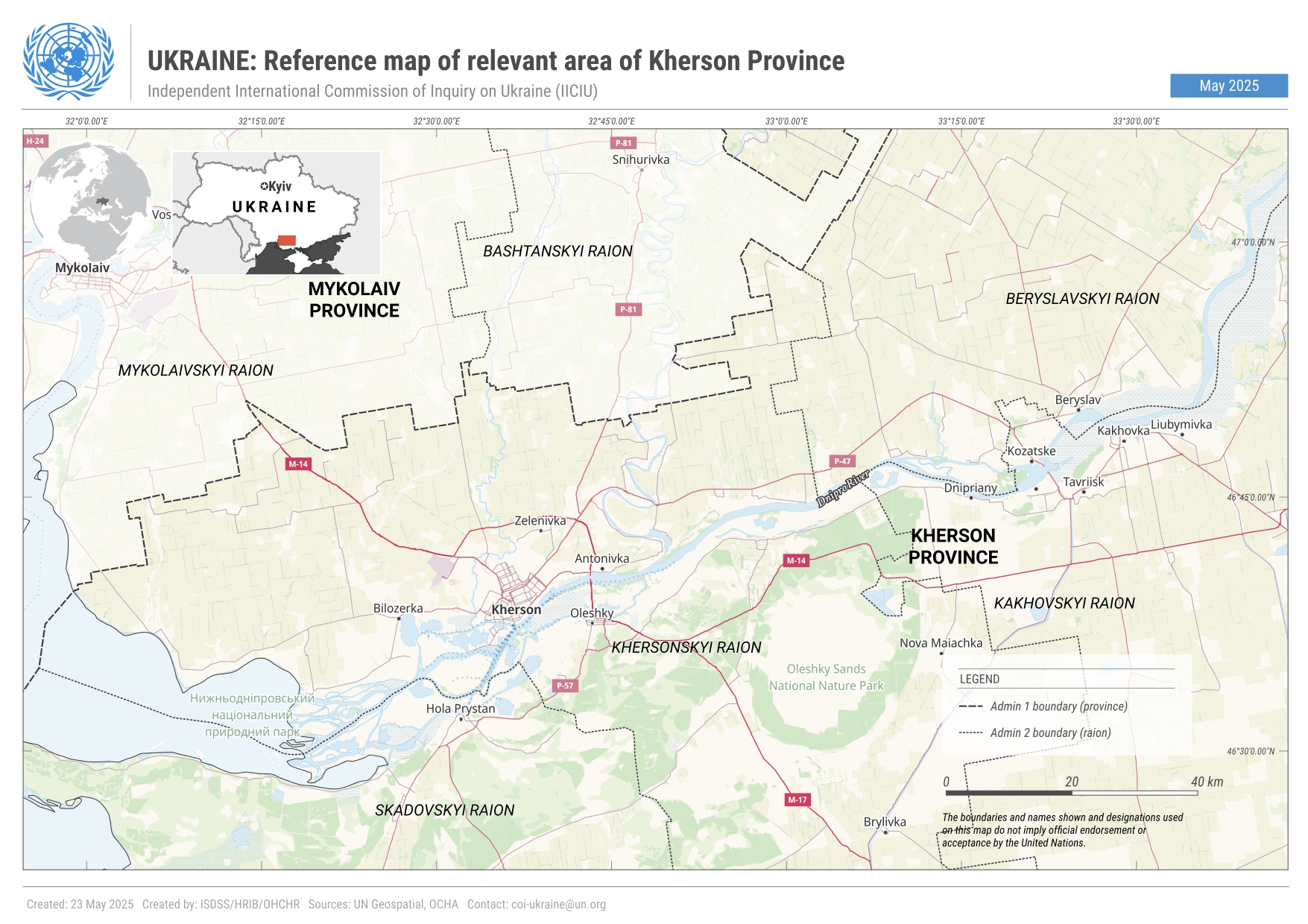
Oleshky sits on the Dnipro River in the Kherson region. Russian forces took it on the first day of the invasion in February 2022. It had about 24,000 residents before the war and now has no electricity, heat or running water, and scarce food and medical supplies, the AP said.
The truce does not signal broader movement toward peace. Neither side has shown flexibility on core demands. Ukrainian Foreign Minister Andrii Sybiha said in Helsinki that Kyiv “will never accept any formula at the cost of our sovereignty or territorial integrity.”
Fighting elsewhere continued. A Russian drone strike on Kharkiv overnight wounded five people, including a four-year-old child, Ukraine’s State Emergency Service said. Russia’s Defence Ministry said its air defences shot down 531 Ukrainian drones between late Tuesday and early Wednesday.
Zelenskyy said the leaders of Finland and Norway, who phoned Putin on Tuesday, told him Russia is “serious” about de-escalation. Possible steps include pausing attacks on energy infrastructure and commercial shipping, more prisoner swaps and discussing a leaders-level meeting format, he said. He added that U.S.-led technical talks, expected in Abu Dhabi in November, have not been scheduled because Washington is awaiting developments in the Middle East. The EU has also sought a seat at those talks, as we have reported.
For Canadians, the story is close to home for a large diaspora. About 1.3 million Canadians reported Ukrainian ancestry in the 2021 census, according to Statistics Canada, and many have relatives in southern Ukraine.
The ceasefire is scheduled to end Sunday. The next signal will be whether the road to Oleshky is cleared, aid arrives and the first evacuees leave before then.
Via the Associated Press.
If you find reporting like this useful, consider supporting Canada News Media, an independent Canadian newsroom with no corporate parent.
Follow Canada News Media
Get the day's top Canadian stories and our two daily 60-second news videos wherever you scroll.
X Threads Facebook Instagram LinkedIn TikTok YouTube Pinterest Reddit Substack Flipboard Newsletter RSS