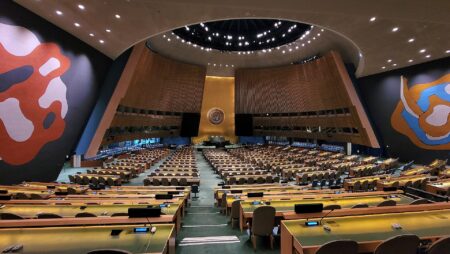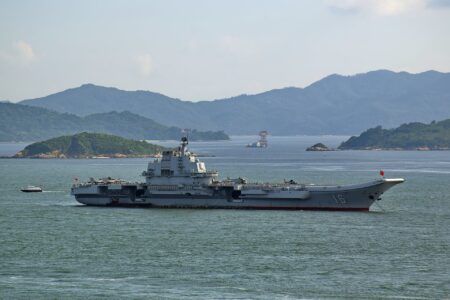

Senior Saudi, Turkish and Pakistani officials met Iran’s leaders in Tehran on Oct. 26 and agreed only to continue talking, and within hours the Saudi-led coalition said it had shot down three Houthi ballistic missiles and four drones fired at Saudi Arabia.
The meeting was the first joint session of the four countries, Iranian state television said, according to Al Jazeera, and it came after an attack on Riyadh’s King Khalid International Airport this month that killed at least 13 people and wounded more than 300. It was the deadliest attack on the kingdom in more than a decade, Al Jazeera reported.
Saudi Defence Minister Prince Khalid bin Salman Al Saud, Pakistani army chief Field Marshal Asim Munir and Turkish intelligence chief Ibrahim Kalin were hosted by Mohsen Rezaei, secretary of Iran’s Supreme National Security Council. Iranian state media showed President Masoud Pezeshkian and Foreign Minister Abbas Araghchi at the meetings. In a joint statement, the four countries agreed to “continue the dialogue to strengthen cooperation,” Press TV reported.
Rezaei called the discussions “very good” and described a “new and positive atmosphere,” Al Jazeera and The National reported. The National, citing sources briefed on the talks, said they made no clear headway. The visitors asked Iran to persuade the Houthis to stop attacking Saudi Arabia, and Iran said it lacked leverage over the group, The National reported. A Tehran source told the outlet the Houthis’ condition has not changed: Saudi Arabia must lift its air blockade on Yemen before fighting ends.
Iran in turn asked its guests to persuade Washington to accept a two-week regional pause in hostilities, The National reported. The pause would let negotiations resume in exchange for gradually reopening the Strait of Hormuz. A senior Pakistani security official told Reuters that Munir presented Iran with a proposal, with U.S. President Donald Trump’s blessing, that offered something to both Washington and Tehran. Details were not disclosed, Al Jazeera reported.
The firing did not stop. Coalition spokesman Maj.-Gen. Turki al-Maliki said Oct. 27 that the three ballistic missiles were aimed at the Eastern Province and caused no casualties, and that the four drones were headed for southern regions, Al Jazeera reported, citing Reuters. The coalition said it also destroyed three drones over Riyadh and the south on the evening of Oct. 26, and that it had struck five missile-storage tunnels, four launchers and a depot. The Houthis had not commented, Al Jazeera said. These claims could not be independently verified.
The three visiting countries are linked by the Mecca Joint Defence Agreement, which Saudi Arabia, Türkiye and Pakistan signed in August. Under it an armed attack on one member is treated as an attack on all, Al Jazeera reported. Pakistan has approved the pact and Türkiye’s parliament is still ratifying it. Egypt’s parliament authorized its military on Oct. 26 to help defend Saudi Arabia. The war has restricted shipping through Hormuz and pushed up oil prices.
For Canadians, the risk is practical. Global Affairs Canada’s travel advisory for Saudi Arabia, updated Oct. 22, tells Canadians to avoid non-essential travel to the country and to avoid all travel to King Khalid International Airport in Riyadh and King Fahd International Airport in Dammam. It says King Khalid is currently closed and that further attacks could close Saudi airspace. It also says to avoid all travel within 30 kilometres of the Yemen border and in the provinces of Asir, Jazan and Najran.
Fuel prices are the other link. Brent crude settled at US$116.72 in the last close we reported, a six-month high. Earlier, Iran had offered to mediate between Saudi Arabia and the Houthis, and eight foreign ministers meeting in Istanbul urged diplomacy rather than a new strike on Iran.
What happens next is unsettled. No date or venue was given for another round, Al Jazeera reported. Iran’s proposed pause depends on Washington accepting it, and The National reported that the Houthis still demand the lifting of the Saudi air blockade first. Supreme Leader Mojtaba Khamenei repeated Iran’s conditions for ending the war with the United States in a meeting with Rezaei the next day, The National said.
If you find reporting like this useful, consider supporting Canada News Media, an independent Canadian newsroom with no corporate parent.
Via Al Jazeera, Reuters and The National. Casualty figures and military claims are attributed to the sources named.
Follow Canada News Media
Get the day's top Canadian stories and our two daily 60-second news videos wherever you scroll.
X Threads Facebook Instagram LinkedIn TikTok YouTube Pinterest Reddit Substack Flipboard Newsletter RSS