



In 1895, a group of Black Baptist leaders and professionals in Halifax and Dartmouth organized an ice hockey league. Parks Canada says the Colored Hockey League of the Maritimes ran for 30 years, drew multiracial crowds and impressed journalists with a “fast and innovative brand of hockey.” In October 2024, the federal government designated it an event of national historic significance.
The league’s story is better documented than some of its best-known legends, and the difference matters. Here is what the record shows, and where it asks readers to be careful.
Founded in the church community
According to The Canadian Encyclopedia, the league was organized by Black Baptists and Black intellectuals, and its origins “appear to have come from the actions of four men”: Pastor James Borden of Dartmouth; James A.R. Kinney, a layman at Cornwallis Street Baptist Church; James Robinson Johnston, described as the first Black graduate of Dalhousie’s law program; and Henry Sylvester Williams, a Trinidadian law student who later founded the first Pan-African Conference, in 1900.
The Encyclopedia says the idea was designed to attract young Black men to Sunday worship, with the promise of a hockey game between rival churches after services. It traces the roots to all-Black baseball clubs of the mid-1880s. That church link fits a wider pattern in Black Nova Scotian life, including the 12-church Baptist association formed in 1854.
The league began with three teams, including the Dartmouth Jubilees, and grew. The Encyclopedia lists later challengers such as the Africville Sea-Sides, the Truro Victorias, the Charlottetown West End Rangers, the Amherst Royals and the Hammond Plains Moss Backs. Parks Canada says the league expanded in Nova Scotia and Prince Edward Island, and names the Halifax Eurekas among its clubs.
Crowds, and a short season
The Encyclopedia puts the league’s peak between 1900 and 1905, with hundreds of players and more than 12 teams. It reports crowds as high as 1,200 for an inter-provincial championship game between the Sea-Sides and the Charlottetown West End Rangers in Halifax.
Ice was a constraint. The Encyclopedia says the teams got arena access only after white leagues had finished, so championship play was squeezed into roughly eight weeks from late January to early March, with the top three or four teams playing about six games each.
The claimed firsts
Two innovations are widely attached to the league. Parks Canada states that Henry Franklyn, the Jubilees’ original goaltender, introduced what is today called the butterfly style of goaltending in 1900, and that around the same time the Eurekas’ Eddie Martin began using the slapshot, before the techniques seemed to be permitted in other Canadian leagues.
The Encyclopedia is more cautious. It credits Henry “Braces” Franklyn with a goaltender dropping to his knees, and says Martin’s shot “may have been” an early form of the slapshot. Neither page, in the versions read for this article, cites a specific contemporary source for the dates. Readers should treat the claims as credited to these players by the heritage record, not as settled firsts.
The Encyclopedia also says games were played “with no official rules other than the Bible,” which it links to a more physical and innovative style.
Why the league faded
Parks Canada says racism and economic hardship led the league to disband and reorganize in the 1920s, with a few teams competing into the 1930s. The Encyclopedia reports the league reformed in 1921 with three teams, then fell apart during the Depression.
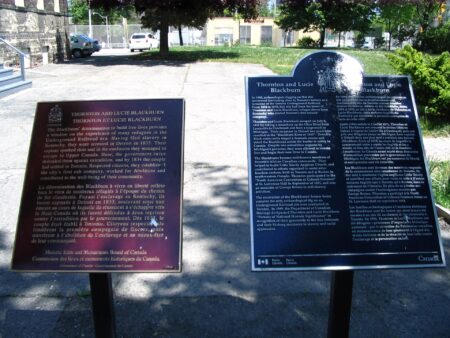
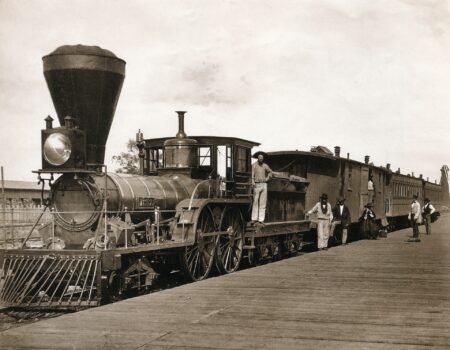
The Encyclopedia also links the earlier decline to a dispute over expanded rail service to the Halifax port, which led to a proposed railway annexation of Africville land. It describes a five-year legal fight in which Johnston represented the families and says some rink owners refused to rent to the league or to Black teams. That account comes from one source among those reviewed for this article, so it is presented here as the Encyclopedia’s account. For the neighbourhood’s wider history, see our reporting on Halifax razing Africville.
Recognition
On Feb. 15, 2025, in Halifax, Darrell Samson, MP for Sackville-Preston-Chezzetcook, unveiled a plaque at the Black Cultural Centre for Nova Scotia on behalf of the minister responsible for Parks Canada. Samson said he was “honoured to join Parks Canada and the Historic Sites and Monuments Board in commemorating the national historic significance of the Colored Hockey League of the Maritimes.” The weekend was hosted by the Black Ice Hockey and Sports Hall of Fame Society and the Black Cultural Centre.
The league’s history also reached wider audiences through the 2004 book Black Ice by George and Darril Fosty, the 2015 documentary Soul on Ice and a Canada Post stamp in January 2020, according to the Encyclopedia. The Encyclopedia article is itself by the Fostys, so the book’s account and the encyclopedia entry are not fully independent. That is one more reason to keep the archival record, and any newly surfaced game reports, at the centre of future work.
If you find reporting like this useful, consider supporting Canada News Media, an independent Canadian newsroom with no corporate parent.
Sources: Parks Canada news release, Feb. 15, 2025; The Canadian Encyclopedia, “Coloured Hockey League” (George and Darril Fosty, updated by Andrew McIntosh).
Follow Canada News Media
Get the day's top Canadian stories and our two daily 60-second news videos wherever you scroll.
X Threads Facebook Instagram LinkedIn TikTok YouTube Pinterest Reddit Substack Flipboard Newsletter RSS