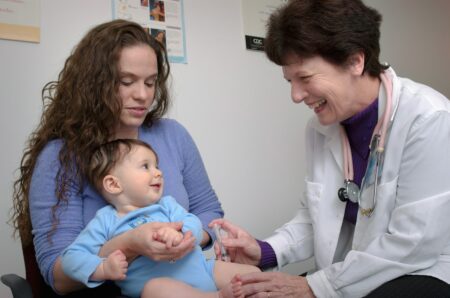



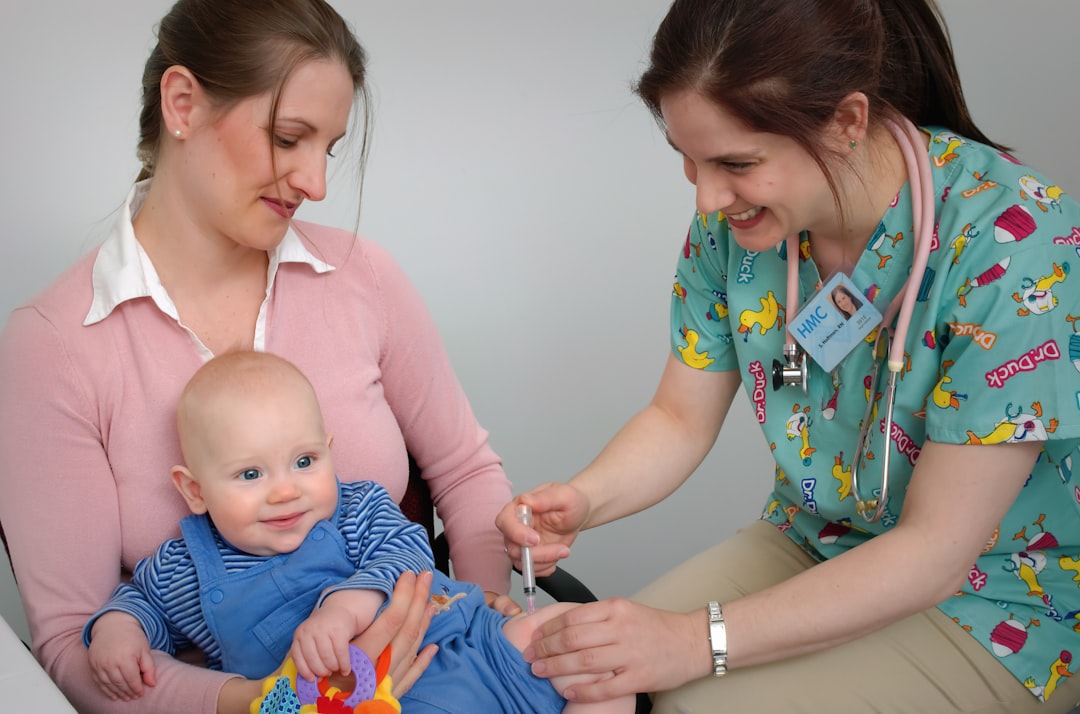
Canada’s chief public health officer urged parents this week to check their children’s routine vaccinations before classes resume, citing a national measles immunization rate of about 85 per cent among two-year-olds. But the number that determines whether an outbreak takes hold is not the national one — and in the regions where Canada’s largest recent outbreaks began, local coverage has run closer to 60 per cent.
Dr. Joss Reimer said on Sept. 1 that measles is still spreading in Canada and that vaccine misinformation continues to circulate online, according to The Canadian Press. Federal data show roughly 85 per cent of Canadian two-year-olds had completed the measles, mumps and rubella series by the end of 2025, short of the 95 per cent public health authorities say is needed to stop sustained transmission. Canada lost its measles elimination status in November 2025, after holding it since 1998, following more than 5,000 cases reported across 10 provinces and territories.
The 95 per cent figure is usually reported as a national target. It is more accurately a local one. Measles moves through networks of people who live, worship and attend school together, which means a country can post a respectable average while containing pockets where the virus spreads almost unimpeded. Canada’s experience since 2024 illustrates that gap precisely, and the provincial data behind it is more specific than the national headline suggests.
Alberta recorded 2,008 measles cases in 2025, according to CBC News — the largest provincial total of the outbreak. In the province’s south zone, 59.6 per cent of two-year-olds were up to date on two doses of measles vaccine as of 2023 provincial data, and Alberta Health Services has said coverage in parts of that zone ranges from roughly 40 to 65 per cent. The south zone is the region for which AHS issued a standing measles exposure advisory covering the entire zone, rather than the site-by-site alerts used elsewhere.
British Columbia shows the same divergence. Provincewide, the share of seven-year-olds fully vaccinated against measles fell from 90 per cent in 2015 to 70 per cent in 2024, according to a CBC News analysis of provincial immunization data. In the province’s northeast, the same measure fell from 95 per cent to 66 per cent over the same period. The northeast is where B.C.’s outbreak concentrated, and health officials said in late 2025 that it would carry into 2026.
A parent who wants to know where their own community sits often cannot find out. Ontario’s most recent publicly available figure showed 70 per cent of seven-year-olds vaccinated for measles in 2023-24 — a number provincial health officials themselves say understates reality because of reporting lag rather than refusal. Hamilton’s health unit found that 96 per cent of children born in 2017 had received at least one dose as of June 5, 2025, according to The Trillium, with an exemption rate of 4.1 per cent. The underlying problem is structural: Canada has no national network of interoperable immunization registries, and in many jurisdictions physicians and pharmacists are not required to report every dose they administer, researchers wrote in the Canadian Medical Association Journal.
The practical consequence is that Canada’s early-warning system for measles is a national average that lags by a year or more, layered over provincial systems that do not talk to each other. That is a weaker instrument than the 85 per cent figure implies.
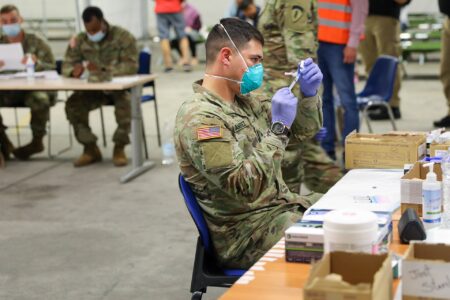
There is evidence the local numbers can move quickly when they are targeted. In Alberta’s south zone, where baseline uptake was lowest, vaccinations rose 72 per cent during the outbreak response, and early doses for infants aged six to 11 months in high-risk areas increased 432 per cent, according to Alberta Health Services. Those gains followed outreach aimed at specific communities, not a national campaign.
Reimer’s advice — check the records before the first day of school — applies the same way in every postal code. What the national number cannot tell a parent is how much that check matters where they live.
via CTV News / The Canadian Press. Original report: Check vaccinations before heading back to school: chief public health officer
Follow Canada News Media
Get the day's top Canadian stories and our two daily 60-second news videos wherever you scroll.
X Threads Facebook Instagram LinkedIn TikTok YouTube Pinterest Reddit Substack Flipboard Newsletter RSS