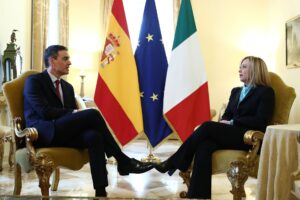



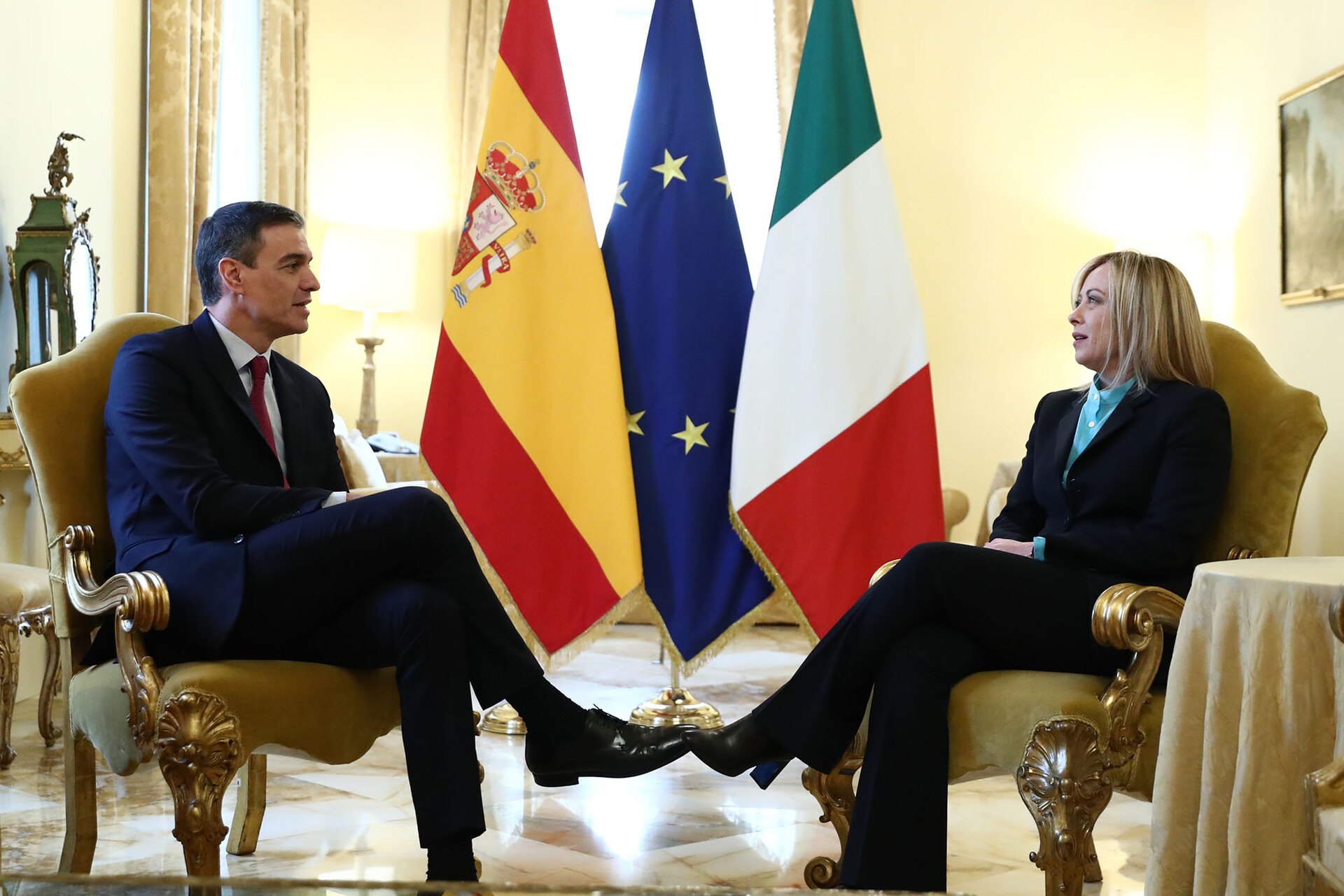
Italy extended its temporary border checks on arrivals from Spain by seven days on Friday, Oct. 16, after Prime Minister Giorgia Meloni and Spanish Prime Minister Pedro Sánchez met on the sidelines of the European Union summit in Brussels, Euronews reported.
The extension is the fourth since Italy introduced the checks on Aug. 1 for one month, and it leaves the two countries on the same timetable. Spain’s reciprocal checks on arrivals from Italy were due to expire Oct. 22, and Italy’s new deadline matches that date, according to Euronews.
Italy brought in the checks after a surge of migrants into Ceuta, Spain’s North African exclave. Euronews reported that almost 90,000 irregular migrants arrived there, a figure Canada News Media has not been able to confirm independently. Italy’s interior minister said almost 500,000 people were checked in the first month and 31 were refused entry, including eight Moroccan citizens, Euronews reported.
Spain’s government has said no irregular migrants have moved from Ceuta to mainland Spain. European Commission President Ursula von der Leyen said in early August that most of those who entered Ceuta irregularly had been repatriated and that none had reached mainland Spain or other EU countries, Euronews reported.
Italy’s interior ministry announced the measure on July 31 for maritime and air links with Spain. Meloni called it “an extraordinary measure adopted to safeguard national security and prevent possible repercussions,” Wanted in Rome reported. Italian Interior Minister Matteo Piantedosi described it as “important but precautionary.”
Spanish Interior Minister Fernando Grande-Marlaska said the Italian measure was taken “without necessity or proportionality,” according to Wanted in Rome. Madrid called the decision unilateral and said it did not conform to the Schengen Borders Code, the rulebook for the passport-free travel zone. Sánchez wrote to European Council President António Costa and von der Leyen asking Brussels to intervene.
The checks are targeted rather than universal. Airport police have carried out random checks on arrivals from Spain at Rome Fiumicino, Milan Malpensa and Milan Linate. EU citizens must show proof of identity, while non-EU nationals must show an ID document plus a valid residence permit or visa, Euronews reported. Flights from Italy to Spain were not affected at the start.
Schengen rules allow a country to reintroduce internal border controls temporarily in cases of a serious threat to public order or internal security. The European Commission has said such checks should be a last resort, used exceptionally, proportionately and for a limited time.
The dispute has spilled into the broader migration debate. At the Brussels summit, Denmark, Poland and Italy pushed for conclusions that referred indirectly to Spain’s plan to regularize about 600,000 undocumented migrants, Euronews reported. A draft urged countries to avoid “measures that could create incentives for illegal migration.” That wording was dropped and a shorter text was adopted. Several countries worry about a “pull factor” if Spain goes ahead, according to Euronews.
Diplomatic sources told Euronews that the interior ministers of both countries are expected to work out alternatives to the checks next week. The two governments remain at odds over migration policy: Meloni leads a right-wing government and Sánchez a centre-left one. Spain also faces an election on Nov. 29, Canada News Media reported.
For Canadians, the practical effect is limited but real. Canadian passport holders are non-EU nationals, so those flying between Spanish and Italian airports can be asked to show a passport and, where required, proof of entry status. Travellers should carry their passport on flights within the Schengen area and check travel.gc.ca for current advice before leaving.
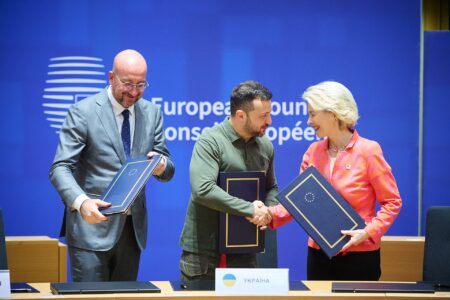
The row unfolded as EU leaders were also dealing with Ukraine’s funding needs, which Canada News Media covered earlier on Friday, and with divisions over China trade, energy and the budget, as set out in our summit coverage.
Whether the checks end on Oct. 22 will depend on what the two interior ministers agree.
If you find reporting like this useful, consider supporting Canada News Media, an independent Canadian newsroom with no corporate parent.
Via Euronews and Wanted in Rome.
Follow Canada News Media
Get the day's top Canadian stories and our two daily 60-second news videos wherever you scroll.
X Threads Facebook Instagram LinkedIn TikTok YouTube Pinterest Reddit Substack Flipboard Newsletter RSS