



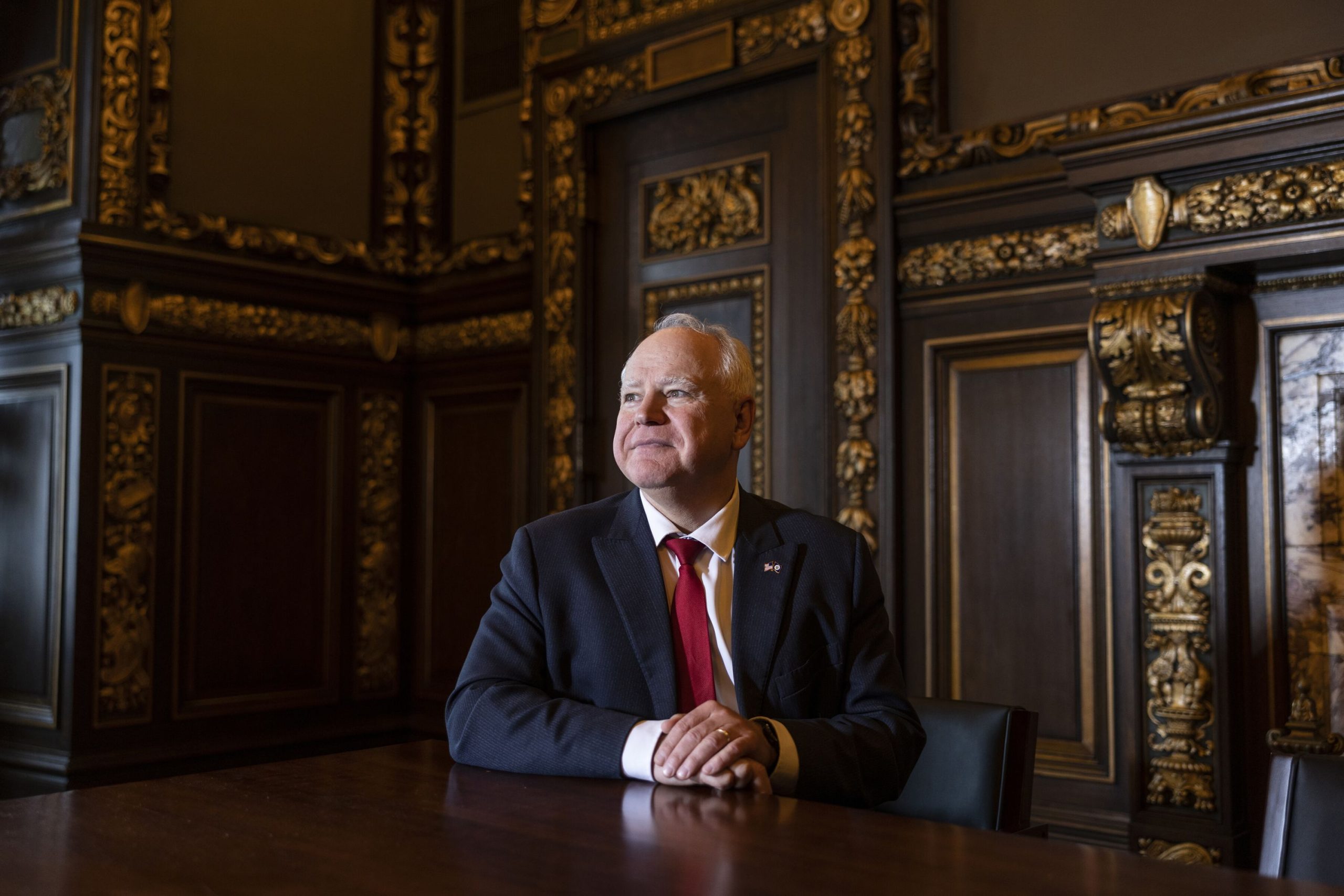
Tim Walz 60 years old, born on April 6, 1964, in West Point, Nebraska, has carved out a significant legacy in American politics as the 41st Governor of Minnesota. With a career spanning education, military service, and political leadership, Walz’s journey is marked by a steadfast commitment to public service and a vision for a more inclusive and progressive Minnesota.
Timothy James Walz grew up in a modest, working-class family. His early years were spent in the rural heartlands, where he developed a strong work ethic and a deep appreciation for community values. Walz pursued higher education at Chadron State College in Nebraska, where he earned a Bachelor of Science in social science education. His passion for teaching and community engagement was evident from the start, setting the stage for his future endeavors.
Walz’s sense of duty extended beyond the classroom. He joined the Army National Guard in 1981, serving for 24 years and retiring with the rank of Command Sergeant Major. His military career provided him with invaluable leadership experience and a profound understanding of the sacrifices made by service members. Walz’s military service remains a cornerstone of his identity, influencing his approach to governance and public policy.
Before entering the political arena, Walz dedicated himself to education. He moved to Mankato, Minnesota, where he taught high school geography and coached football. His commitment to education and his students earned him recognition and respect within the community. Walz’s experience as an educator has deeply influenced his political career, shaping his views on education reform and the importance of supporting teachers and students.
Walz’s political journey began in earnest in 2006 when he ran for the U.S. House of Representatives. Representing Minnesota’s 1st congressional district, he won the election, becoming the first Democrat to do so in over a century. During his six terms in Congress, Walz established himself as a pragmatic and effective legislator. He focused on veterans’ affairs, agriculture, and healthcare, often working across party lines to achieve tangible results for his constituents.
In 2018, Walz successfully ran for Governor of Minnesota, defeating Republican Jeff Johnson. His campaign emphasized education, healthcare, and economic equity, resonating with a broad spectrum of voters. As governor, Walz faced significant challenges, including the COVID-19 pandemic, civil unrest following the murder of George Floyd, and ongoing debates over healthcare and education funding.
Walz’s response to the COVID-19 pandemic was marked by decisive action and a focus on public health. He implemented statewide lockdowns, promoted vaccination campaigns, and sought to balance economic concerns with the need to protect vulnerable populations. His leadership during the crisis earned both praise and criticism, reflecting the complex nature of governing during unprecedented times.
Governor Walz has been a vocal advocate for social justice and equity. In the wake of George Floyd’s murder, he called for police reform and addressed systemic racism within the state. His administration has worked to implement policies aimed at reducing disparities in education, healthcare, and economic opportunities for marginalized communities.
Tim Walz is married to Gwen Walz, and the couple has two children. Gwen has been an active partner in her husband’s political career, often focusing on education and community outreach. The Walz family resides in St. Paul, where they are deeply involved in the local community.
As Tim Walz continues his tenure as governor, his focus remains on building a more inclusive and prosperous Minnesota. His leadership style, characterized by empathy, pragmatism, and a deep commitment to public service, has positioned him as a significant figure in American politics. With the 2024 gubernatorial election on the horizon, all eyes will be on Walz as he seeks to continue his work and legacy in Minnesota.
Governor Tim Walz’s journey from a rural Nebraska upbringing to the highest office in Minnesota is a testament to his dedication to public service and his vision for a better future. As he navigates the complexities of governance, his story serves as an inspiration and a reminder of the impact that committed and compassionate leadership can have on a state and its people.
Follow Canada News Media
Get the day's top Canadian stories and our two daily 60-second news videos wherever you scroll.
X Threads Facebook Instagram LinkedIn TikTok YouTube Pinterest Reddit Substack Flipboard Newsletter RSS