

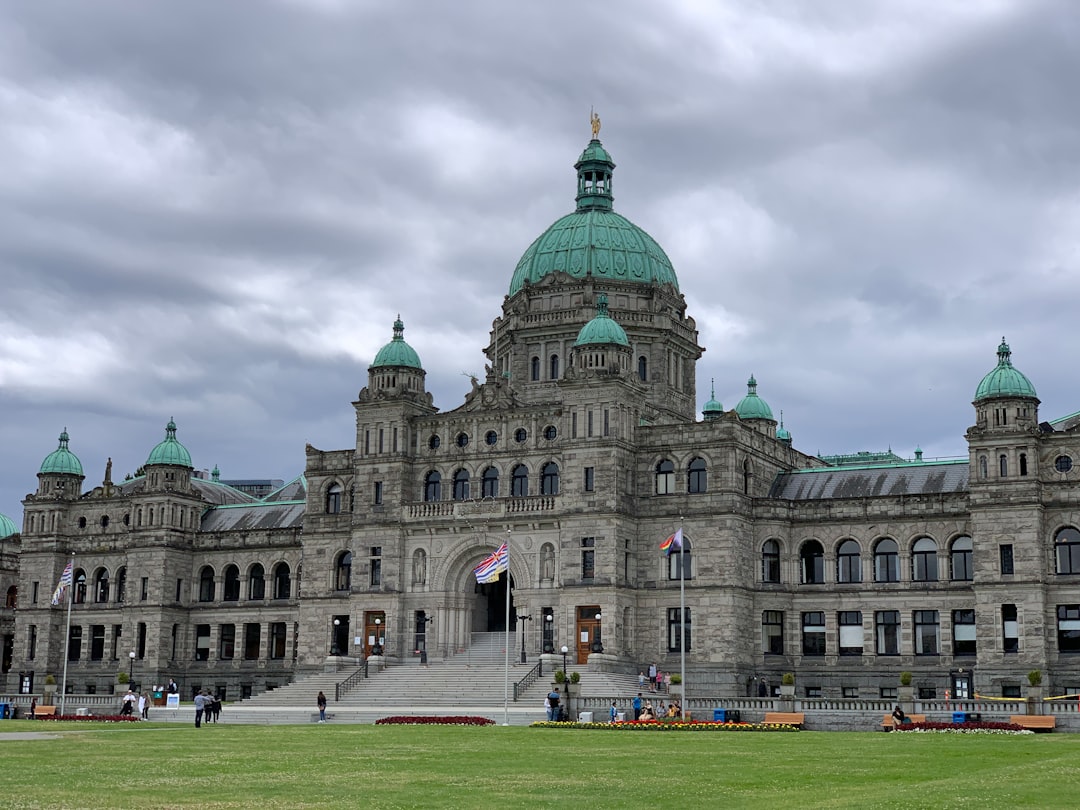
On Sept. 9, 1988, David See-chai Lam was sworn in at Government House in Victoria as the 25th lieutenant-governor of British Columbia, becoming the first Chinese Canadian appointed to viceregal office anywhere in Canada.
The appointment placed a Hong Kong-born immigrant of 21 years’ residence in the Crown’s most senior ceremonial post in the province, and it did so in a province whose statute books had, within living memory, been written expressly to keep people like him out of public life.
Lam was born in Hong Kong on July 25, 1923, the son of a banker, according to The Canadian Encyclopedia. He trained in banking himself before emigrating to Canada in 1967 with his wife, Dorothy, and their three daughters, settling in Vancouver. He took work selling real estate, then moved into property development, drawing on Hong Kong investment capital at a moment when that flow of money was only beginning to reshape the Lower Mainland. He retired from business in 1983.
What followed was a second career in giving money away. The Canadian Encyclopedia records that Lam established the David and Dorothy Lam Foundation and the Floribunda Philanthropic Society, which together directed millions of dollars a year to causes including the Dr. Sun Yat-Sen Chinese garden in Vancouver, the Asian Pacific Initiative Centre and Regent College, a theological seminary. In 1985 his support opened the David Lam Management Research Library at the University of British Columbia, an institution UBC Library has continued to associate with his name.
Lieutenant-governors are appointed by the governor general on the advice of the prime minister, and Lam’s appointment came under the federal government of Brian Mulroney. He was Canada’s second non-white lieutenant-governor, following Lincoln Alexander, who took up the Ontario post in 1985, and the first of Asian descent.
The symbolism was not incidental, and it was not lost on anyone in British Columbia. Lam was born in 1923, the year Parliament passed the Chinese Immigration Act. The law, widely known as the Chinese Exclusion Act, took effect on July 1 of that year and effectively barred Chinese immigration to Canada while requiring Chinese residents, including those born in this country, to register with the government. The Canadian Museum of Immigration at Pier 21 notes that fewer than 100 Chinese people were admitted to Canada during the 24 years the law stood. It was repealed in 1947. Parks Canada has since designated the exclusion of Chinese immigrants between 1923 and 1947 a national historic event.
Anti-Chinese legislation in British Columbia predated the federal act by decades and was not confined to immigration. Provincial law had stripped voting rights from residents of Chinese descent, a restriction the Province of British Columbia’s Chinese Legacy BC history project documents as part of a broader architecture of exclusion in the province. That a Chinese Canadian would one day give royal assent to British Columbia’s laws would have struck the legislators who wrote those measures as an impossibility.
Lam served until April 21, 1995, a term of nearly seven years. He used the office, which carries no political power, to speak persistently about immigration, tolerance and what he framed as the obligation of newcomers to participate in Canadian public life rather than remain apart from it. He travelled the province heavily, and his tenure coincided with a period of rapid Hong Kong migration to British Columbia ahead of the territory’s 1997 handover to China, a demographic shift that generated real friction in Vancouver-area politics.
Lam died in Vancouver on Nov. 22, 2010, at 87. The Globe and Mail, reporting his death, described him as Canada’s first ethnic Chinese lieutenant-governor, the distinction he had earned on this date 22 years earlier.
Sources: The Canadian Encyclopedia; UBC Library; Canadian Museum of Immigration at Pier 21; Parks Canada; Province of British Columbia, Chinese Legacy BC; The Globe and Mail.
Follow Canada News Media
Get the day's top Canadian stories and our two daily 60-second news videos wherever you scroll.
X Threads Facebook Instagram LinkedIn TikTok YouTube Pinterest Reddit Substack Flipboard Newsletter RSS