
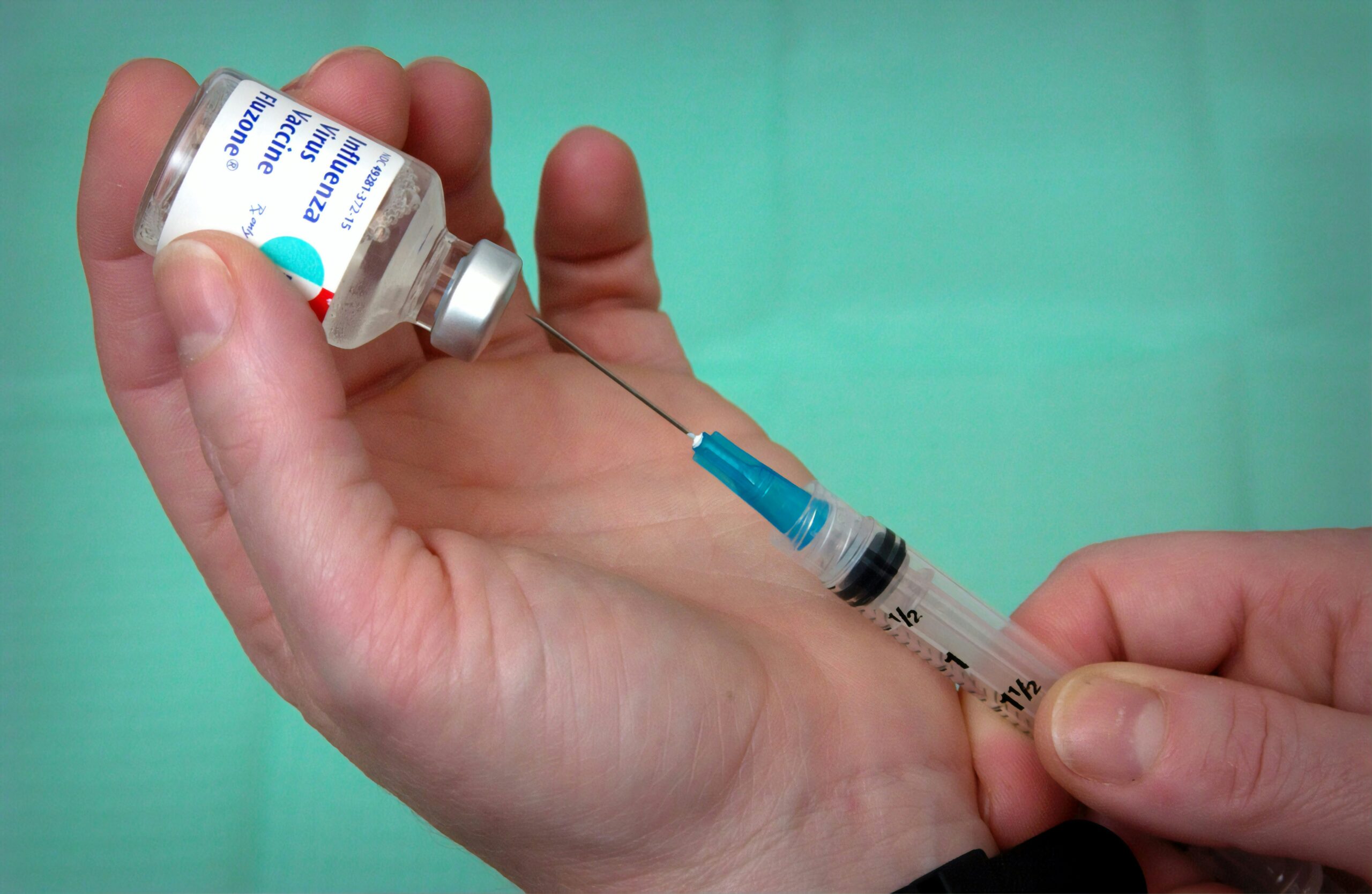
When the Public Health Agency of Canada announced on Feb. 19, 2025, that it had secured doses of a human vaccine against avian influenza, it set out how the shots would be shared. Sixty per cent of available doses would go to the provinces and territories, the agency said in its news release, and 40 per cent would be held in a federal stockpile for national preparedness.
Over the year that followed, 39,200 doses reached the provinces and territories. Another 2,300 were donated to researchers. The remaining doses, out of a total supply that grew to 870,000, expired on Feb. 28, 2026, according to the Commissioner of the Environment and Sustainable Development’s audit of Canada’s avian influenza response, tabled May 4, 2026.
The deliveries amount to roughly 4.5 per cent of the doses the agency eventually held. Measured against only the 500,000 doses referred to in the February 2025 announcement, the 60 per cent share the agency described would have been about 300,000 doses. Provinces and territories received about 13 per cent of that.
The audit’s headline finding, that more than 95 per cent of the doses went unused, was reported across the country when the report was tabled. The distribution framework the agency itself announced, and how little of it was ever exercised, has not previously been reported. It emerges from reading the audit against the agency’s own February 2025 news release, which remains posted on Canada.ca.
The audit’s timeline sets out a sequence the news release does not mention. In June 2024, according to Exhibit 3 of the report, the agency intended to acquire 800,000 doses “without having conducted any analysis.” In August 2024 it purchased 500,000 doses after estimating that was how many it would need. In February 2025, the same month the purchase was announced publicly, the agency “completed a more detailed analysis and determined it needed only 300,000 doses.” In March 2025 it purchased an additional 370,000 doses, again, in the auditors’ words, “without having conducted any analysis,” bringing the total to 870,000.
The February 2025 news release describes the 500,000 doses as an “initial supply.” It does not disclose that the agency had concluded, or was in the course of concluding, that 300,000 would cover the population it had identified as at risk.
The same release was issued the day the agency published preliminary guidance from the National Advisory Committee on Immunization on using the vaccine outside a pandemic. That guidance, dated as of December 2024 and released Feb. 19, 2025, states that the committee “has not recommended broad deployment” of human vaccines against avian influenza, and instead identified narrow groups, including laboratory workers handling live H5N1 virus and people in ongoing contact with infected animals, that provinces might consider prioritizing if they chose to vaccinate at all. The release itself acknowledges that broad deployment “is not recommended at this time.”
Provinces and territories, not Ottawa, decide whether to run such a program. Both the news release and the committee’s guidance say so explicitly. That is a material point in the agency’s favour: low uptake is not by itself evidence that the federal agency mismanaged distribution, because there was little for provinces to distribute the vaccine against. Canada had reported one domestically acquired human case of H5N1, in November 2024, and no further human cases have been publicly reported since.
What the records do show is that the agency purchased a further 370,000 doses in March 2025, a month after publishing expert advice against broad deployment and after its own analysis put the requirement at 300,000, at a point when it already held 500,000.
What the public record does not show is what any of it cost. The February 2025 news release gives no contract value. The audit gives none. Federal proactive disclosure of contracts does not appear to carry a published line item identifying the value of the avian influenza vaccine order, which was placed by leveraging an existing agreement with GSK rather than through a new competitive award. Establishing the cost would require either the agency answering the question directly or an access to information request for the contract and its amendments. Until then, the size of the loss is unknown, and no figure should be attached to it.
For scale, the audit notes the outbreak has been expensive elsewhere. Roughly 17.3 million commercial birds died or were culled between December 2021 and March 2026, costing about $360 million in compensation paid by the Canadian Food Inspection Agency.
The auditors recommended that the agency base any further vaccine purchases on updated risk assessments, a cost-benefit analysis and demand forecasting. The report notes the agency has already obtained financial approval to buy more doses if needed, and that as of the audit it had not decided whether to refresh the expired inventory.
That decision, if it is taken, will determine whether the pattern documented here repeats. This report is based on published federal records. Canadanewsmedia.ca has not received a response from the Public Health Agency of Canada on the questions raised, and will update this piece if one is provided.
Sourcing note: Reporting drawn from the Commissioner of the Environment and Sustainable Development’s report on avian influenza, tabled May 4, 2026 (dose totals, purchase timeline, expiry date, deliveries to provinces and territories, compensation figures, recommendations and restocking status); the Public Health Agency of Canada news release of Feb. 19, 2025 (the 60-40 distribution framework, the “initial supply” characterization, vaccine product and supplier); and the National Advisory Committee on Immunization summary statement of Feb. 19, 2025 (guidance against broad deployment, priority populations, provincial decision-making authority). The Canadian Press reported the audit’s purchase-timeline findings on May 4, 2026; the comparison with the agency’s own distribution commitment and the same-day publication of the immunization guidance are original to this report. Contract value remains unverified and is identified above as an open question.
Follow Canada News Media
Get the day's top Canadian stories and our two daily 60-second news videos wherever you scroll.