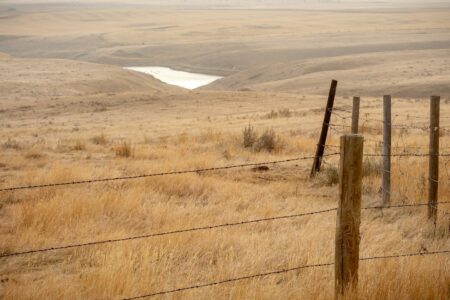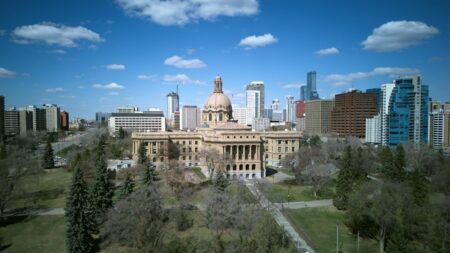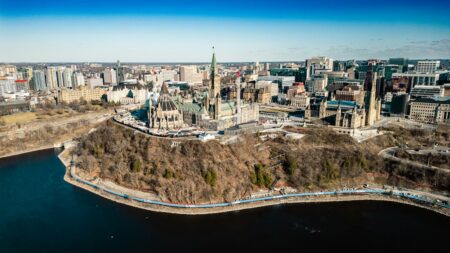
Treaty 6 turned 150 on August 23, with dignitaries, First Nations leaders and hundreds of attendees gathering at Fort Carlton Provincial Park in Saskatchewan to mark exactly a century and a half since the Crown and Plains and Wood Cree chiefs signed the agreement. Chief Christine Longjohn of Sturgeon Lake First Nation told the crowd that “our people continue to face serious inequities in healthcare, housing, education, and infrastructure” — a line that made headlines across the ceremony coverage but went unquantified. One treaty term explains both why that promise exists and how far short of it Canada currently falls: the medicine chest clause.
What the Medicine Chest Clause Actually Requires
Treaty 6’s text commits the Crown to keep “a medicine chest… at the house of each Indian Agent” for First Nations’ use. On its face, that reads like a first-aid kit. In practice, it has been tested in court and interpreted far more broadly. In Dreaver v. The King (1935), Chief George Dreaver and two Mistawasis band councillors in Saskatchewan sued after the federal government tried to charge them for medical supplies. The court sided with the band, ruling the clause meant all medicines, drugs and medical supplies were to be provided to Treaty Indians free of charge — treating the “chest” as a metaphor for a broader health-care obligation, not a literal cabinet. That interpretation has been challenged since, with some rulings narrowing it back toward “free medicine and not much more,” but a 1999 Federal Court decision involving the Wuskwi Sipihk Cree Nation reaffirmed Dreaver’s broader reading. The clause is one of the few treaty commitments with an actual court precedent establishing what Canada owes.
The Gap the Ceremony Speeches Didn’t Put a Number On
Alberta Health data reported this year shows how that legal obligation compares with outcomes on the ground. In 2023, the average life expectancy for First Nations people in Alberta was 62.81 years, against 81.88 years for non-First Nations Albertans — a gap of just over 19 years, the widest on record in the province. That gap has moved in exactly the wrong direction over time: it stood at 15 years in the late 1970s, narrowed to just 7 years by 1999, then widened back out past 19 as COVID-19 and the toxic drug crisis hit First Nations communities disproportionately hard. COVID-19 mortality was up to 4.5 times higher among Indigenous people in Canada than the general population; unintentional opioid poisoning deaths among First Nations Albertans rose 366 percent between 2016 and 2022, and are now roughly eight times more common than among non-First Nations Albertans. None of that data appeared in the Treaty 6 anniversary coverage, even as multiple speakers referenced healthcare inequity directly.
A Promise With Legal Standing, Still Unmet
That combination — a treaty clause with a nearly century-old court ruling behind it, paired with a health gap now wider than at any point since Ottawa started measuring it in the 1970s — is what gives weight to Governor General Louise Arbour’s admission at the ceremony that “history unfortunately tells a very different story” than the treaty’s promise, and to Assembly of First Nations national chief Cindy Woodhouse’s line that “there is no expiration date on our treaties, but there is unfinished business.” Alberta’s government has pointed to its Modernizing Alberta’s Primary Health Care System initiative, budgeting roughly $12.7 million in 2025–2026 for First Nations, Métis and Inuit primary care access — a figure that, set against a life-expectancy gap now measured in decades rather than years, illustrates the scale mismatch Treaty 6 leaders were pointing to when they said the next 150 years “must be about implementing” the treaty, not just remembering it.
via 650 CKOM / The Canadian Press (read the original ceremony coverage)
Follow Canada News Media
Get the day's top Canadian stories and our two daily 60-second news videos wherever you scroll.