

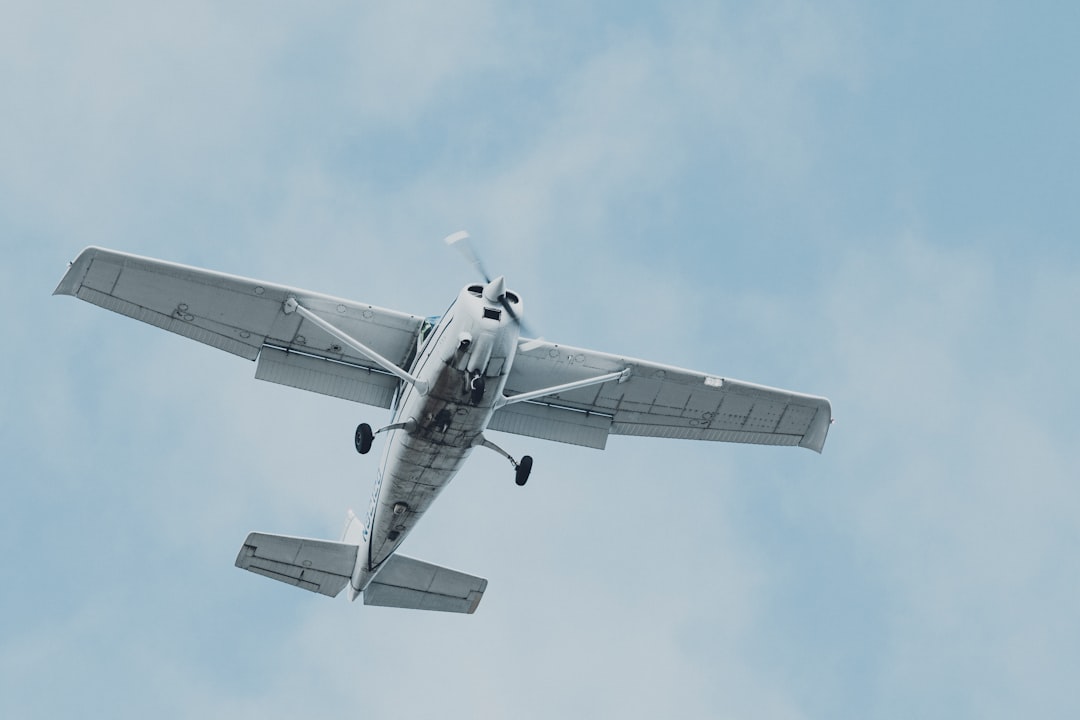
Two small planes collided in mid-air over Chilliwack, British Columbia on Monday evening, with one aircraft going down into a flooded gravel quarry, but remarkably, nobody was seriously hurt. Canada’s Transportation Safety Board (TSB) has now deployed a team of investigators to the Fraser Valley community, about 100 kilometres east of Vancouver, to determine how two training aircraft ended up on a collision course in open sky.
The collision happened around 5:30 p.m. Monday near Chilliwack Airport and involved two Cessna 172s, a workhorse single-engine aircraft widely used by flight schools, from a pair of local training operators, according to Garry Atkins with the Chilliwack Airport, cited in reporting by The Canadian Press via Global News. One plane, carrying two occupants, managed to make it back to the airport and land safely despite the impact. The second aircraft, with one person aboard, went down into a quarry lagoon off Wolfe Road and Schweyey Road, northwest of the airport, and was fully submerged by the time fire crews arrived, according to Black Press Media’s Abbotsford News.
Witnesses in the area first alerted emergency services to a plane going into the water, triggering a significant multi-agency response. BC Emergency Health Services dispatched five ambulances to the crash site, and a helicopter landing zone was set up nearby before being stood down around 6 p.m. Despite the dramatic scene of a plane fully submerged in a quarry pond, BC Emergency Health Services confirmed no patients were taken to hospital, suggesting the sole occupant of the downed aircraft escaped serious injury. RCMP had not responded to requests for comment as of Tuesday morning.
The TSB, the independent federal agency responsible for investigating air, marine, pipeline and rail occurrences across Canada, confirmed in a deployment notice issued Tuesday that a team of investigators would arrive in Chilliwack that afternoon to begin gathering information and assessing the occurrence. In the early stages of a mid-air collision probe, TSB investigators typically examine flight paths, radio communications, weather conditions at the time and each aircraft’s maintenance history, though the agency’s final findings and probable-cause reports in cases like this often take months, and sometimes years, to be published.
Chilliwack Airport is a well-used hub for general aviation and flight training in the Fraser Valley, home to several schools that rely on the surrounding airspace for touch-and-go circuits and cross-country training flights, the kind of routine instructional exercise the two Cessnas were reportedly engaged in Monday evening. Mid-air collisions involving light training aircraft are uncommon in Canada but not unheard of, and past incidents at busy training airports have previously prompted TSB recommendations around collision-avoidance procedures, radio calls in uncontrolled airspace, and see-and-avoid practices for student pilots.
No further details about the pilots or students involved, the flight schools operating the aircraft, or a possible cause of the collision had been released as of Tuesday afternoon. The TSB said it would provide updates as its investigation progresses, and any formal findings are expected well after the initial fact-finding phase concludes.
Via The Canadian Press/Global News and Black Press Media/Abbotsford News. Sourcing: core facts verified via Global News/Canadian Press, cross-checked against Black Press Media’s Abbotsford News/Chilliwack Progress and CBC News coverage, all published Aug 4, 2026. TSB deployment confirmed via TSB’s own Aug 4 deployment notice.
Follow Canada News Media
Get the day's top Canadian stories and our two daily 60-second news videos wherever you scroll.
X Threads Facebook Instagram LinkedIn TikTok YouTube Pinterest Reddit Substack Flipboard Newsletter RSS