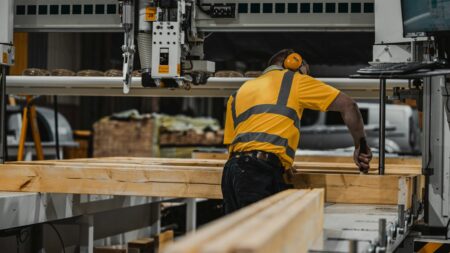


Toronto quantum computing firm Xanadu announced this week that the federal government will loan it $195 million to build an advanced photonics manufacturing hub inside a converted Campbell’s Soup factory in Etobicoke — what the company calls the largest quantum manufacturing investment in Canadian history. The 158,000-square-foot facility, named Inception, is expected to create 275 jobs and open in early 2027, part of a broader $893-million expansion Xanadu calls Project OPTIMISM.
The headline number is the one getting attention: $195 million from Ottawa for a single quantum computing company. What’s missing from the announcement coverage is what kind of $195 million this actually is, and how it fits into a much larger running tally of federal money that has already flowed to this one company.
A Loan, Not a Grant — With Strings Attached
The funding is structured as a “repayable contribution” through Innovation, Science and Economic Development Canada’s Strategic Response Fund, the successor to the Strategic Innovation Fund. That distinction matters: unlike a grant, Xanadu is expected to pay this money back over time, and the program requires the company to put up significant matching investment of its own rather than simply receiving a cheque. It’s also not Xanadu’s first federal cheque of any kind — the company has already received $78 million from Ottawa to date, including $40 million through the original Strategic Innovation Fund, and is separately due to collect up to $23 million more through the first phase of the Canadian Quantum Champions Program.
Add it up, and this week’s $195-million loan brings known federal financial exposure to one Toronto company to roughly $296 million — before counting whatever Ontario contributes toward the up to $390 million combined federal-provincial amount Xanadu has been seeking for this specific facility. That running total doesn’t appear anywhere in the announcement itself.
From Soup Cans to Qubits — and Back to Jobs
The building carries its own under-told story. Campbell’s ran a soup and food-manufacturing plant on the Etobicoke site for decades before closing it in 2019, one of several food-manufacturing closures that hit Toronto’s west end over the past decade. The Art Deco building sat empty until property owner QuadReal restored it to its original 1930s look; Xanadu is now taking over the entire structure, and CEO Christian Weedbrook has floated putting a print of Andy Warhol’s Campbell’s Soup Cans near the entrance as a nod to the site’s history. The 275 advanced-manufacturing, engineering and science jobs Xanadu plans to add there are a genuine, if modest, replacement for the industrial employment the neighbourhood lost when Campbell’s left — a local detail easy to miss inside a funding announcement about quantum physics.
The Bet Ottawa Hasn’t Fully Explained
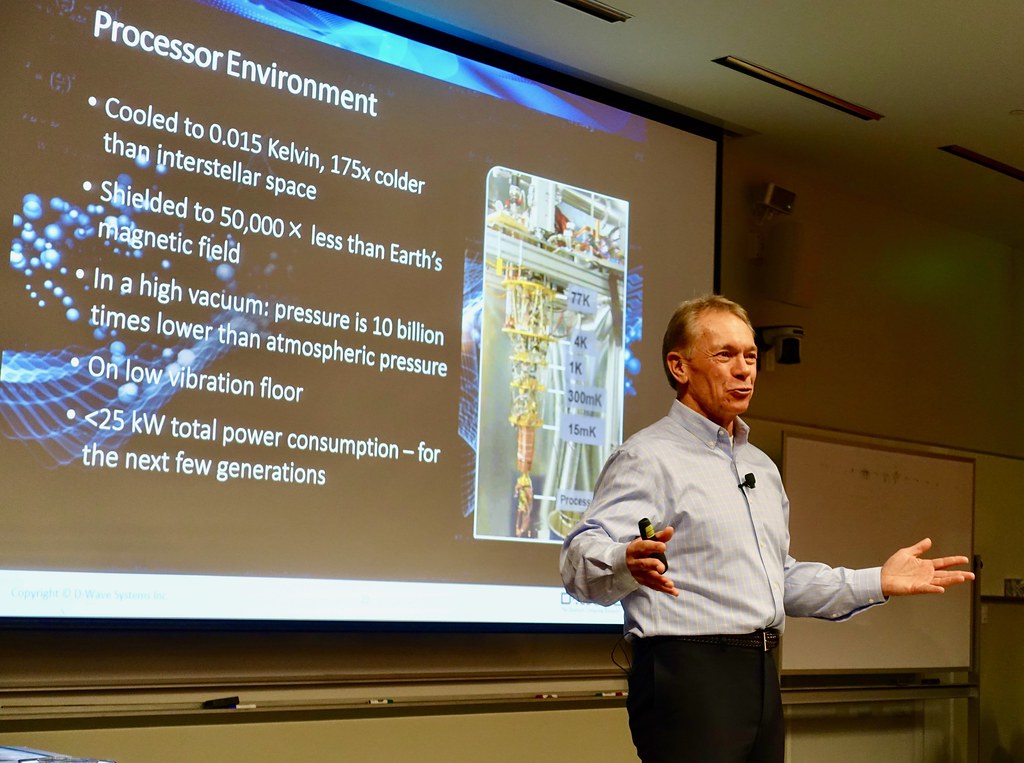
Buried in Xanadu’s own comments is an admission that matters more than the celebratory language around it: quantum computers, including the photonics-based systems Xanadu builds, have yet to prove viable at a commercially useful scale. That’s not a minor caveat when the money involved is a loan the company is expected to repay, not a grant Ottawa can simply write off if the technology doesn’t pan out on schedule. Canada has made large quantum bets before — Burnaby, B.C.-based D-Wave Systems, founded in 1999, is widely credited as the world’s first company to sell commercial quantum computers, and Ottawa’s 2023 National Quantum Strategy committed $360 million over seven years to the sector broadly. Neither the government nor Xanadu has said publicly what happens to this specific repayable loan if the company’s planned quantum data centre, targeted for 2029, slips or underdelivers. For a company whose known federal support now approaches $300 million, that’s the follow-up question this week’s ribbon-cutting coverage leaves for taxpayers to ask themselves.
via BetaKit (https://betakit.com/from-soup-to-qubits-xanadu-to-open-advanced-photonics-hub-in-old-campbells-factory/)
Follow Canada News Media
Get the day's top Canadian stories and our two daily 60-second news videos wherever you scroll.